
Archive for June, 2022
Shii News – Academic Items
1.Call for book proposals – The Ottoman Empire and the World
I.B.Tauris and the British Institute at Ankara are seeking book proposals for academic book series under new editorship and advisory board: The Ottoman Empire and the World.
Series Editor:
Christopher Markiewicz, University of Birmingham, UK
Editorial Advisory Board:
Amila Buturović, York University, Canada
Emine Fetvacı, Boston College, USA
Joshua M. White, University of Virginia, USA
Stefan Winter, The Université du Québec à Montréal, Canada
For more information, or to submit a proposal, please contact:
Christopher Markiewicz, Series Editor, c.markiewicz@bham.ac.uk
Rory Gormley, Senior Commissioning Editor, rory.gormley@bloomsbury.com
2. Islamic Manuscript and Print Culture: from the Middle East to South Asia
Faculty: Nur Sobers-Khan
Description:
This course provides broad historical overview of Islamic manuscript and print culture, featuring sessions on the historical background and material context of manuscript production, the rise of typographic print and lithography in the Middle East and South Asia, as well as a critical view of 19th-century colonial collecting practices and the formation and conceptualization of ‘special collections’ in Western institutions today vis-à-vis the Islamic world.
The course will open by setting the historical context of Islamic manuscript production, from early Quran manuscripts in the 7th-9th centuries, starting with the rise and development of Arabic script and also examined other forms of early written production, such as Arabic block printing from the 9th century CE, to both decenter the focus on the birth of printing in Europe and also to explore the phenomenon of the co-existence of print techniques and large-scale scribal manuscript production in Islamic societies, a theme which recurs in the 18th-19th century. To provide the wider context of manuscript culture and production, students will also be introduced to the history of the formation of manuscript libraries in the Islamic world and the role they played in premodern knowledge production.
Students will be introduced to the development of Islamic courtly manuscript culture in the early modern period and the flourishing of manuscript illumination and figural illustration, as well as receive an overview of how to describe and date Islamic manuscript bindings, papers, locate colophons, seals and inscriptions, which often have a close connection to the historical libraries and courts foregrounded in the course. After a thorough exploration of manuscript production, we will turn to the rise of print in the Muslim context in the Middle East and South Asia, exploring the first experiment in typography and the role of missionary presses, then moving on to examine the technology of lithography and how it facilitated a transition from manuscript to large-scale production in the nineteenth century, with particular attention to India and Iran. The course will conclude with a discussion of colonial histories of collecting in the Middle East and South Asia, and an overview of the European and North American repositories that house large Islamic manuscript, lithograph and rare printed book collections and examine the history and provenance of a selection of these collections with an eye to providing a critical account of the history of collecting.
Requirements:
Circumstances permitting, we will use the UCLA Islamic manuscript collections in handling sessions for our course. If possible, we can include a visit to view manuscripts in LACMA’s collections as well.
Years taught: 2022
Department of Information Studies, UCLA
232 GSEIS Building Box 951520
Los Angeles, CA 90095-1520
3. The deadline for application for the LUCIS Summerschool on Philology and Manuscripts from the Muslim World 2022 (Leiden, August 23-Sept 2) has been pushed forward to June 27. Applicants will be informed about selection before July 1. More information can be found here.
4. Online Event | Alaa Abd El-Fattah’s ‘You Have Not Yet Been Defeated’
Date: Wednesday, 22 June 2022
Time: 16:00 – 17:30 BST
Location: Online via Zoom (registration required)
Registration: www.brismes.ac.uk/events/outreach-and-pedagogy/you-have-not-yet-been-defeated
About the book
Alaa Abd El-Fattah is arguably the most high-profile political prisoner in Egypt, if not the Arab world, rising to international prominence during the revolution of 2011. A fiercely independent thinker who fuses politics and technology in powerful prose, an activist whose ideas represent a global generation which has only known struggle against a failing system, a public intellectual with the rare courage to offer personal, painful honesty, Alaa’s written voice came to symbolize much of what was fresh, inspiring and revolutionary about the uprisings that have defined the last decade. Collected here for the first time in English are a selection of his essays, social media posts and interviews from 2011 until the present. He has spent the majority of those years in prison, where many of these pieces were written. Together, they present not only a unique account from the frontline of a decade of global upheaval, but a catalogue of ideas about other futures those upheavals could yet reveal. From theories on technology and history to profound reflections on the meaning of prison, You Have Not Yet Been Defeated is a book about the importance of ideas, whatever their cost.
Chair and discussant
- John Chalcraft (London School of Economics)
Speakers
- Nicola Pratt (University of Warwick)
- Sherif Azer (University of York)
5. The Iranian Studies Collective
Thank you for following our channel. We aim to publish videos every 3-4 weeks so we appreciate your patience and support. 🙏🏽 and hello to all our new followers, we hope you enjoy what we have here 👋🏽👋🏽 We’re a free initiative dedicated to promoting fresh and exciting scholars working on Iran. PhDs, Masters, Postdocs are very welcome. We hope to create easy to access content & videos featuring the research of these scholars. In addition, we also have videos of experts giving advice to students and scholars in the field of Iranian studies. Thank you for subscribing and for visiting our page.
https://www.youtube.com/channel/UCNLr6AptCB6pYq_AVURoJwQ/featured
6. PhD Position in Arabic Lit and Cultural Studies at UiO
A PhD position in Arabic Literary and Cultural Studies is available at the University of Oslo. The deadline for application is 1st of September.
7. Residence Program in Advanced Arabic & Social Studies
Spring Semester 2023
A limited number of merit-based tuition waiver and housing support
The Language Center at the Doha Institute for Graduate Studies (DI) is pleased to announce its Spring semester 2022 – 2023 Residence Program in Advanced Arabic Language and Social Studies.
The Program is a unique forum for academic and cultural exchange between the DI’s predominantly native Arabic- speaking graduate students and faculty (from across the Arab world) from one side and their international non-native or heritage peers from the other side.
The Residence Program is offered for one semester on site in Doha. It meets the language, culture, and academic needs of advanced non-native and heritage graduate students who wish to strengthen their language and cultural skills, as well as prepare for specific challenges related to their academic areas of expertise. The Program is delivered entirely in Arabic and consists of a twin advanced language-training and academic components.
The language-training component prepares students to function professionally in Arabic and offers dedicated courses in language, translation, and content-based instruction. The program adapts to the academic needs of students as a base for linguistic and cultural acquisition, emphasizes productive and presentation skills, and develops higher levels of proficiency in speaking, listening, reading, writing, and translation.
The academic component gives fellows the opportunity to take advantage of the wide array of unique graduate-level courses the DI distinguished faculty teach in Arabic through its academic units: The School of Social Sciences and Humanities, the School of Economics, Administration and Public Policy.
The Residence Program is an important part of the DI’s mission to establish, maintain, and nurture intellectual links and two-way dialogues between its students, faculty, and the international learning and research community.
The DI aims to create an enduring legacy of intellectual innovation and education within the Arab world and beyond. It assumes and promotes the Arabic language as a tool of scientific inquiry, an official language in public discourse, and a primary language for teaching and research.
Semester Program Features:
⦁ 6 credits of intensive Arabic;
⦁ Option to audit graduate academic courses taught in Arabic if eligible;
⦁ Option to have an academic partner;
⦁ Option to a language partner;
⦁ Access to the DI rich conferences, symposia, and guest lectures.
Admission Requirements:
⦁ Advanced level in Arabic;
⦁ Tuition fees: QAR 9,000 (approximately €2,250 OR $2,465) Per semester.
⦁ Housing: QAR 11,000 (approximately €3,000 OR $2,650) Per semester.
Program Dates:
⦁ Application Deadline: July 20, 2022
⦁ Start of Classes: January 8, 2023
⦁ End of Classes: April 20, 2023
To Apply to the Doha Residence Program, click on the link below:
https://dilc.wufoo.com/forms/znatdf40sd7rqv/
8. The Afghanistan Wars
William Maley
I B Tauris, 2022
https://www.bloomsbury.com/uk/afghanistan-wars-9781352011005/
9. The Shahnameh, a critical edition
Djalal Khaleghi-Motlagh
8-volume set
Mazda, 2022
http://www.mazdapublishers.com/book/the-shahnameh
10. Persian, Kurdish and Assyrian Periodical Press in the Ottoman Empire
The Turkish-language journal Kebikec has recently made available its 52nd issue that appeared in December 2021. This issue includes contributions on Persian, Assyrian and Kurdish periodical press in the Ottoman Empire. You can download the complete issue from the following academia link of the journal.
- June 18, 2022
- 0 Comment
- June 17, 2022
- 0 Comment
Shii News – ‘Haji Bektash Veli in Seven Climates and Four Directions’ – Eds. Ahmet Taşğın-Erdal Aksoy-Abdurrahman Kültür-Hakkı Taşğın
We are very happy to introduce you to an edited volume on the Turkish History of Bektashism and Alevism. Most articles are in Turkish but also English articles are included with some very interesting Chapter about Oldest painting of Haji Bektashi veli and Sari Saltuk Baba.
Yedi İklim Çar Köşede Hacı Bektaş Veli
Haji Bektash Veli in Seven Climates and Four Directions
introductory pages can be viewed here: https://www.academia.edu/80173194/
Editors: Ahmet Taşğın-Erdal Aksoy-Abdurrahman Kültür-Hakkı Taşğın
ISBN 978-90-6921-033-9
First Published in 2022, Leiden, Netherlands
PRICE € 70,-
Türk Tasavvufunun Kaynakları nr. 1
Sources of Turkish Sufism 1
© Copyright 2022, SOTA
Research Centre for Turkestan, Azerbaijan, Crimea,
Caucasus and Siberia
Publisher: Stichting SOTA Türk ve Arap Dünyası Araştırma Merkezi
Turkish and Arabic Research Centre
FOR ORDERING contact via: sotapublishing@gmail.com
- June 15, 2022
- 0 Comment
Shii News – Academic Items
1.„Berlin meets Parviz Tanavoli. Tandis Tanavoli and Dr. Gisela Fock“
Thursday, June 16th 2022 at 6:30 pm (CET)
Webex link: https://spk-berlin.webex.com/spk-berlin/onstage/g.php?MTID=e7c556401527d2dd09f9b49996e01bd9e
Language: English
The focus will be on the sculptor Parviz Tanavoli, whose work “HEECH” has been on display at the Museum for Islamic Art (Pergamon Museum) since 2020.
Parviz Tanavoli is one of Iran’s most outstanding artists alive, whose work spans over six decades now. Venturing the popular aesthetics in his native country, he bridged European style modernism, U.S. Pop art, and many more inspirations into a uniquely modern as well as recognisably Iranian art form.
By some regarded as his most outstanding series Heech iconises an elegantly curved Nastaliq script in three dimensions. Since 1964 the Farsi word that translates as “nothingness” forms one of Tanavoli’s central occupations and he processed it in painting to sculpture, as an almost hidden inclusion into other works or as grand scale stand-alone script statues.
Sitting on the Tandem-Sofa will be Tandis Tanavoli, film producer and daughter of the artist, and Dr. Gisela Fock, who did her doctorate on Parviz Tanavoli and has been studying Iranian modernism for 25 years. Prof. Dr. Stefan Weber, Director of the Museum for Islamic Art, will speak about the “HEECH” in Berlin as an introduction, followed by an insight by Tanavoli and Fock into the works and its meanings.
Registration is not required.
2. ONLINE Webinar “Making Genealogies, Creating Pasts: Shajre-nasb as an Alternative Archival Practice in Kashmir” by Idrees Kanth (Leiden University), Trinity College Dublin, 14 June 2022, 17:00-18:00 h
Shajre nasb can be described as a mapping exercise that provides a genealogical account of a particular khandan (clan). It is an old practice that has usually involved the Syed families of Kashmir who claim to have descended directly from the family of the Prophet Muhammad.
Information and registration: https://apcairogenizah.com/events .
Zoom: https://tcd-ie.zoom.us/j/94790996814?pwd=dk1ZQUIxdUVlRlh1VFI0U3ZkM1lWZz09
3. ONLINE Research Workshop “Egypt’s Football Revolution: Emotion, Masculinity, and Un-easy Politics” by Carl Rommel, CDEJ, Universitè Paris 1, 15 June 2022, 4:00 pm CEST
Information and registration: https://docs.google.com/forms/d/e/1FAIpQLScDfcVJPHUElQ45E61OeZB-_r_OeZqDEKOFi5M6Zc-fASHr_w/viewform
4. ONLINE “Mediterranean Studies Virtual Symposium”, Auburn University, 17-18 June 2022
The emphasis is on women and women’s issues. There will be 24 presenters and a social hour included in the program.
Information, program and registration: https://mailchi.mp/mediterraneanseminar/attend-mediterranean-stud-ies-symposium-17-18-june-2022-zoom?e=82aeb6c61d
5. International Conference: “The Final Chapters: Twentieth Century Jewish Communities in the Muslim World. Comparative Perspectives”, Munich University, 21 – 22 June 2022
The Conference brings together scholars from Europe, the US and Israel, who work on Jewish communities in the Muslim world in the 20th century.
Deadline for registration: 17 June 2022. Information and program: https://www.jgk.geschichte.uni-muenchen.de/aktuelles/termine/konferenz-mahla/index.html
6. Conference “Multilingualism, Translation, Transfer: Persian in the Ottoman Empire”, Gotha Research Library, 27–29 April 2023
The aim of the conference is to bring together scholars with expertise in Persian and Ottoman Turkish language contacts who are interested in the fields of language, literature, and history, and to explore the role of multilingual practices – especially translation – which are an essential part of knowledge production in the respective traditions.
Deadline for abstracts: 15 July 2022. Information: philip.bockholt@uni-leipzig.de
7. World Congress “Comparative Empire: Conflict, Competition, and Cooperation, 1750-1914”, Society for Global Nineteenth-Century Studies, Singapore, 19-22 June 2023
We welcome proposals for papers and panels that consider forms of interimperial exchanges between empires during this period.
Deadline for abstracts of panels: 25 July 2022; for papers 1 October 2022.
Information: https://www.sgncscongress.com/
8. Panel “Perspectives of Political Islam in the MENA Region”, 5th GIS MOMM Congress, University of Lyon, 11-13 July 2023
This panel discusses the Islamists’ political professionalization in the MENA region facing the sanitary crisis, protest movements (Tunisia, Morocco, Algeria), election loss and fragmentation (Morocco, Tunisia), or polit-ical marginalization (Tunisia) and repression (Egypt), based on their interactions with social and political ac-tors and resulting public policies.
Deadline for proposals (En/Fr): 10 July 2022. Contact: anca.munteanu@univ-lyon2.fr
9. Andrew W. Mellon Postdoctoral Fellowship (1 Year) in Arabic, Bowdoin College, Brunswick, Maine
Native or near-native fluency in English and Arabic and familiarity with a dialect are required. Experience in Arabic language instruction preferred. Possible research areas include literature, cinema, linguistics, and cultural studies.
Deadline for applications: 24 June 2022. Information: https://mesana.org/resources-and-opportuni-ties/2022/06/08/andrew-w.-mellon-postdoctoral-fellow-in-arabic
10. Croft Visiting Assistant Professor (1 Year) of Anthropology & International Studies (Focus on Contemporary Middle East & North Africa), University of Mississippi
The successful candidate will be able to teach courses with a focus on the contemporary Middle East & North Africa and have a strong commitment to teaching excellence and a pedagogy that values diversity and inclusivity. Preference is for candidates with an active program of scholarly research and language proficiency to conduct original research in Arabic.
11. Six Scholarships for Binational Master`s Program “Middle Eastern Sociology / Anthropology & History” (MESH) at the University of Erfurt, Université Saint-Joseph (Beirut) and Université Saint-Esprit De Kaslik (Jounieh)
The one-semester study phase in Lebanon provides knowledge of the sociology / anthropology of the Middle East. It is embedded in the anthropological and global-historical study of history at the University of Erfurt. The teaching languages of the MA program are English, French and German, and special attention is also paid to the acquisition of Arabic language skills.
Deadline for applications: 15 July 2022.
12. Chapters for Edited Book on “Arts and Politics Between the Arab World and Latin America, 1920s-1970s” (Edinburg University Press)
How have artistic networks taken shape between the Arab world and Latin America? To what extent, and how, have cultural institutions and individual agents such as literary translators, poets, novelists, painters, or editors related to key political issues both in the Arab world and in Latin America? How have Arab and Latin American states themselves mobilized art and culture in their foreign policy toward each other, and for what purposes?
Deadline for announcing interest in writing a chapter: 30 June 2022.
Information: laureguirguis1205@gmail.com and eugenia.palieraki@cyu.fr
13. Open Access – Methodos 22: Argumentation and Arabic Philosophy of Language
We are very pleased to announce publication of the latest online, open access
issue of Methodos, dedicated to “Argumentation and Arabic Philosophy of
Language,” co-edited by Shahid Rahman and Walter Edward Young, with chief
editor Leone Gazziero and editorial secretary Anne Dourlens.
The issue includes an introductory essay by Rahman and Young, followed by ten articles
by authors in relevant fields—one of which includes a first-time critical
edition of an intriguing text on dialectic.
Link to the issue: https://journals.openedition.org/methodos/8605
14. St Andrews: Alternative Paths in Iranian Cultural Production 20 June 2022
(Online and in Person) 12-5pm.
12- 13: Persian Poetry
Vahid Davar: Nezami, an Equal of Kings, a Giver of the Means of Reigning
Dr Farshad Sonboldel: Verse-essay in Modern Persian Poetry: the Return of Didactic Literature
13-13.30: News Media
Mahtab Saadatmandi: A Comparative Discourse Analysis of the Persian News Bulletins of The Islamic Republic of Iran News Network (IRINN), BBC Persian and Iran International Television
13.30-14.30: Buffet Lunch
14.30-15.30: Fiction
Parviz Jahed: The Literary Style of Ebrahim Golestan’s Short Stories
Fatemeh-Mehr Khansalar: The Tale of that Distant, Foggy Landscape”: An Ecocritical Reading of Houshang Golshiri’s “Naqāsh Bāghāni” (The Painter of Bāghān)
15.45-17: Drama and Cinema
Dr Saeed Talajooy:From Mehrin Negār to Tārā: The Evolution of Female Protagonists in Bahram Beyzaie’s The Snake King (1966) and The Ballad of Tārā (1979)
Dr Nahid Ahmadian:Indigenizing Shakespeare: Revisiting Iranian theatrical forms in Seh Bāz’khāni
For Abstracts and Bios, see https://forumfortheculturalstudiesofiran.wp.st-andrews.ac.uk/2022-2/symposium-2022-alternative-paths-in-persian-cultural-production/
Join Zoom Meeting: https://us02web.zoom.us/j/81765628186?pwd=bkc2TllMTStuL05GcS9PbzV0bE4wdz09
Meeting ID: 817 6562 8186
Passcode: 2CF7YU
In Person Venue: 216 Buchanan Building, University of St Andrews
Further Information: Dr Saeed Talajooy (st83@st-andrews.ac.uk )
15. Journée d’étude “Dans l’objectif d’Henry Viollet. Les monuments islamiques à travers un fond d’archives inédites (1904-1913)”
Dans le cadre du projet CollEx-Persée EpiPOM (BULAC/CeRMI), nous avons le plaisir de vous annoncer l’organisation de la journée d’étude qui se déroulera les 23-24 juin à l’auditorium de la BULAC (65 rue des Grands Moulins, 75013 Paris) :
“Dans l’objectif d’Henry Viollet. Les monuments islamiques à travers un fonds d’archives inédites (1904-1913)“.
Retrouvez le programme complet en cliquant ici et la présentation de l’exposition-dossier organisée à la BULAC à l’occasion.
N’hésitez pas à faire circuler l’information !
En espérant avoir le plaisir de vous revoir à cette occasion,
Sandra Aube Lorain & Martina Massullo
16. BA Taster Course – The Islamic College
- Considering a BA degree in Islamic Studies? Attend our taster course where you can attend taster class sessions and meet some of our staff.
- BA degrees in Islamic Studies and Islamic Law
- Full-time and Part-time options
- Degrees validated by Middlesex University, UK
- Study under eminent academics, Islamic scholars, and specialists
- Be part of a vibrant, knowledgeable student community
DATE: 5th July 2022
TIME: 10:00 am – 4:00 pm (London time)
HOSTED BY: The Islamic College, London, UK, degrees validated by Middlesex University, UK
- June 14, 2022
- 0 Comment
Shii News – Academic Items
1.British Institute of Persian Studies WEBINAR
Roi sur son Trône: the Achaemenid royal audience in late Qajar media
29 June 2022, 5PM BST
Lindsay Allen, Senior Lecturer in Greek and Near Eastern History at King’s College London.
For more information and to register:
https://us06web.zoom.us/webinar/register/7016510585756/WN_DeF8offES6C_naWNIZL4gg
2. ‘Decolonising Human Rights: Theories and Practices’: Prof. Abdullahi Ahmed An-Naim and Prof Noorhaidi Hasan, Monday 13 June, 2pm BST via Zoom
You are warmly invited you to a special online event ‘Decolonising Human Rights: Theories and Practices’ featuring Prof. Abdullahi Ahmed An-Naim (Emory University) and Prof. Noorhaidi Hasan (Indonesian InternationaI Islamic University), chaired by Alwaleed Fellow Dr Siti Sarah Muwahidah.
The event will take place online via Zoom on Monday 13th June, starting at 2pm BST.
For further information and registration, click here: https://decolonisinghumanrights.eventbrite.co.uk
With very best wishes from us all,
The Alwaleed Centre for the Study of Islam
in the Contemporary World
University of Edinburgh
16 George Square
Edinburgh
EH8 9LD
3. Islam and Creativity in Popular Culture (Online Short Course)
This is a three-day online course that addresses the many new expressions of mass mediated creative arts that make reference to Islam. These expressions may be motivated by a wish to express an Islamic interpretation or spirituality, but they may also be for other reasons, such as from anti-racism or critical perspectives. Muslims, as well as non-Muslims, take part in this ongoing art making process. By looking into a number of exciting and intriguing case-studies, and by combining this with the latest theoretical ideas in the field, this course aims to enable participants to individually analyse and comprehend contemporary creativity in relation to Islam.
Read and download course structure: https://fal.cn/3pm67
Course Convenor
Professor Jonas Otterbeck is a specialist on contemporary Islam. He is Head of Research at the Aga Khan University’s Institute for the Study of Muslim Civilisations (AKU-ISMC) and the current holder of the Rasul-Walker Chair in Popular Culture in Islam. The three main topics of his research are Islamic views on music, Muslims in Europe, and contemporary Islamic ideas. Theoretically, he has worked within gender, culture, and religious studies. In August 2021, Otterbeck’s new book The Awakening of Islamic Pop Music was published by Edinburgh University Press, and his current research is on creativity and Islam.
Date and Time
12, 19 and 26 September 2022,13:30 – 16:00 London Time.
Tickets
£75 professionals | £45 students, AKU alumni and staff. Book soon: https://fal.cn/3pm65
Organiser
Aga Khan University’s Institute for the Study of Muslim Civilisations (AKU-ISMC), London.
*The course will be delivered via Zoom. Readings and further details will be provided later upon registration.
4. Graduate Student Research Workshop
“New Directions in the Study of the Arab World”
March 4-8, 2023
The NYU Abu Dhabi Humanities Research Fellowship for the Study of the Arab World program invites applications for its second Graduate Student Research Workshop to be hosted in spring 2023 at NYU Abu Dhabi.
The Humanities Research Fellowship for the Study of the Arab World program welcomes applications from international doctoral students with the opportunity to present and thoroughly discuss their Ph.D. projects related to the Arab world.
The workshop provides the opportunity for current advanced doctoral candidates who are currently in the writing stage to present, discuss, and receive valuable feedback on their research. Accepted applicants will pre-circulate an English-language chapter of their project and orally present a short overview of the project, raising questions or challenges to be discussed with the group.
Participants will read and discuss each other’s work in addition to presenting their own. NYUAD-based scholars in a variety of disciplines will offer feedback on the students’ projects and questions related to research, writing, and professional development. The workshop is also an opportunity to meet, learn from, and develop relationships with colleagues in the field.
Participants will be required to prepare a 10-minute presentation of their research project, which will be followed by 10 minutes of commentary from an assigned discussant, and a 35-minute open discussion.
Applications are encouraged for projects that range broadly across the arts, humanities, and social sciences related to the study of the Arab world, broadly defined, its rich literature and history, its cultural and artistic heritage, and its manifold connections with other cultures.
The Humanities Research Fellowship for the Study of the Arab World program will cover travel costs to and from Abu Dhabi, accommodation, and meals during the three-day workshop.
Applicants should submit a curriculum vitae, a two-page statement about the research, a one-page work plan with the projected date of completion of the degree, an abstract of the chapter that would be presented, and a letter of recommendation from the dissertation advisor. Application materials must be submitted in English.
Due to the ongoing pandemic, NYUAD reserves the right to adapt the conference format and structure and host the event online or in a hybrid format if necessary.
Conveners: Dr. Nathalie Peutz and Dr. Erin Pettigrew
Application process opens: July 2022
Application deadline: September 30, 2022
Project selection by: November 1, 2022
Applications should be submitted via our website.
5. AMEA Bi-annual Book Award 2022
The Association for Middle East Anthropology is accepting nominations for its bi-annual book award. This award is given to an anthropological work (single or co-authored, but not edited volumes) that features creative ethnographic writing, innovative data collection strategies, and sophisticated analysis. We solicit books that make significant contributions to anthropological knowledge and that advance our understanding of the complex forces that shape life in the Middle East and North Africa. Books submitted for the 2022 award must have a publication date in 2020 or 2021.
Submissions for this award should include a brief letter of nomination or self-nomination to the AMEA Book Award Chair. Please send this letter, along with a copy of the book, to each committee member. The letter and book may arrive separately (nominators/authors can contact the editorial office of their press to have books shipped directly to committee members). All submissions must be received by July 1st, 2022. Awardees will be announced at the fall 2022 meeting of MESA in Denver, CO.
Send any inquiries to the AMEA Book Award Chair, Anne Meneley: ameneley@trentu.ca.
Committee Members:
- Chair, Anne Meneley:
Department of Anthropology, Trent University
Peterborough, Ontario, Canada, K9L 0G2
- Second member, Angie Abdelmonem:
angie.abdelmonem@asu.edu (contact via email to receive shipping address)
- Third member, Sa’ed Atshan:
Department of Anthropology, Emory University
1557 Dickey Drive, Atlanta, GA 30322
https://mesana.org/resources-and-opportunities/2022/03/10/amea-bi-annual-book-award-2022
6. 16th Annual Muslim Studies Program Conference
Measuring Muslim Publics: Curves, Columns, Spheres and Squares
February 23-24, 2023
Michigan State University, International Center, East Lansing, MI, USA
Michigan State University is hosting an international conference entitled “Measuring Muslim Publics: Curves, Columns, Spheres and Squares.” This conference investigates who is ‘the public’ in public opinion? What effect does it have on politics? These questions have received a great deal of attention by scholars of American and European contexts where their contributions have taken on a universalistic overtone. Are these generalized assumptions valid in other societies – notably in Muslim-majority contexts? In addressing these questions, this conference aims to contribute to the interdisciplinary study of public opinion and ‘the public’ in Muslim contexts inside and outside of the Muslim world.
Previous research on public opinion and the public often falls into one of the following metaphorical categories. Survey research aggregates individual attitudes into curves measuring supplies of cultural values and of political demands. Media studies interprets the public through the writing of columns by journalists and their contemporary electronic equivalents. Social movement theories investigate the contentious social and political behavior of protest and demonstrations in city squares. Theories of public spheres investigate both the discourses that shape collective norms and the institutional settings they reside in.
Studies of public opinion from these various approaches in the Muslim world have increased in quantity and quality in recent years. However, researchers often fail to have conversations across both disciplinary boundaries and geographic scope. Area Studies specialists – of the Middle East, South Asia, Southeast Asia, or of Africa – may share interdisciplinary findings on their region of focus. Scholars within disciplines may use comparative research but without engaging with theories and methods from other fields. Moreover, with greater globalization of media and communications people hear, share (and ‘like’) content from beyond their own communities and nations. Yet, social media have also created information ‘bubbles’ while linguistic differences reflect lasting boundaries. Finally, do these theories and methods reflect imported or indigenous practices? While academic research on public opinion has been globalized in various disciplines, do the concerns of the field only reflect priorities from outside the regions they study? Thus, this conference seeks to foster a dialogue across disciplinary and geographic boundaries about research on public opinion and especially on who constitutes the public that it assumes.
Call for papers: The organizers welcome abstracts for previously unpublished research that can fall into any of these research streams about public opinion and the public in Muslim-majority contexts or Muslim contexts outside of the Muslim world. It especially encourages papers that blend them or have a comparative geographic scope. Papers that interrogate normative assumptions and methodologies in public opinion research are also encouraged. Junior scholars and post-doctoral researchers are encouraged to submit abstracts for consideration.
The deadline to apply is August 31, 2022, and accepted papers will be announced by September 30, 2022.
Click here to submit an abstract.: https://docs.google.com/forms/d/e/1FAIpQLSc5PHqGPdzJRTbfkUfUiA_XWgeLHBYdtZHZPzHCLlGVpPL7sg/viewform?usp=sf_link
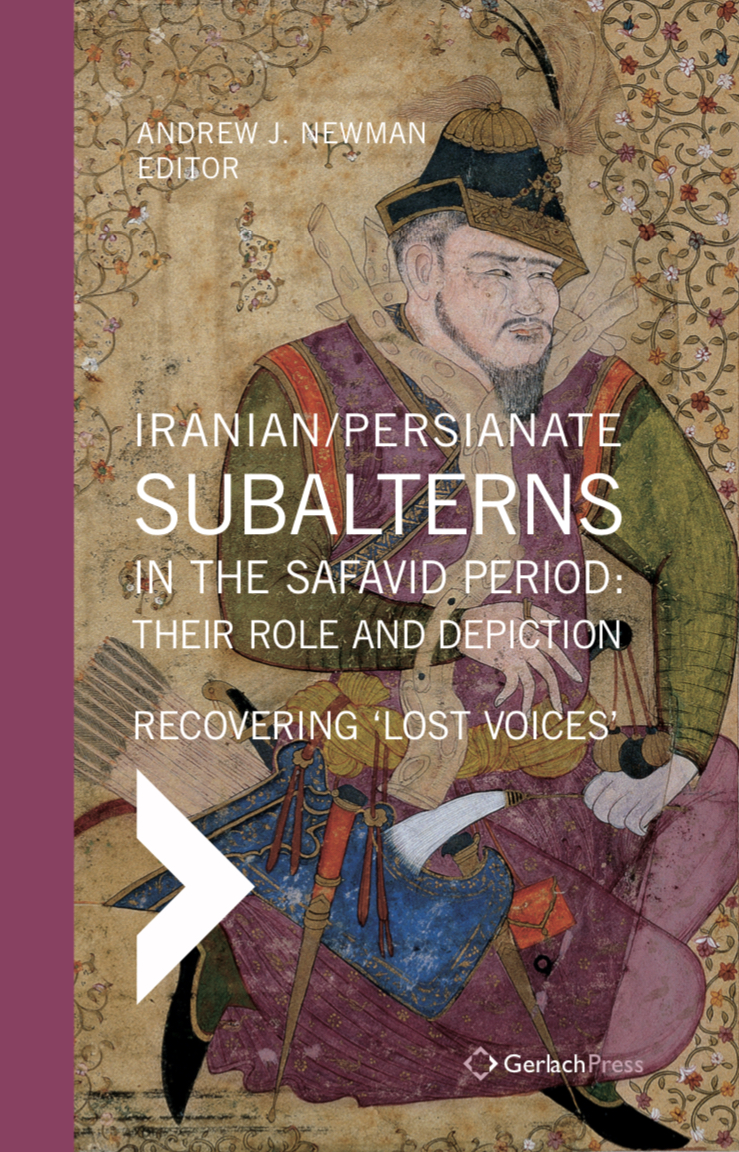
7. Iranian / Persianate Subalterns in the Safavid Period: Their Role and Depiction, Recovering ’Lost Voices‘
Editor: Andrew J. Newman
- June 11, 2022
- 0 Comment
Shii News – Open Access – ‘Manuscript Cultures of the Ismaili Communities and Beyond’ – W A Momin, ed.
- June 10, 2022
- 0 Comment
Shii News – Academic Items
1.HYBRID Book Launch and Discussion “Learning Morality, Inequalities, and Faith: Christian and Muslim Schools in Tanzania” by Hansjörg Dilger, Berlin Anthropology Seminar, Leibniz-Zentrum Moderner Orient, Free University Berlin, 8 June 2022, 4:00 pm – 6:00 pm CEST
The author explores the emerging entanglements of faith, morality, and the educational market in Dar es Salaam, thereby shedding light on processes of religious institutionalisation and their individual and collective embodiment. By analysing the politics of Christian-Muslim relations in postcolonial Tanzania, this book shows how the field of education has shaped the positions of highly diverse religious communities in diverging ways.
Information and registration: https://www.zmo.de/en/events/learning-morality-inequalities-and-faith
2. ONLINE Lecture “‘Authoritarian Democracy’ and the late Ottoman Empire: State, Power, and Civil Society in the Second Constitutional Period” by Erol Ülker (Işık University, Istanbul), Leibniz-Zentrum Moderner Orient, Free University Berlin, 13 June 2022, 4:00 pm CEST
This lecture aims to discuss the political and ideological character of the single-party rule that prevailed in the Ottoman Empire during the First World War. It addresses this topic by focusing on the formation of a corpo-ratist movement in the Second Constitutional Period (1908-1918).
Information and registration: https://hisdemab.hypotheses.org/seminarprogramme/2022-06-13-erol-ulker
3. HYBRID Webinar “Cryptocurrencies: How Will Islamic Finance and Law (fiqh) Adapt to the New Economic Paradigm?”, Centre for Islamic and Middle Eastern Law, SOAS, London, 15 June 2022, 6:00 pm – 8:00 pm GMT
Information and registration: https://www.eventbrite.co.uk/e/cryptocurrencies-how-will-islamic-law-adapt-to-the-new-economic-paradigm-tickets-335163812987?aff=ebdssbdestsearch
4. ONLINE Symposium “The Art of Incredible: Strategies Employed by Early Arab Poets to Sur-pass the Competitors” by Dr. Maxim Yosefi, University of Göttingen, 15 June 2022, 18:15-19:45 h CEST
Early Arab poets used to describe each quality in its completeness, and each function fulfilled in the poem got infinitely close to the limit. Poets tried to be most effective in conventional descriptions of ideal beauty, perfect she-camels and absolute hospitality and pugnacity of their tribes. The art of playing with the listeners’ imagination will be in the centre of discussion.
Information: https://www.uni-goettingen.de/de/657724.html
Zoom Link: https://uni-goettingen.zoom.us/j/68191031818?pwd=Q0FiR2w4cklkTEg0OWQxRnlFajFhQT09
5. International Conference “Mediterranean Mobility between Migration and Colonialism (19th-20th Centuries)”, University of Bologna, 11-12 November 2022 Deadline for abstracts: 29 July 2022. Information: https://mailchi.mp/mediterraneanseminar/cfp-mediterranean-mobilities-between-migrations-and-colonialisms-11-12-november-bologna?e=82aeb6c61d
6. Symposium “Animals as Worshippers of God First of All. On Animal Piety in Islam”, Paris, 16-17 November 2022
This symposium aims to consider the religious figure of the animal in Islam, neither as an object of worship (an idol) nor a means of worshipping (sacrificial offering), but rather as a fully-fledged subject, a worshipper of God and a model for all worshippers.
Deadline for abstracts: 30 June 2022. Information: https://apam.hypotheses.org/4200
7. Communications Coordinator for the Middle East Centre, LSE, London
The Centre seeks to hire a Communications Coordinator to work on all aspects of the Centre’s communi-cations, online presence (including developing a social media strategy) and designing publications. The post-holder will play a key role in regularly updating and improving the quality and reach of the Centre’s commu-nications work and impact.
Closing Date for Applications: 19 June 2022.
Information: https://jobs.lse.ac.uk/Vacancies/W/7372/0/349856/15539/communications-coordinator-mec
8. Summer Course “Romanization and Islamization in the Western Mediterranean”, Casa Árabe Córdoba, 18-22 July 2022
Experts from multiple international and national academic institutions would lead a selected group of students through the exciting history of the romanization and islamization of the Western Mediterranean over the course of a week. The courses would be taught in English.
Deadline for applications: 25 June 2022. Information: https://en.casaarabe.es/event/summer-course-romanization-andislamization-in-the-westernmediterranean
9. Summer Course “Arabic & Moroccan Arabic”, Al Minbar Institute, Rabat, 11 July – 19 August 2022
You can choose between Modern Standard Arabic or Colloquial Moroccan Arabic (Darija) or a hybrid solution.
Information: https://alminbar-institute.ma/mesana-6-weeks-july-application-form/
10. Articles on “Forces and Order. Police, Security and Surveillance in North Africa” for Journal “L` Année du Maghreb”, Research Dossier 30, Vol. II, 2023
This special issue aims to highlight sociological, anthropological and historical analyses of the various security systems: from the police institution to the more opaque surveillance mechanisms fostered by various institutionalised security professions (informers, militias, neighbourhood agents, etc.). Articles in English and French.
Deadline for abstracts: 1 September 2022.
Information: https://journals.openedition.org/anneemaghreb/10465
11. La célébration de la naissance du Prophète (al-mawlid al-nabawī) dans les mondes musulmans et en Occident : débats, pratiques et représentations
Projet de publication proposé par Farid Bouchiba et Myriam Laakili
Axe 1. Débats doctrinaux autour du mawlid à travers l’histoire; – Axe 2. Pratiques du mawlid : une approche socio-anthropologique; – Axe 3. Productions littéraires et artistiques Propositions d’article sont à envoyer avant 1er septembre 2022, Information : https://journals.openedition.org/remmm/16764?fbclid=IwAR0z6y08ptPUf7QW1WBh7KLHv9KWePGWusVRMVbRKypSkZqPmqEjzgVkGC8
12. Articles on “Speech, Speak Out, Crisis” for First Issue of Journal “Mutations en Méditerranée (MEM)”
We submit various lines of thought ranging from the Arab uprisings to the place speech occupies in social movements. Our contemplation of this topic ranges from the hierarchy of languages to the hierarchies of discourse, to the role of scientific discussion in society and within the restitution of an interviewees or respondents spoken word within the framework of research investigation in the humanities.
Deadline for abstracts: 15 June 2022, Information: https://somum.hypotheses.org/7810
13. Call for SAMSA Book Award and a symposium
A call for submissions for the second SAMSA Biennial Book Award and a call for abstracts for a symposium organized by the Tasavvur Collective.
The South Asian Muslim Studies Association (SAMSA) announces its second biennial SAMSA Book Award for a monograph published on the subject of South Asian Islam and Muslim societies during the calendar years of 2020 and 2021. Books from all disciplines in the Humanities and the Social Sciences will be considered. Only single-authored monographs are eligible; edited volumes, works of translation, literary fiction and short stories, or collections of poetry are not eligible. Monographs focused on all regions of South Asia (including Afghanistan) and time periods will be considered. Awards will be decided on the basis of the novelty of the book’s intervention in the field, its intellectual rigor and its clarity and quality of writing. Award recipient will be recognized at a SAMSA meeting and will be featured at a panel discussion. The award does not carry any monetary compensation. Submissions may be made by an author or by a publisher. To apply, please mail a copy of the book to Dr. Raisur Rahman, Department of History, P.O. Box 7806, Wake Forest University, Winston-Salem, NC 27109, USA no later than July 15, 2022. Additional copies of the monographs will be requested in due time. Applicants must also email rahmanmr@wfu.edu with the following information: book title, author email and phone contact, and publisher’s email and phone contact. Award will be announced in Spring 2023. For more information on SAMSA and a list of previous winners, click here.
The Tasavvur Collective is organizing a symposium in the summer of 2022 (provisionally August 5-6, 2022) titled ‘Writing Muslim Women in South Asia’. The symposium aims to make interventions in the monolithic discourse surrounding Muslim women by expanding on notions of self, identity, politics, agency, resistance, and much more, with particular reference to the experiences and representation of Muslim women in South Asian countries. Please send 300 word abstracts/presentation outlines including a short bio of not more than 100 words to tasavvurcollective@gmail.com. The deadline for submission of abstracts is July 1, 2022. More information can be found here.
In addition, the annual meeting of the Association for Asian Studies will be held in Boston, MA during March 16-19, 2022. The call for proposals is not out yet, but feel free to get in touch in due course, if you would like to propose a panel or a paper.
If you are into social media, please follow us on Twitter, thanks to our Social Media Coordinator Dr. Jaclyn Michael.
14. AMECYS Call for Papers:
Graduate Student Paper Prize
Submission deadline: August 1, 2022
The Association of Middle East Children’s and Youth Studies (AMECYS) calls graduate students engaged in the study of children and youth in the region to submit papers to the AMECYS graduate student paper prize. A cash prize of $100 will be awarded to the winner at the Middle East Studies Association (MESA) of North America’s annual meeting in Denver, Colorado, U.S.A, December 1-4, 2022
Papers can be submitted in any capacity that aligns with AMECYS’ mission statement:
The AMECYS is a private, non-profit, international association for scholars with an interest in the study of children and youth in the Middle East, North Africa and their diasporic communities. Through interdisciplinary programs, publications, and services, AMECYS promotes innovative scholarship, facilitates global academic exchange, and enhances public understanding about Middle Eastern children and youth in diverse times and places.
Requirements for submission:
- Papers should be original scholarship. However, papers readying for journal submission are acceptable (i.e., not yet submitted for publication or published).
- No more than 7,500 words (excluding endnotes and bibliographies)
- Standard font, Double-spaced, 1” margins, IJMES standards for endnotes and transliteration
- AMECYS membership in good standing
- Proof of registered graduate student enrolment for the 2021-2022 academic year may be requested at a later date
3 prior winners/honorable mentions of the award (Caroline Kahlenberg, Tory Brykalski, and Nada Berrada) will review all papers submitted by members of AMECYS that are received by the deadline of August 1.
Send submissions as a pdf or word doc to dylan.baun@uah.edu.
For any queries, email program chair at dylan.baun@uah.edu.
15. Zoom – The Shah’s Imperial Celebrations of 1971 Spotlighting an Author with Dr. Robert Steele
In this first comprehensive academic study of the 2500th Anniversary Celebrations, Robert Steele looks beyond the pomp and splendor to examine the events’ origins, the goals the organizers set out to achieve with them and the extent to which these goals were accomplished. The book seeks to place the Celebrations in the context of the Shah’s rise, rather than his fall, uncovering the unparalleled international cultural and scholarly operation that was spurred by the Iranian regime for the occasion, exploring the effects the event had on Iran’s tourism industry and questioning narratives of the event’s cost.
Join Dr. Robert Steele as he talks about his book “/The Shah’s Imperial Celebrations of 1971”.
Friday, 10 June, 1 pm EST
https://us06web.zoom.us/webinar/register/WN_SGXdVrrsRD-qCBj-NF7GKA
16. Video: Persia Exhibition @ Getty Museum
The Getty Museum in Los Angeles is currently displaying over 200 objects from ancient dynasties of Persia.
The exhibition has been warmly received but has had a controversial side too:
(BBC Persian coverage
- June 07, 2022
- 0 Comment
Shii News – Academic Items
1.US Department of Justice, Criminal Division
Historian (Middle East and North Africa)
The Human Rights and Special Prosecutions Section (HRSP) investigates and prosecutes international crime cases involving human rights violators, human smuggling organizations and extraterritorial violent crime over which the U.S. has jurisdiction.
Full information at: https://www.h-net.org/jobs/job_display.php?id=63437
Closing date: 16 August, 2022
2. Call for Expression of Interest: Pedagogy in International Development
Scholars in Global Development Studies (GDS) have long emphasized the importance of decolonizing teaching and learning, mainstreaming Diversity, Equity and Inclusion (DEI) in GDS pedagogy, and balancing the goals of student engagement and professional development with community interests in international experiential learning. But what does decolonizing, inclusive and critical GDS pedagogy look like in practice?
We invite you to contribute to a book to answer this question!
We envision this book as a practical guide to implementing innovative teaching and programming in the area of international development. It will include traditional written chapters, lesson plans, activities, and other teaching techniques, as well as a variety of creative media content (songs, videos, podcasts, art) that reflect the rich diversity of contributions and knowledge.
The book will be organized thematically across three sections:
- Global experiential learning on campus and beyond
- Decolonization and DEI in GDS pedagogy
- Critical Innovations in the GDS Classroom
For more information and to submit an expression of interest, please click here. Deadline for proposals is June 15
3. 3 year position for DH Research Associate
IDHN member Prof. Johann Büssow from Bochum University is offering a 3-year full-time position for a DH-Research Software Engineer (DH-RSE) / Research Assistant for the project “Late Ottoman Palestinians (LOOP)”.
The requirements include:
– Master’s degree (or equivalent) in the field of Digital Humanities, Computer Science, or in a Social Sciences and Humanities subject with extensive experience in the field of Digital Humanities
– Good programming skills in a modern programming language (e.g. Python, Java)
– Experience in Database design, data modeling, data analytics, data handling, HGIS, Social Network Analysis, Social Simulation, UX, and/or programming in HTML, CSS, JavaScript, or R.
Follow this link, to find out more.
Closing date: 13.06.22
4. Monday (6th June) at 5.15pm UK time
Alex Bevilacqua will speak on:
‘The Republic of Arabic Letters: Islam, the European Enlightenment, and Beyond’.
“In the seventeenth and eighteenth centuries, a community of Catholic and Protestant scholars laid the groundwork for the modern Western understanding of Islamic religion and culture. These men produced the first accurate translation of the Qur’an into a European language, mapped the branches of the Islamic arts and sciences, and wrote Islamic history using Arabic sources. The knowledge they generated was deeply indebted to native Muslim traditions, especially Ottoman ones. Eventually the translations, compilations, and histories they produced reached such luminaries as Voltaire and Edward Gibbon, who not only assimilated the factual content of these works but wove their interpretations into the fabric of Enlightenment thought. This lecture will present the main arguments of The Republic of Arabic Letters (Harvard University Press 2018), then consider critical engagements with its thesis and exciting new scholarship that has appeared since its publication. ”
Alexander Bevilacqua is assistant professor of history at Williams College, Massachusetts and author of The Republic of Arabic Letters: Islam and the European Enlightenment (Belknap Press, 2018), which was selected as one of the Times Literary Supplement books of the year and awarded the Herbert Baxter Adams Prize from the American Historical Association.
You can either join us in person at the Faculty of Asian & Middle Eastern Studies, Sidgwick Avenue, Cambridge, CB3 9DA
or Online via Zoom – https://teamup.com/event/show/id/zMRHSo7ni5YTzfcYp2GuQHFD6TEUYR
5. Séminaire « Sociétés, politiques et cultures du monde iranien »
Séminaire mensuel du CeRMI
Jeudi 9 juin 2022
Nous avons le plaisir de vous convier à la prochaine séance du séminaire “Sociétés, politiques et cultures du monde iranien” organisé par le CeRMI, qui aura lieu le jeudi 9 juin 2022 de 17h à 19h, en présentiel et sur Zoom. Nous serons heureux d’y accueillir Samra AZARNOUCHE (EPHE – PSL / CeRMI), pour une conférence intitulée :
Le complexe architectural de Bandiyān (Khorāsān septentrional) et son temple du feu : une réévaluation d’un monument sassanide
Abstract: Situé à quelques kilomètres de la frontière du Turkménistan au cœur d’une vallée verdoyante, le site sassanide de Bandiyān est exceptionnel à plusieurs égards : son emplacement géographique et stratégique idéal, un temple du feu dans un bon état de conservation, le matériel épigraphique qui désigne le complexe comme un dastgird (domaine seigneurial ou royal), et, par dessus tout, ses décorations en stuc figurant des scènes de chasse, de bataille, de culte et de banquet, d’une qualité rarement égalée dans le reste de l’Iran sassanide.
La datation du site – qui est resté en activité jusqu’au VIIe siècle – demeure incertaine, tout comme la fonction exacte de plusieurs des pièces du monument du Tepe A. Cette intervention propose dans un premier temps une synthèse de nos connaissances sur ce site depuis les fouilles conduites par Mehdi Rahbar. Puis seront exposées de nouvelles hypothèses concernant la localisation du domaine, l’articulation des espaces bâtis sur la base de données archéologiques centrasiatiques, et enfin l’interprétation d’une scène de culte zoroastrien sur le décor en stuc qui semble illustrer les préliminaires du sacrifice solennel.
Bibliographie indicative :
Azarnouche S., « A Zoroastrian Cult Scene on Sasanian stucco reliefs at Bandiyān (Daregaz, Khorāsān-e Razavī) », in Sasanian Studies: Late Antique Iranian World / Sasanidische Studien: Spätantike iranische Welt. Vol. 1, T. Daryaee et Sh. Farridnejad (ed.), Wiesbaden, Harrassowitz, 2022, p. 1-28.
Callieri P. F., Architecture et représentations dans l’Iran sassanide, Paris, Association pour l’avancement des études iraniennes, 2014.
Cereti C. G., “Once more on the Bandiān Inscriptions”, in Āfarīn-Nāmeh. Essays on the Archaeology of Iran in Honour of Mehdi Rahbar, Y. Morādi (ed.), Tehran, Pažuhešgāh-e Mirās-e Farhangi va Gardešgardi/Research Institute of Cultural Heritage and Tourism, 1398/2019, p. 149-156.
Gignoux Ph., “Le site de Bandiān revisité”, Studia Iranica 37, 2008, p. 163-174.
Rahbar M., “Découverte d’un monument d’époque sassanide à Bandian, Dargaz (Nord Khorassan). Fouilles 1994 et 1995”, Studia Iranica 27/2, 1998, p. 213-250.
Rahbar M., “Kāvosh-hāye bāstān-shenāsi-ye Bandiyān-e Daregaz”, Gozāreš-hāye Bāstānšenāsī 1, 1376/1998, p. 9-32.
Rahbar M., “Le monument sassanide de Bandiān, Dargaz : un temple du feu d’après les dernières découvertes 1996-98”, Studia Iranica 33/1, 2004, p. 7-30.
Rahbar M., “Bandiyān-e Daregaz dar fasl-e yāzdahom-e kāvosh-hāye bāstān-shenākhti”, Gozāreš-hāye Bāstānšenāsī 17/2, 2007, p. 131-154.
Rahbar M., “The Discovery of a Sasanian Period Fire-temple at Bandiyān, Dargaz,” in Current Research in Sasanian Archaeology, Art and History, Proceeding of a Conference Held at Durham University 2001, D. Kennet and P. Luft (eds.), Oxford, Archaeopress, 2008, p. 15-40.
Pour suivre la séance
– En présentiel : Salle 3.15, INaLCO, 65 rue des Grands Moulins, Paris.
– En distanciel (Zoom) :
https://zoom.us/j/92212834142?pwd=NVBDT2FHSi8zajYwc3hNSlhONmRPQT09
ID de réunion : 922 1283 4142
Code secret : CeRMI
6. In-person event: William Dalrymple in Conversation
Inaugural Bruce Wannell Memorial Lecture
in partnership with University of York, Jaipur Literature Festival, and BIPS
|18 June 2022, 5:30PM BST |
Join acclaimed historian, writer and broadcaster, William Dalrymple, as he reflects upon over three decades of scholarship on India, and its relationship with the East India Company and the Mughals. During this in-conversation, William will consider what his research reveals about the impact the British had on India.
This lecture is also a celebration of the life and scholarship of the adventurer, linguist and orientalist Bruce Wannell (1953-2020), who was both a friend and translator for William.
In-person only event. Free admission
Venue:
Room PZA/103,
Piazza Building,
Campus East,
University of York
More information and booking of tickets at:
https://yorkfestivalofideas.com/2022/calendar/william-dalrymple/
7. Lecturer in Modern Islam at King’s College London
Department of Theology & Religious Studies at King’s College London in the area of modern/contemporary Islam. Please see the link below for full details.
Closing date: 5 July 2022
Full details available at https://jobs.kcl.ac.uk/gb/en/job/046565/Lecturer-in-Modern-Islam
The Department of Theology and Religious Studies at King’s College London is seeking to appoint a Lecturer in Modern Islam starting on 1 September 2022. The post is open to candidates with expertise in Islam in the modern and contemporary world, whether in relation to theological, philosophical, sociological, anthropological, legal and/or political debates and dimensions. Applicants should have a good command of Arabic and/or another language relevant to Muslim majority contexts. The successful applicant will teach a range of modules on modern and contemporary Islam at BA and MA levels and should be willing to supervise PhD students. Different disciplinary backgrounds are welcome, but candidates must be able to teach and research within the context of a department specialising in the integrated, postcolonial study of theology and religious studies.
8. Open Islamicate Texts Initiative Seeking English-to-Arabic Translator
The Open Islamicate Texts Initiative (OpenITI) is seeking an English to Arabic translator. This person will work as a paid contractor with our team of experts to translate the white paper written for the OpenITI Arabic-script OCR Catalyst project. This position will run from July to August 2022. Candidates ideal for this position will be native Arabic speakers with a background in computer science or digital humanities. We especially encourage applications from individuals with prior experience in translation.
To apply, please send your CV or resume and a writing sample in English to openiti@umd.edu. The deadline for applications will be June 20, 2022 at 11:59 p.m. EST. For more information on this position, feel free to contact us at the above email address or visit our website at openiti.org.
9. New Books Network: Interview with Peter Mandaville, editor of Wahhabism and the World: Understanding Saudi Arabia’s Global Influence on Islam,
Oxford University Press, 2022
/To watch a video version of this interview on YouTube please click/<https://urldefense.proofpoint.com/v2/url?u=https-3A__email.mg-2Dd1.substack.com_c_eJwlUMtuhDAM-5FBpyK8qTTQ85tKr23ltvKA-5FDZgsJymMRf99QJNsH22PPjNUF5pgOtcVc0FnGcmygAux5gVIgoZohjd6pGyZMSoqcYu8GSzsgn8cpAazaL6qkCmirZvFWFx-5FDiaB8kFSihzIanAFjBzs5bqzkEhsrLJkGaQBzcT3W1XkIFhS8IB0xALJxXSGU8xZa1KOULXfso6P3Fvu-2D90espRro297Z0cU-2DOnZ-5FdewL359J-5FnymunwjryimFA-2D4JSdE9qwnjE1ai8aDTZKI947jdX5zpM-5FV5KLt73kSJTXPmbaZjUtdjdc9uHqKHE9iNfhyjBC0WcBd-2Dstl478j4wwBUrPXjbooMghOBMVSEEouuU2UuA1EMD6g9tbFhgrqqVfIq4spw-5FEHDKGLmQ&d=DwMFAA&c=009klHSCxuh5AI1vNQzSO0KGjl4nbi2Q0M1QLJX9BeE&r=bmZ4lT7HBpNlAfZo7Lzvn4FDxZWxoyZffV9kffzgwaM&m=wYcCSgPnng5Kd8qHlVs0oapI8Eb8hZzY4C1XuPVgbkp8_XDMMVqKhw2R1E2D2iPs&s=uwkf8OMZMVzHdQzz4VIgTY-9Cwyb4b7CgPJoZa6jVXA&e=>/here. <https://urldefense.proofpoint.com/v2/url?u=https-3A__email.mg-2Dd1.substack.com_c_eJwlUMtuhDAM-5FBpyK8qTTQ85tKr23ltvKA-5FDZgsJymMRf99QJNsH22PPjNUF5pgOtcVc0FnGcmygAux5gVIgoZohjd6pGyZMSoqcYu8GSzsgn8cpAazaL6qkCmirZvFWFx-5FDiaB8kFSihzIanAFjBzs5bqzkEhsrLJkGaQBzcT3W1XkIFhS8IB0xALJxXSGU8xZa1KOULXfso6P3Fvu-2D90espRro297Z0cU-2DOnZ-5FdewL359J-5FnymunwjryimFA-2D4JSdE9qwnjE1ai8aDTZKI947jdX5zpM-5FV5KLt73kSJTXPmbaZjUtdjdc9uHqKHE9iNfhyjBC0WcBd-2Dstl478j4wwBUrPXjbooMghOBMVSEEouuU2UuA1EMD6g9tbFhgrqqVfIq4spw-5FEHDKGLmQ&d=DwMFAA&c=009klHSCxuh5AI1vNQzSO0KGjl4nbi2Q0M1QLJX9BeE&r=bmZ4lT7HBpNlAfZo7Lzvn4FDxZWxoyZffV9kffzgwaM&m=wYcCSgPnng5Kd8qHlVs0oapI8Eb8hZzY4C1XuPVgbkp8_XDMMVqKhw2R1E2D2iPs&s=uwkf8OMZMVzHdQzz4VIgTY-9Cwyb4b7CgPJoZa6jVXA&e=>/
/A podcast version is available on Soundcloud, <https://urldefense.proofpoint.com/v2/url?u=https-3A__email.mg-2Dd1.substack.com_c_eJwlUUmu6yAQPE3YYTE6ZMHibf41LIaOzQsGiyGRb-5F-5Fxi0QjdfVY1c40WHM59ZFrQ9e3tPMAneBTI7QGBfUKZQle3wnlSjHkNX9YotyMQl2eBWA3IepWOqCj2xicaSGnq4KJWTGFNs1n97BKeAvGA7C7pFRxoEwo4QQQ8R1sug-2DQHGh4QzlzAuTyvkNqVy8U9dbaUW-5F858b-2DjVdzT97F3P000gZw7Ymp5IJJQh8DGBywzflVcYL2yeWFQxqE3mHgn9A2fMBw8W6SN-2D8QI2DwoeWC8xN-5FzLYZG-2DqORxS3DfBoED0KmhHGyEyGicFi4hPl-5FGmMFIrwp6LycRNkX7GnU-2D22NuNe136o6HWtbMRcjn23wUzg-2DyXYcpHsKbRzgWRsBP-5FVsn1P8qfuskKCMk7lF9M0naWgkhElKaNf6YZA8j5f5Gc0xvo8qpL-2DNTvU3edS4fwPbUymxw&d=DwMFAA&c=009klHSCxuh5AI1vNQzSO0KGjl4nbi2Q0M1QLJX9BeE&r=bmZ4lT7HBpNlAfZo7Lzvn4FDxZWxoyZffV9kffzgwaM&m=wYcCSgPnng5Kd8qHlVs0oapI8Eb8hZzY4C1XuPVgbkp8_XDMMVqKhw2R1E2D2iPs&s=f6MYlXSCeB-Y8-aGgO1P0JbYKCaUNiV5NkBmSOvDSII&e=>Itunes <https://urldefense.proofpoint.com/v2/url?u=https-3A__email.mg-2Dd1.substack.com_c_eJwlkUluxSAMhk8TdomYy1uwqFT1GhGDk0dLIGJolduX9EnYssD-2DjT8702DP5dJnrg3dbm3XCTrBb43QGhTUK5Q1eP2GCVOKIq-5FZw2LlJAp13QrAYULUrXRAZ7cxONNCTncF5VJRhZ4ajJAeGOXUCmWdEpZtFKyRDyUcJ-2DrV2HQfIDnQ8APlygmQy8cBqd1aKOpna2ed2PtEP8cJrSeoiznPCMtIHFe9Dndm70xtI2pPmFsvtsehMf-5FmEv2ct-5FkI3keYYSTNNTsH5VbzhDPJGcZSTuzzaBP7oChoiinFEg-5FjhKiFLYSxzRjBFWabIuIxcXzssydL7bY2477vv6Ci973S8eZy7IcNZgHfbzzrPVJPoV0rJGMj-2DBe59lrAP8t1hwRlLMavpmkiBSeCYiUIJS9QA4d4k0QwLtFo6-5FOoSvrLHFAPn0uF6w-5FpOJ3D&d=DwMFAA&c=009klHSCxuh5AI1vNQzSO0KGjl4nbi2Q0M1QLJX9BeE&r=bmZ4lT7HBpNlAfZo7Lzvn4FDxZWxoyZffV9kffzgwaM&m=wYcCSgPnng5Kd8qHlVs0oapI8Eb8hZzY4C1XuPVgbkp8_XDMMVqKhw2R1E2D2iPs&s=Vfl_WAcddBTVGqfW5CevWDhMuSPJjZvcGfvhKmbUhgc&e=>, Spotify <https://urldefense.proofpoint.com/v2/url?u=https-3A__email.mg-2Dd1.substack.com_c_eJwlUMluxSAM-5FJrHrRFLSODAoVJbqefeeokImDxeE0hZWuXvSxrJi2R7bM8YXWCJ6VB7zAWdYSrHDirAb16hFEioZkiTt2rEhAlBkVVMzliYAfk8uQSwab-2Dqkiqgvc6rN7r4GE4E7QdBBborOcphdESPTGDHNKGzc5xhTXAvDZdwHdbVeggGFPxAOmIAZOK2QSjnLrSqeyl7vrHnG31rFncIXd5j8e7o2mAr5Xv8bYmKj0eV78579-5FL56heSvkcpkFcUU4oH3LwnRHSsI4w5rXkvMHOCcHnr8bY8WdLlOueizde5GCW1LJm2nolr3WavO7D15Dqd-5F9XgyzFB0PMK9pKhXGr-2DCzMtECA1le2kiyID7wmnWHBCycW6cePjQDjrB9TO2thQQT30BnmzMWU4-5FgDqdYw-5F&d=DwMFAA&c=009klHSCxuh5AI1vNQzSO0KGjl4nbi2Q0M1QLJX9BeE&r=bmZ4lT7HBpNlAfZo7Lzvn4FDxZWxoyZffV9kffzgwaM&m=wYcCSgPnng5Kd8qHlVs0oapI8Eb8hZzY4C1XuPVgbkp8_XDMMVqKhw2R1E2D2iPs&s=GwWjQwjtqMhxz23lsvRAxW4b6_fDUoAxoLzedV1Bijg&e=>, Spreaker <https://urldefense.proofpoint.com/v2/url?u=https-3A__email.mg-2Dd1.substack.com_c_eJwlUEluxCAQfM1wi8ViGObAIZd8w2qg7SGxwWKJ5d8Hx1IvUq9V5aDikvJp9lQqucJUzx1NxKOsWCtm0grmKXjzpExozYk34mWpdoqEMs0ZcYOwmpobkr3ZNTioIcVrg49Kc03eRlkJL-5FQU5vn5dMAcBWu54oh2Riv8-5FRiaDxgdGvzFfKaIxKVtw1ivW2Q171r38hCfD-5F7V7TiOoewZ4Qfz0Ad76ULa0xY8QqklOdfhB8Mp51TR7iNjehADE2IGkKOmYtZMvh4j3ZYPz4bSbKngfq57JJtlKbz3XFrbZgMM6NtFcbpgtRjqOWEEu6K-5F2ddbxH89pgUj5i6un6AapuTIJKdaMs5usp2SfComxahIf-2DtT34rmGzYsm0-2D54PkH9TKMRA&d=DwMFAA&c=009klHSCxuh5AI1vNQzSO0KGjl4nbi2Q0M1QLJX9BeE&r=bmZ4lT7HBpNlAfZo7Lzvn4FDxZWxoyZffV9kffzgwaM&m=wYcCSgPnng5Kd8qHlVs0oapI8Eb8hZzY4C1XuPVgbkp8_XDMMVqKhw2R1E2D2iPs&s=2agzHZyzlomOIgbvvkiVdTcEoYefifgg5uv6xAnty0s&e=>, and Podbean. <https://urldefense.proofpoint.com/v2/url?u=https-3A__email.mg-2Dd1.substack.com_c_eJwlUUuO7CAMPE2zIwrk02TBYjbvGpEBJ2E6QAROt3L7R6YljGRKVabKFgjXlC99pELsvma6DtQRP2VHIszsLJhn7-5FSzFZ1SkjndTaZVdmS-2DzEtGDOB3TflEdpxm9xbIp3gzZD8qqdimRT9MQnUTjNNgDPSLQDQIT2P6FiXa72A4ncdoUeMb85UiMptCwEi3Ftv1RnSUR-5FfzkP-5FqCd4hFCrJWszNkVwVjE1lVAxrVQfcpPQqPCJ9Un5xH6udt6-5FvH08bP7C2PEB08Pb7jhydp5R5WvgHtg2ML4FXlNOGvArsrqoyr2UrZTu2tXohVNM1ousWgKFXbbcoMUyPvg0rd6IppykE9nX-5FimW9rkVWzKb9DMZDg-2D68E5tvl2f0dM0YwezovmHSdyd-5F8c4rRsx1V24G0mIcejHIVg1Cim92NaHhOYqh60dWx7pUWVH-5FQsASXMoFr-5F84LajJ&d=DwMFAA&c=009klHSCxuh5AI1vNQzSO0KGjl4nbi2Q0M1QLJX9BeE&r=bmZ4lT7HBpNlAfZo7Lzvn4FDxZWxoyZffV9kffzgwaM&m=wYcCSgPnng5Kd8qHlVs0oapI8Eb8hZzY4C1XuPVgbkp8_XDMMVqKhw2R1E2D2iPs&s=4lBQIHASpGOruwgn1rI3qT7nsdFNjt5zRjIilT7lsgw&e=>/
10. New Podcasts – New Books Network (NBN)
New Books Network (NBN) has three new podcasts: Eiren L. Shea on her book Mongol Court Dress, Identity Formation, and Global Exchange (2020) https://newbooksnetwork.com/mongol-court-dress-identity-formation-and-global-exchange and Lisa Reilly on her investigation into the Normans in the book The Invention of Norman Visual Culture: Art, Politics, and Dynastic Ambition (2020) https://newbooksnetwork.com/the-invention-of-norman-visual-culture . In the most recent podcast: Amanda Phillips on her book Sea Change: Ottoman Textiles between the Mediterranean and the Indian Ocean (2021) https://newbooksnetwork.com/sea-change
11. Conference Announcement – International Qur’anic Studies Association (IQSA) Annual Meeting – 5-7 September 2022
The 2022 International Qur’anic Studies Association (IQSA) Annual Meeting will take place in Parlermo, 5-7 September 2022- FSCIRE – La Pira Library and Research Centre.
The International Qur’anic Studies Association will hold two Annual Meetings in 2022: IQSA in Palermo, Italy from September 5–7 hosted by the Giorgio La Pira Library and Research Centre, and IQSA in Denver, Colorado from November 18–21 held in conjunction with the Society of Biblical Literature (SBL) and American Academy of Religion (AAR).
See https://iqsaweb.wordpress.com/annual-meeting-2022/
For the Palermo programme, see
https://iqsaweb.wordpress.com/palermo-italy/
- June 04, 2022
- 0 Comment