
Archive for September, 2022
- September 30, 2022
- 0 Comment
Shii News – ‘Al-Šarīf al-Murtaḍā’s Oeuvre and Thought in Context’ (H Ansari, S Schmidtke)
- September 30, 2022
- 0 Comment
Shii News – Apologies for Technical Problems
Editor’s note – Please accept my apologies for a technical glitch that resulted in some subscribers not receiving postings, in some cases for some time. The problem has been identified and fixed. But, the reset means that some of these subscribers may receive a number of back postings all at one go or in rapid succession. If this does happen, may I ask for your patience…things should settle down shortly.
- September 29, 2022
- 0 Comment
Shii News – CfP: Turkish Journal of Shiite Studies
Submission of articles for the new issue (December 31, 2022, Volume:4, Issue:2) continues to Nov 30.
Turkish Journal of Shiite Studies is double-blind peer reviewed and no fee is requested from the author before or after publication.
- September 28, 2022
- 0 Comment
Shii News – Academic Items
1.ONLINE Webinar “Ukraine from Ottoman Times to Today“, University of California, Davis, 30 September 2022, 9:00 am – 10:30 am Pacific Time
Nihat Çelik (San Diego State University), Dilyara Agisheva (Harvard University), and Oleksandr Halenko (İstanbul Üniversitesi) will speak about “The Russian Annexation of Crimea in 1783,” “The Making of Colonial Space in Crimea in the Late 18th and 19th Centuries,” and “History or Life: The Ottoman Past that Tempted Russia to Invade Ukraine.” Victor Ostapchuk (University of Toronto) will chair the panel and moderate the open discussion.
Information and registration: https://ucdavis.zoom.us/meeting/register/tJcudOCupjMoH9QOyjHHq7Xc96uylaO6ea8M
2. HYBRID Annual Islamic Philosophy Conference of the American Society of Islamic Philosophy and Theology on “Islamic Philosophy and Theology in Contemporary Engagements”, Harvard University, 2-4 December 2022
We invite academic studies of scholars, methods, institutions, texts, and topics typically considered within the domain of philosophy, as well as those that treat kalam-theology, Islamic legal philosophy (usul al-fiqh), or other intellectual trends that at times may be seen as distinct from philosophy. Papers may be within specific disciplines (Philosophy, Islamic Theology, Religious Studies, etc.) or may be interdisciplinary.
Deadline for abstracts: 20 October 2022. Information: https://mesana.org/resources-and-opportunities/2022/09/23/annual-islamic-philosophy-conference
3. Workshop “Theorizing Jewish-Arab Transculturation”, Heidelberg Center for Jewish Studies, 7-9 February 2023
Co-organized by the Heidelberg Center for Jewish Studies, the Heidelberg Center for Transcultural Studies and the Van Leer Jerusalem Institute, the workshop will bring together scholars interested in Jewish-Arab relations from a transcultural perspective – from medieval times to the present.
Deadline for abstracts: 15 October 2022. Information:
4. 10 PhD Students in Humanities, Social Sciences, and Area Studies for the Doctoral Program of the Berlin Graduate School Muslim Cultures and Societies, Humboldt-Universität zu Berlin, and Leibniz-Zentrum Moderner Orient
The Graduate School investigates the plurality, changeability, and global connectedness of Muslim cultures and societies. Applications with a focus on strategies of negotiating diversity, difference, and distinction, both among Muslims and between Muslims and non-Muslims are especially encouraged. Our language of instruct-tion and communication is English.
Deadline for applications: 1 November 2022.
Information: https://www.bgsmcs.fu-berlin.de/application/call_for_applications/index.html
5. Tenure-Track Assistant Professor of History in Late Medieval/Early Modern Middle East, Northwestern University, Evanston, IL
We are particularly interested in scholars with research agendas focusing on comparative empire, mobility, race and gender. Applicants must have earned a Ph.D. in History or an adjacent field by the time of appoint-ment, or shortly thereafter.
Deadline for applications: 20 October 2022.
Information: https://history.northwestern.edu/about/news/late-medievalearly-modern-middle-east.html
6. New International MA Program in Middle East Studies (MAPMES): “Intertwined Worlds: Jews, Christians, and Minorities in Islamic Societies”, Ben-Gurion University of the Negev, Israel
One year MA program, with a special focus on minority religious communities and inter-religious relations taught in English.
Program launch in October 2023. Registration will open in January 2023.
Information: https://in.bgu.ac.il/en/international/Pages/Middle-East-Studies.aspx
7. Chapters for Edited Book on The Crusades : Historiography, Settlements, People and Roads (11th– 14th Centuries)
Topics: The origin of the idea of crusade; Crusades historiography: eastern and western sources; Battles: The Crusades of 1096-1291; Alliances and Conflicts; Settlements: Crusader States (County of Edessa, Principality of Antioch, County of Tripoli, Kingdom of Jerusalem, Kingdom of Cyprus); Roads: Crusades army route: sea and land roads from Clermont to Jerusalem; Byzantine Empire, Constantinople and the crusades.
Deadline for abstracts: 3 October 2022. Information: https://mailchi.mp/mediterraneanseminar/call-for-articles-the-crusades-historiography-settlements-people-and-roads-11-14th-centuries?e=82aeb6c61d
8. Race and the Middle East/North Africa Mellon Sawyer Seminar: Marie Grace Brown: “Finding Black Joy in the Anglo-Egyptian Sudan”
Thursday, September 29 at 5:00 PM – 7:00 PM
Skylight Room on the 9th Floor, The Graduate Center, CUNY (365 5th Avenue, New York NY 10016)
Where do we find Black joy in the archive? How do we evaluate claims of interracial affection or friendship made by white imperialists? Using case studies of servants, sex, and food, Marie Grace Brown addresses these questions and more in her examination of everyday life in the Anglo-Egyptian Sudan. She argues that the search for Black joy—whether we find it or not—is a new, critical responsibility for today’s racially conscious scholars.
Marie Grace Brown (Ph.D. University of Pennsylvania, 2012) is a cultural historian of the Modern Middle East with a special interest in questions of intimacy, gender, empire, and the body as historical text. Her award-winning book, Khartoum at Night: Fashion and Body Politics in Imperial Sudan (Stanford University Press, 2017), traces gestures, intimacies, and adornment to give a history of northern Sudanese women’s lives under imperial rule. Brown’s second book-length project, “A World of Color: Adventures in Romance in Imperial Sudan,” continues the exploration of the relationship between bodies and imperial power. Brown’s work has been supported by grants from the American Association of University Women, the Social Science Research Council, and the Woodrow Wilson National Fellowship Foundation.
This event will also have a Zoom option for those unable to attend in person, registration is required: https://gc-cuny.zoom.us/meeting/register/tJYpc-6grTIrGNb5MCa-AS3hOcvtUy2Uncic
https://racemena.gc.cuny.edu/event/09-29-2022-finding-black-joy-in-the-anglo-egyptian-suda…
- September 27, 2022
- 0 Comment
Shii News – Academic Items
1. Socio-spatial Marginalization in Islamic Contexts: Architectural Conditions and Active Approaches
Thursday, October 27, 2022
11:00 am–12:30 pm CDT
Free & open to the public
This program will be recorded. Registrants will receive a link to the video after the event.
Temporary architectures, adaptive tactics, the large- and small-scale movement and relocation of people, and concerted programs of colonization and razing shape sites and spaces of marginalized communities in Islamic contexts. People may be marginalized for reasons of religious practice, gender, ethno-linguistic identification, nationalist policies, conflict, environmental shifts, or other factors, with the result that they have limited access to certain resources and live their lives, seek places of worship, assemble support systems, and adopt and adapt the built environment in specific ways. Architectures created by the forces of marginalization include buildings on the urban outskirts and the borderlands of states, makeshift housing and services in the socio-economic badlands, and solutions to the need for space enacted in the “in-between” of ad hoc adaptations.
The impetus for our panel comes from our collective work to understand the marginalization of communities in Islamic contexts around the globe through the built environment, as well as from our active engagement with the selfhood, rights, and safety of women, children, minority denominational communities, sectarian groups, racialized people, and even those questioning their own socio-political and scholarly dominance.
According to UN statistics, migration disproportionately impacts states with majority Islamic populations, and the primary host countries for refugees are also largely Muslim. These dynamics have historical roots, and when combined with environmental and economic factors, can lead to marked changes in the architectural fabric, the exclusion and erasure of undesired peoples and their narratives, and a misunderstanding of how the built environment functions.
Our panel includes architects, visual artists, and scholars working to understand, address, and confront the conditions of marginalization embodied in architecture in Islamic contexts as part of their practice, teaching, research, and activism.
2. Publication Announcement – Karl Stowasser’s translation of al-Maqrīzī’s Khiṭaṭ
Karl Stowasser’s partial translation of al-Maqrīzī’s Khiṭaṭ is now available for download (Open Access: https://hdl.handle.net/2268/237608):
Al-Maqrīzī: Book of Exhortations and Useful Lessons in Dealing with Topography and Historical Remains (al-Khiṭaṭ). Translated and annotated by Karl Stowasser (d. 1997). Parts I-II in 3 vols. Edited by Frédéric Bauden and Clopper Almon with an Introductory Essay by Frédéric Bauden. Liège, 2022.
This translation covers a bit more than the first half of the first volume of the Khiṭaṭ in the Būlāq edition, ending with page 285, and volume 4 of the Wiet edition. It will serve as a basis for a new critical edition with an annotated English translation in the frame of the Bibliotheca Maqriziana project published by Brill.
3. Online Symposium – The Sasanians in Context: Art, History, and Archaeology, NMAA – October 21-22, 2022
Join the Smithsonian’s National Museum of Asian Art on October 21 and 22, 10 am-5 pm EST daily, for The Sasanians in Context: Art, History, and Archaeology.
This is a hybrid event: In-person attendees register on eventbrite here / Virtual attendees register on Zoom here.
Between the third and seventh centuries CE, the Sasanian Empire became one of the most dominant powers in the ancient world, extending geographically from Western to Central Asia. From monumental buildings and impressive rock reliefs to elaborately designed metal vessels and finely carved seals, these structures and objects provide a glimpse into the empire’s artistic diversity and its rich material culture. Recent scholarship has further expanded our knowledge of the Sasanian empire and has confirmed its enduring legacy beyond its geographic borders, long after the Arab conquest in the seventh century.
The Sasanians in Context: Art, History, and Archaeology gathers some of the most renowned national and international scholars to share their recent work on the Sasanians and their lasting artistic and historical contributions.
This symposium is generously supported by the Tina and Hamid Moghadam Fund and is organized in collaboration with the University of California, Irvine.
4. The 2022 BRISMES Annual Lecture will be given by Professor Nadje Al-Ali (Brown University). Nadje Al-Ali is Director of the Center for Middle East Studies at Brown, where she is also Robert Family Professor of International Studies and Professor of Anthropology and Middle East Studies. Her main research interests revolve around feminist activism and gendered mobilization, mainly with reference to Iraq, Egypt, Lebanon, Turkey and the Kurdish political movement.
The title of the lecture will be Feminist Dilemmas and Ambivalences: Gendered and queer perspectives on the Middle East.
Date: 22 November 2022, 17:30-19:00 (GMT)
Location: Online (via Zoom)
More information and registration: www.brismes.ac.uk/events/annual-lecture/2022
5. The Islamic College
Postgraduate Studies Certificate in Islamic Philosophy
Three Semesters (full-time) & Six Semesters (part-time)
18:00 -20:30 (London Time)
Starting: 14 November 2022
Application Deadline: 15 October 2022
Fees: £1500 (All students are eligible for a scholarship of up to 50%)
https://www.islamic-college.ac.uk/psc-islamic-philosophy/
6. Funds: The J.B. Harley Research Fellowships in the History of Cartography: call for applications (Deadline: 1st November)
The Harley Fellowships – the only one of their kind in Europe – provide support for those working on the history of cartography, from any discipline, doing the equivalent of post-graduate level work in the historical map collections of the United Kingdom. Awards range up to £2000. Website: http://www.maphistory.info/harley.html
The J.B. Harley Fellowships were set up in London in 1992 in memory of Brian Harley (1932-91). Prof. Harley was founding co-editor of the History of Cartography Project and the leading theoretical thinker in the field.
Applications are invited from anyone pursuing advanced research in the history of cartography, irrespective of nationality, discipline or profession, who wishes to work in London and other parts of the United Kingdom. While independent of them, the fellowships are run in association with the four institutions in the London area that, together, hold the greatest number of early maps, namely: British Library, The National Archives, Royal Museums Greenwich and Royal Geographical Society.
The closing date for applications is 1st NOVEMBER. The Fellowship website has an application page that should provide all the necessary information as well as answering many frequently asked questions: http://www.maphistory.info/application.html . Please indicate in your application if you are a postgraduate or an early career researcher within five years of completion of your PhD.
It would be helpful if you could say where you saw this notice. Please forward to others who might be interested.
Contact Info:
Tom Harper
Honorary Secretary, J.B. Harley Fellowships, Lead Curator of Antiquarian Mapping, The British Library
Contact Email:
URL:
http://www.maphistory.info/harley.html
7. New Publication – Lüsterkeramik. Schillerndes Geheimnis / Luster Ceramics. Shimmering Secret, Museum für Islamische Kunst
Dear Friends of the Museum für Islamische Kunst,
We are pleased to announce our latest publication Lüsterkeramik. Schillerndes Geheimnis / Luster Ceramics. Shimmering Secret
The volume aims to explore the fascination of the shimmering shine of luster ceramics by illuminating the history of this special ceramic technique up to the present day. The starting point is the restoration of a unique Iranian luster vase of the thirteenth century, which the Peter and Irene Ludwig Foundation has given to the Museum für Islamische Kunst in Berlin on permanent loan.
The 98-page publication is bilingual in English and German.
Table of Contents
- Preface Peter and Irene Ludwig Foundation: Benjamin Dodenhoff
- Foreword: Stefan Weber
- Introduction: Martina Müller-Wiener
- The Reconstruction of the Reconstruction: Stephanie Fischer
- Mastery Has Many Facets – A Monumental Luster Vase in the Museum für Islamische Kunst: Martina Müller-Wiener
- Luster – the Secret of the Shimmering Ceramic: Deniz Erduman-Çalış
- Interview with Master Potter Abbas Akbari
- Image of Architecture with God’s Word – The Luster Tile Panel of a Prayer Niche from Kashan: Markus Ritter
- Friedrich Sarre’s Gift to Munich – A Collection of Lusterware from Rayy: Miriam Wallner
- Shards That Reveal (Hi-)Stories – Egyptian Lusterware of the Eleventh and Twelfth Centuries: Miriam Kühn
- The Consumption and Reception of Iberian Lusterware – Medieval to Contemporary: Mariam Rosser-Owen
- Luster Glaze – Thoughts of a Master Potter from Iran: Abbas Akbari
Check for the restoration of the luster vase also: https://www.youtube.com/watch?v=gXVeDxbp4M8
The restoration and publication were sponsered by Peter und Irene Ludwig Stiftung Aachen https://ludwigstiftung.de/
8. Great Lakes Adiban Society Workshop 2022
I’m pleased to invite you to this year’s Great Lakes Adiban Society Workshop on October 1-2 at the University of Chicago. Online participation is also an option. You will find below details including the panels, paper titles, and associated times. Please feel free to circulate the program more broadly. If you have any questions, please email greatlakesadibansociety@gmail.com. We are very much looking forward to your participation.
- Dates and times:
Saturday, October 1, 9:00am–3:30pm (Central Time)
Sunday, October 2, 9:00am–4:15pm (Central Time) - Physical location:
Foster Hall 103
1130 E 59th St
Chicago, IL 60637 [link to map] (visitor parking available nearby)
- Remote participation:
On registering at [tinyurl.com/glas2022]tinyurl.com/glas2022 , you will receive a confirmation email containing information about joining the meeting.
Saturday, Oct 1
On Persia, Persian, and Persians (09:15-10:45)
09:15-10:00: Jeson Ng (U of Chicago), Arab roots in a Persian land: Saljuq panegyrists and the negotiation of ethnic identity in the eleventh century
10:00-10:45: Shaahin Pishbin (U of Chicago), Persian and the Cosmos: Iranophilia in Akbar’s Hindustan
The Politics of Translation in Persianate South Asia (11:00-12:30)
11:00-11:45: Justin Smolin (U of Chicago), Religion As a Question: The Tauḍīḥ al-milal and Mughal Political Theology
11:45-12:30: Zoë Woodbury High (U of Chicago), Translating the new taste: Rasa, movement, and multilingualism in Ibrahim ʿAdil Shah II’s Kitāb-i nauras
Islamicate Poetics of Time and Place (14:00-15:30)
14:00-14:45: Rama Alhabian (Hamilton College), The Poetics of Contingency in Ḥarīrī’s “Maqāma of Oman”
14:45-15:30: Cameron Cross (U of Michigan, Ann Arbor), Call Him Diyanus in Greek! The Correlating of Pagan and Islamic Knowledge in ʿUnsurī’s Vāmiq-u ʿAzrā
Sunday, Oct 2
Islamicate Editorial & Critical Practices (09:15-10:45)
09:15-10:00: Shiva Mihan (Princeton U), Text transmission and editing in 15th-century Iran under the Timurids
10:00-10:45: Shahla Farghadani (U of Michigan, Ann Arbor), The Earliest Critics: The role of rhetoric in the creation of a proto-literary canon
Adab & the Paratext (11:00-12:30)
11:00-11:45: Seher Agarwala (Colombia U), Between word and image: Illustrated manuscripts and the construction of ethics in sixteenth-century Golconda
11:45-12:30: Manpreet Kaur (Colombia U), Scenographic Strategy as Literary Technique: Framing the teacher-student relationship in the Sufi malfūẓāt genre in South Asia
The Adab of Disclosure & Recitation (14:00-15:30)
14:00-14:45: Zach Winters (U of Chicago), Speaking Too Freely with Āẕarī Isfarāyinī (d. 866/1461-2)
14:45-15:30: Fateme Montazeri (UC Berkeley): Zikr and ‘Aqd-i Nikah: Forgotten functions of Persian quatrain
Closing Discussion (15:30-16:15)
- September 24, 2022
- 0 Comment
Shii News – CfP: ‘Workshop on Alevi Historiography’ (Leipzig, 5-7.10.23)
Deadline for abstracts: 8 November 2022.
Information: https://www.gkr.uni-leipzig.de/fileadmin/Fakult%C3%A4t_GKR/Religionswissenschaftliches_Institut/Dokumente/Alevi_Pasts_-_call_for_papers.pdf
- September 23, 2022
- 0 Comment
- September 22, 2022
- 0 Comment
- September 21, 2022
- 0 Comment
Shii News – The Passing of Franklin Lewis
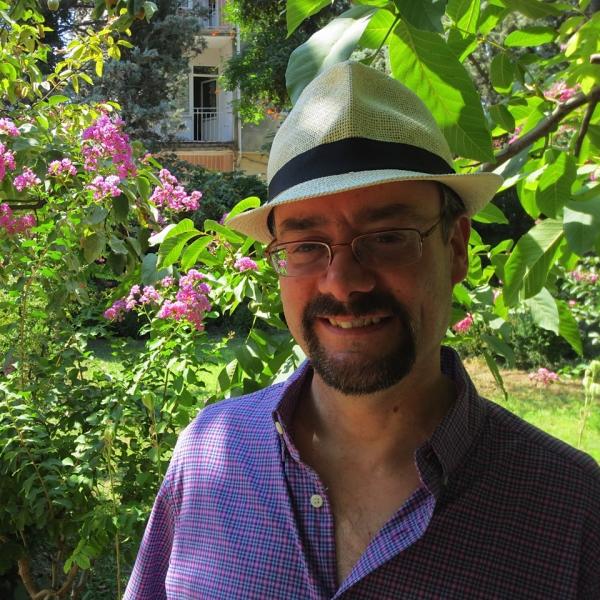
The very sad news of the passing of Professor Franklin Lewis, of the University of Chicago, is being reported via the Adabiyat list.
- September 20, 2022
- 0 Comment