
Archive for April, 2021
- April 13, 2021
- 0 Comment
Shii News – Academic Items
1.ONLINE Book Introduction “Familiar Futures: Time, Selfhood, and Sovereignty in Iraq” by Sara Pursley, Centre for Middle East Studies, Brown University, AMEWS, 15 April 2021, 12:00 pm – 1:00 pm EST
This book considers how the country’s creation under British mandate rule in 1920 through the 1958 revolution to the first Ba’th coup in 1963 reshaped Iraqi everyday habits, desires, and familial relations. Future-oriented discourses about the importance of sexual difference to Iraq’s modernization worked paradoxically, deferring demands for political change in the present and reproducing existing capitalist relations.
Information and registration: https://watson.brown.edu/cmes/events/2021/sara-pursley-familiar-futures
2. ONLINE Conference: “Gulf Research Meeting 2021”, Gulf Research Center (GRC), University of Cambridge/UK, 23-24 July 2021
The workshops cover a wide range of topics in the fields of politics, energy, security, and the wider social sciences as they relate to the wider Gulf region (GCC countries in addition to Iraq and Yemen).
Information: https://www.gulfresearchmeeting.net/
3. Open Panels for the “27th International Congress of the German Middle East Studies Association (DAVO)” Institute for Islamic Theology, University of Osnabrück, 16-18 September 2021
If you are interested in organizing an open panel for this congress and look for paper presenters, you are kindly requested to send the title and summary (up to 300 words) to the General Secretary of the congress, Amke Dietert (amke.dietert@googlemail.com) before 15 April 2021.
Deadline of submissions: 15 May 2021.
Information: https://www.irp-cms.uni-osnabrueck.de/en/events/27th_international_davo_congress.html
4. Conference on “Translation and Transfer” of the Network “Eastern European-Ottoman-Persian Mobility Dynamics”, University of Marburg, 6-9 October 2021
The conference will stress the pragmatic implications of the translation of texts in its narrower sense and the translators involved in activities across or within the Transottoman focus region. For a closer look at this and the multiple projects within this framework, please visit our website at www.transottomanica.de.
For further information, contact florian.riedler@uni-leipzig.de.
5. Seminar “Reassembling Creation: Green Ethics (GE) and the Scholarly Disciplines in the Islamic Tradition”, Research Center for Islamic Legislation and Ethics (CILE), Doha, 12-14 October 2021
The seminar is convened by Dr. Birgit Krawietz (Freie Universität Berlin) in collaboration with Dr. Mohammed Ghaly (CILE). The papers will be published as part of a thematic issue of the “Journal of Islamic Ethics (JIE)” and/or an edited volume in the peer-reviewed book-series “Studies in Islamic Ethics”, both published by Brill.
Extended deadline for abstracts: 30 June 2021. Information: https://www.cilecenter.org/resources/news/call-research-papers-reassembling-creation-green-ethics-ge-and-scholarly-disciplines
6. 3rd ANU Religion Conference: “Religion and Migration: Culture and Policy”, Australian National University, Canberra, 8-10 December 2021
The aim of this conference is to explore the various phenomena related to religion and migration; the political and social transitions impacting upon the transnational religiosity of contemporary communities.
Deadline for abstracts: 21 May 2021. Information: https://hrc.cass.anu.edu.au/events/religion-and-migration-culture-and-policy-0#acton-tabs-link–tabs-0-middle-1
7. 5 PhD Positions (65 %) in Dependency and Slavery Studies (Focus Islamic World)”, Bonn Center for Dependency and Slavery Studies, Bonn University (1 October 2021 to 30 September 2024)
Applicants are required to have a Master degree in history, archaeology, philology, theology, sociology, anthropology, law, history and societies of the Islamicate World, Religious Studies etc.
Deadline for applications: 30 April 2021. Information: https://www.dependency.uni-bonn.de/en/career/wissenschaftliche-hilfskraft-whf-mit-ba-abschluss-oder-studentische-hilfskraft-shk-fur-den-bereich-it-19-std.-woche
8. Senior Fellow, Crown Center for Middle East Studies, Brandeis University, Waltham, MA
This position is open rank and open discipline. The successful candidate must hold a PhD (or the equivalent in experience) and show a track record of scholarship on and/or teaching of the Arab-Israeli conflict.
Application deadline: 15 April 2021. Information: https://mesana.org/resources-and-opportunities/2021/03/16/senior-fellow
9. Visiting Assistant Professor in the Arabic Language, Middle East and South Asia St/udies Program, Wake Forest University, North Carolina
Applicants must have a Ph.D. in Arabic linguistics, literature, second-language pedagogy, or a related area. They must have native or near-native fluency in Arabic and English, and experience in teaching Arabic language courses of all levels as well as for specific purposes at the university level.
Review of applications will begin 30 April 2021. Information: https://mesana.org/resources-and-opportunities/2021/04/08/visiting-assistant-professor-of-arabic-wake
10. 2021 Book Award of the “Association for Middle East Women’s Studies (AMEWS)” for Books Published in 2020
The award recognizes and promotes excellence in the field of Middle East gender, women’s and sexuality studies. The award is offered annually to a scholar for a solo-authored book.
Deadline for the nomination of a book: 1 June 2021. Information: https://amews.org/amews-book-award/
11. Book Awards of the Central Eurasian Studies Society (CESS)
This award and a monetary prize of $500 is presented to the author of a research monograph, published in 2020, that: 1) represents the most important contribution to Central Eurasian studies, or 2) that holds the greatest potential for furthering scholarship on the Central Eurasian region.
Deadline for applications: 15 April 2021. Information: https://www.centraleurasia.org/2021/call-for-nominations-2021-cess-book-awards/
12. ONLINE Free Workshop: “An Introduction to Arabic Manuscripts, Centre for Near Eastern Studied, UCLA, 23-27 August 2021
The workshop will equip emerging scholars with the basic tools to conduct research with original handwritten texts in Arabic script. The participants will learn the basics of codicology, palaeography, and manuscript production and circulation, in the context of an expansive vision of current debates in Arabic manuscript research.
Application deadline: 22 April 2021. Information: https://www.international.ucla.edu/cnes/event/14962
13. Chapters for Edited Book on „Marxism in Muslim Contexts: Communist Organizing, Social-ist Movement, and Religious Response“
Proposals investigating Muslim responses to Marxism from historical, anthropological, literary, sociological, cultural, and religious perspectives are welcomed.
Deadline extended to 16 April 2021. Information: dwidmannabraham@ursinus.edu
14. OPenn Primary Digital Manuscripts of the Muslim World Available to Everyone
The digital editions comprise more than 500 manuscripts and 827 paintings from the Islamicate. Together these holdings represent in great breadth the flourishing intellectual and cultural heritage of Muslim lands from 1000 to 1900, covering mathematics, astrology, history, law, literature, as well as the Qur’an and Hadith. The bulk of the collection consists of manuscripts in Arabic and Persian, along with examples of Coptic, Samaritan, Syriac, Turkish, and Berber.
Information: https://openn.library.upenn.edu/html/muslimworld_contents.html
15. Thursday 22 April, 4:30 pm, Michael Sells reads from and speaks about The Translator of Desires
Join the Yale Departments of Near Eastern Languages & Civilizations and Comparative Literature, the Whitney Humanities Center, and the Translation Initiative for a reading and discussion with Michael Sells’s of his new translation of Muhyiddin Ibn ‘Arabi’s The Translator of Desires, on Thursday, April 22, 2021 at 4:30 p.m. EDT, with Feisal G. Mohamed.
Zoom Registration: tinyurl.com/sellsevent
16. The Elahé Omidyar Mir-Djalali Institute of Iranian Studies Presents:
Women Poets: Gendered Personhood and Displacement
Professor Fatemeh Shams, University of Pennsylvania
Friday April 16, 4:00-6:00 P.M. EST
Zoom Registration: https://uoft.me/IranianStudies
Facebook Page: https://www.facebook.com/events/765732604290639
- April 13, 2021
- 0 Comment
Shii News – Academic Items
1.The Penn Language Center at the University of Pennsylvania invites applications for a part-time Lecturer in Persian starting August 2021.This is a one-year appointment with the possibility of a renewal, contingent upon satisfactory performance, student interest, the availability of funding, and need. Candidates will be expected to teach Advanced Persian language and culture at two levels (one course per semester).
Qualifications: evidence of successful teaching experience at the collegiate level, knowledge of language pedagogy, native or near-native fluency in Persian and English, at least an M.A. in Education, Middle Eastern Studies, or a related field. Candidates must currently be authorized to work in the U.S., without future need of any sponsorship for employment authorization because this is a part-time position.
Please send a letter of application (including a statement of teaching philosophy) and curriculum vitae to Dr. Mahyar Entezari (entezari@sas.upenn.edu). In the letter, please indicate the names and email addresses of three referees who can attest to your pedagogical qualifications.
Review of applications will begin on May 1, 2021, and continue until the position is filled. Preliminary interviews will be conducted via Zoom. The University of Pennsylvania is an EOE. Minorities, women, individuals with disabilities, and protected veterans are encouraged to apply.
2. “The Geopolitics of Womens Rights in the Middle East”, a talk by Dr. Nicola Pratt.
The department of Islamic and Middle Eastern Studies at the University of Edinburgh is delighted to host Dr. Nicola Pratt in this talk, part of our Spring 2021 research seminars. The seminar is open to all and FREE but registration is required.
Date and time: April 19, 5-6 PM, GMT +1.
Please reserve your FREE ticket and details of the Zoom event will be emailed to you directly on the day of the event.
For any questions please contact the seminar organiser, Dr. Ebtihal Mahadeen: ebtihal.mahadeen@ed.ac.uk
Abstract: This paper is based on a chapter of my recently published book, Embodying Geopolitics: Generations of Women’s Activism in Egypt, Jordan and Lebanon (University of California Press, 2020). The book explores the ways in which the legacies of colonialism and ongoing neocolonialism shape the politics of gender and sexuality, with consequences for women’s activism and its effects. Drawing on more than 100 interviews with women activists of different generations, it foregrounds their personal narratives as situated and embodied knowledge about Middle East politics.
This paper explores a geopolitics of women’s rights through a case study of women’s rights activism in the wake of the 2011 Arab uprisings. Rather than viewing gender inequality as a stubborn residue of culture, I contend that it is performative of cultural difference that serves to produce a “sovereignty effect” (Roxanne Doty 1996a: 124) for Middle East states, whose sovereignty is otherwise continuously undermined as a result of their subordinate position within the international state system. The paper considers the ways in which women’s rights demands have posed a challenge to the exercise and organization of geopolitical power, or what Edward Said termed ‘the struggle over geography’ – a struggle ‘not only about soldiers and cannons but also about ideas, about forms, about images and imaginings’ (1993: 7). Viewing women’s rights as integral to the imagining and performance of state sovereignty enables us to understand why regimes may or may not support demands for women’s rights reforms in the Middle East and North Africa region.
Speaker’s bio: Nicola Pratt is Associate Professor (Reader) in the Politics and International Studies Department at the University of Warwick, UK, and Vice President of the British Society for Middle Eastern Studies (BRISMES). She teaches and researches on the international politics of the Middle East, with a particular interest in feminist and decolonial approaches and a focus on ‘politics from below.’ She has written and co-edited a number of books on women and gender in the Middle East. Her most recent monograph, entitled, Embodying Geopolitics: Generations of Women’s Activism in Egypt, Jordan and Lebanon, was published by University of California Press in fall 2020. She has also written extensively on Egyptian ‘politics-from-below’ and is currently co-authoring a book on popular culture and the contested meanings of the 2011 Egyptian revolution; which is also the subject of a multimedia, digital archive that she co-curated: https://egyptrevolution2011.ac.uk/
Link to the Eventbrite page: https://www.eventbrite.co.uk/e/the-geopolitics-of-womens-rights-in-the-middle-east-tickets-149877364231
3. New BRISMES prizes for students and early career researchers
BRISMES is very pleased to announce the following new prizes for 2021:
BRISMES Early Career Development (ECR) Prize
Eligibility
- The applicant must be a BRISMES member by the time the application is submitted.
- The applicant must have submitted a PhD dissertation in the last 2 years in any disciplinary field, on a topic related to the study of the Middle East and North Africa and must not have a permanent academic position when they receive the grant.
Aims
The aim of the BRISMES Early Career Development Prize is to support activities geared toward strengthening the academic profile and CV of an early career scholar. Two prizes of £2,000 each are available. Eligible activities include (but are not necessarily limited to):
- Developing an article for a peer-reviewed journal
- Developing a book chapter
- Transforming a PhD thesis into a book manuscript
- Developing pilot research for a new project
- Preparing a grant proposal for their own postdoctoral work
The activity must be completed within 12 months of receipt of the prize.
How to apply
Applicants must send a CV (4 pages max) and a statement of interest (1000 words max) to administrator@brismes.org including the following details:
- A description of the activity for which support is requested (include specific details of the timeline/scope of work, target journals, granting bodies, publisher, scope of pilot research, etc…)
- An explanation of how the proposed activity will benefit the applicant’s career path
- A description of the activity’s contribution to the field of Middle East Studies
Deadline
30 April 2021
Reporting
Applicants will submit a narrative summary of completed activities within 3 months after the prize period has ended (500 words max).
BRISMES Conference Student Paper Prize
Eligibility
- The applicant must be a BRISMES student member by the time the application is submitted.
- The applicant must have registered for the Annual Conference.
- The paper must be on the same topic on which the applicant is presenting at the Annual Conference.
- The paper needs to be an original unpublished work from any discipline on any topic related to the study of Middle East and North Africa.
- The only selection criteria is academic excellence.
Aims
To support BRISMES student members in the development of peer-reviewed work. The prize winner will receive £300 and will be mentored through a review process at BJMES by a senior member of the BRISMES academic community. Such a mentor will be identified on the basis of the disciplinary field and topic of the awarded conference paper. In addition, the desk review process will be skipped and the journal will commit to sending the paper directly to external reviewers for the final decision about publication.
How to apply
Send the paper with a short biography (150 words max) and CV to administrator@brismes.org, indicating the disciplinary field to which the paper is contributing.
The estimated word count for a typical paper in BJMES is 10,000 words, inclusive of the abstract, tables, references, figure captions.
Deadline
2 weeks after the end of the Annual Conference in which the paper was presented.
4. Online Zoom webinar on Wednesday, April 14, 12:00 PM Eastern Time (US and Canada), hosted by the Institute for Advanced Study, School of Historical Studies (Near Eastern Studies) and Digital Scholarship@IAS.
Bibliotheca Arabica – A Digital Home for the Arabic Manuscript Tradition
Verena Klemm (Institute of Arabic Studies, University of Leipzig, Germany) • Stefanie Brinkmann (Sächsische Akademie der Wissenschaften zu Leipzig) • Boris Liebrenz (Sächsische Akademie der Wissenschaften zu Leipzig) • Thomas Efer (Sächsische Akademie der Wissenschaften zu Leipzig)
Arabic literatures are usually studied as purely creative products, a body of texts disembodied from their material life. Bibliotheca Arabica, in contrast, focusses on the context, the production, transmission, and reception of the manuscripts that for centuries carried the works we study today. Knowing what was copied, read, endowed, or owned when, where, and by whom, offers new perspectives on this immensely rich tradition. However, such a research agenda requires the collection, cross-reference, normalization, and visualization of widely diverse data created over more than one and a half millennia.
The long-term perspective of the Academy Program offers a unique environment to tackle such an ambitious task for an extended period. Over 18 years, the collection of data culled from biographical dictionaries, catalogues, and original manuscript research will enable sharply focused studies (the fate of single books or libraries) as well as broader overviews (literary trends and centers). The project’s database as a combination of bio-bibliography and manuscript reference, including a systematic collection and edition of manuscript notes, will provide a versatile tool not only for our own research agenda, but for the field as a whole.
This presentation will offer an overview of the scope, progress, and challenges of Bibliotheca Arabica, illuminated through exemplary case studies of libraries and marginal commentaries. It will showcase the database tools that are being developed as the backbone of our analytical endeavor.
Register in advance for this webinar here. After registering, you will receive an email containing information about joining the webinar.
For additional information contact María Mercedes Tuya by email to ds@ias.edu
5. IASH-Alwaleed Postdoctoral Fellowships 2021/22: Application deadline 30th April
IASH-Alwaleed Fellowships are open to early career researchers with interests in contemporary Islam and the Muslim world. Fellowship can last between three and ten months and come with a maximum stipend of £13,000.
We would particularly welcome applications linked to the themes of the new Institute Project on Decoloniality (IPD’24) taking place at IASH from 2021 to 2024. This project invites scholars from around the world to visit Edinburgh and conduct research on the theme of decoloniality, broadly understood. Projects dealing with other themes in relation to the contemporary Muslim world will also be fully considered for this round of Fellowships.
For further information, including how to apply, please follow this link: https://www.iash.ed.ac.uk/iash-alwaleed-postdoctoral-fellowship
Application deadline 30th April
6. THE ITS RAMADAN DISCOUNT 2021
In celebration of the holy month of Ramadan and the Eid, the Islamic Texts Society is offering a 15% discount on all titles.*
Books from the ITS are an aid to deepening one’s worship in this holy month, and also make an ideal Ramadan and Eid gift for family, friends and loved ones.
In order to take advantage of this offer, please visit our website by clicking on the button below and enter the coupon code, RAMADAN21, on the purchase page. Discount ends at 11:59PM on Sunday 16th May 2021.
*Excluding Arabic-English Lexicon by E. W. Lane. Coupon cannot be used in conjunction with other coupons nor is it applicable to titles that are already on sale.
7. The Manchester Journal of Transnational Islamic Law & Practice (formerly the Journal of Islamic State Practice in International Laws ) is pleased to announce the call for papers and book reviews for its 2021 Issue. Please take a look at the attached calls.
MJTILP is a peer reviewed journal and can be accessed on HeinOnline. It has recently been accepted to be indexed with SCOPUS.
The journal welcomes submission of articles that meet its objectives for consideration with a view to publication. The journal comprises of three sections: (1) Articles, (2) Recent Developments, and (3) Book Reviews. The normal word length for articles is between 5000-15000 words (16000 including footnotes). The journal also welcomes shorter contributions (between 2000 to 3000 words) for its ‘Recent Developments’ section.
The MJTILP is not restricted to any specific field of law and aims to cover a wide range of subjects relevant to Islamic law and practice. Topics of particular interest include: transnational forms of Islamic law; constitutional developments, law reform and application of international law in the Muslim world; application of Shariah in Muslim or non-Muslim States; accommodation of Muslims in non-Muslim State; comparative practices of Muslim majority States; and intersections between Islamic law and international law or other religious and secular legal systems.
The deadline for submissions for the 2021 Issue is June 30th, 2021. The Issue will be published by the end of October 2021.
Please get in touch with the Editor-in-Chief Dr Ahmad Ghouri (a.a.ghouri@outlook.com) if you have any questions with regards to MJTILP or would like to discuss your paper submission.
8. May 20, 2021, 12:00-1:30 pm EST: “Beyond Ethiopia: The Islamic Intellectual History of the Horn of Africa.” Register in advance for this meeting here. IAS Ethiopian Studies Series
Much progress has been made over the past decade in the study of Muslim Ethiopia, and with the ongoing work of digitizing, cataloguing and analyzing the local Muslim manuscript tradition, scholars are in a better position than ever before to assess the intellectual strands prevalent among the Muslims of Ethiopia at any given time in history. Our objective for the webinar is threefold: First, we would like to get a clearer picture of what still needs to be done in terms of salvaging and providing access to the Muslim manuscript tradition of Ethiopia (or Ethiopian provenance) — what are the challenges and what would be the promises? Secondly, we hope to engage in a discussion that will assess the intellectual traditions prevalent among Ethiopian Muslims, e.g. legal traditions, doctrinal stances, and other prevalent expressions of Islamic identity, throughout history. Thirdly, we intend to engage in a discussion that will situate the intellectual history of Muslim Ethiopia beyond its core region and discuss how it intersected over the centuries with other prevalent strands and developments, such as the Horn of Africa (including Eritrea, Djibouti, Somalia), Southern Arabia (Yemen), as well as East Africa or even the Indian Ocean network. Lastly, we are eager to think together about where the study of Muslim Ethiopia stands within the larger picture of Ethiopian Studies.
Panelists:
Maria Bulakh (Institute for Oriental and Classical Studies, National Research University Higher School of Economics, Moscow)
Alessandro Gori (University of Copenhagen)
Hassen Muhammad Kewo (Addis Ababa University)
Paul M. Love (Al Akhawayn University)
Anne Regourd (Centre National de la Recherche Scientifique, Paris)
- April 10, 2021
- 0 Comment
Shii News – ‘Ibn Abī ʿAqīl and Ibn al-Junayd, “The Two Ancient Scholars,” Retrieved’ – A. Rizek
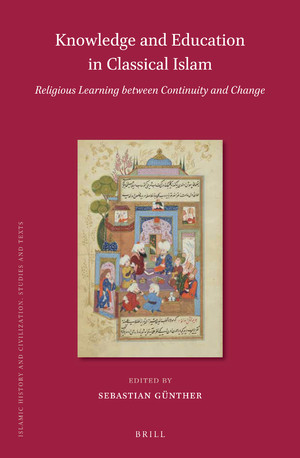
Part 8/Chapter 33 of
Knowledge and Education in Classical Islam: Religious Learning between Continuity and Change (2 vols)
Editor: Sebastian Günther
Leiden: Brill, 2020
For further information, click here.
- April 08, 2021
- 0 Comment
Shii News – ‘Everyday Shi’ism in South Asia’ – K. Ruffle
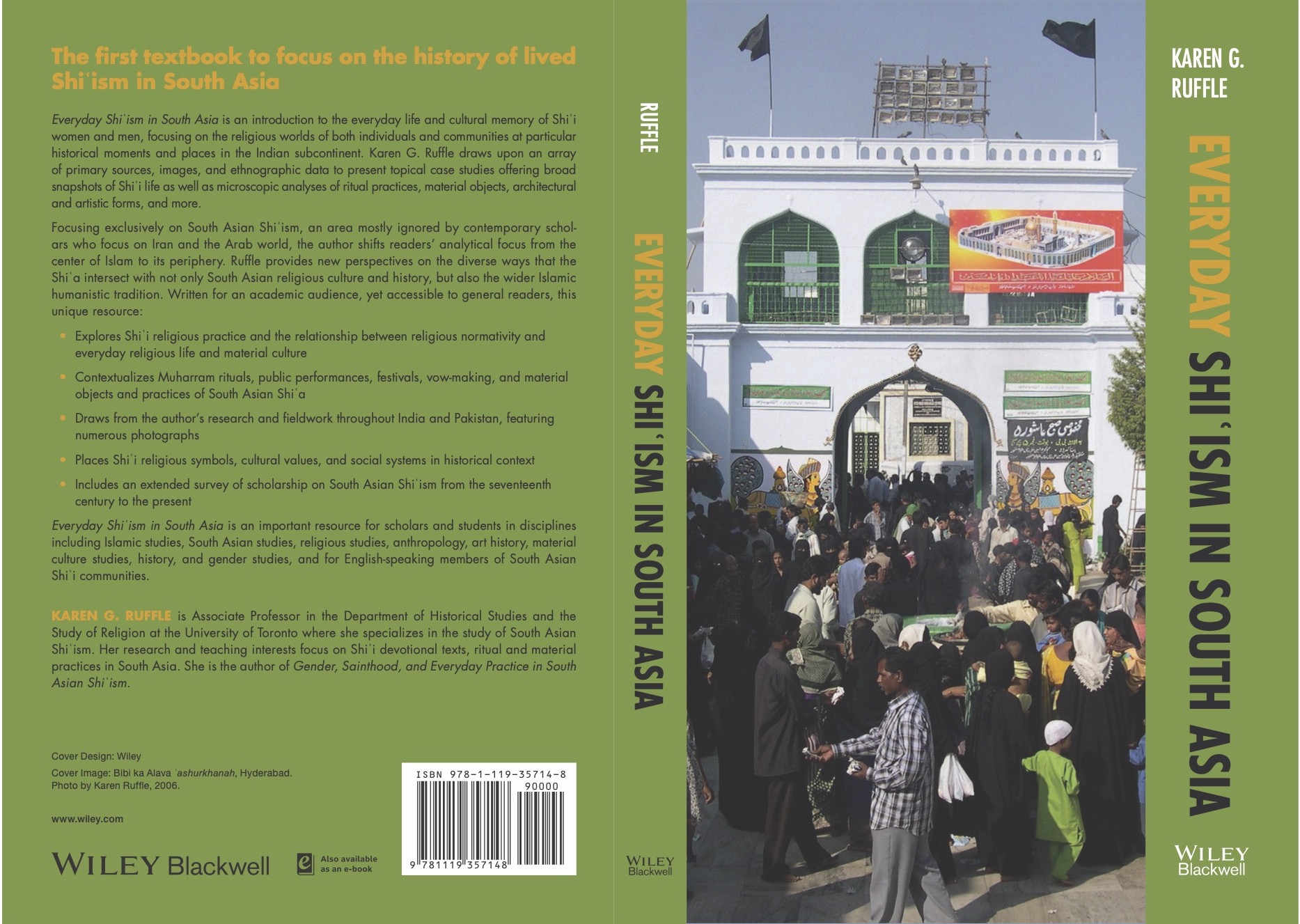
Everyday Shi’ism in South Asia is an introduction to the everyday life and cultural memory of Shi’i women and men, focusing on the religious worlds of both individuals and communities at particular historical moments and places in the Indian subcontinent. Author Karen Ruffle draws upon an array primary sources, images, and ethnographic data to present topical case studies offering broad snapshots Shi’i life as well as microscopic analyses of ritual practices, material objects, architectural and artistic forms, and more.
Focusing exclusively on South Asian Shi’ism, an area mostly ignored by contemporary scholars who focus on the Arab lands of Iran and Iraq, the author shifts readers’ analytical focus from the center of Islam to its periphery. Ruffle provides new perspectives on the diverse ways that the Shi’a intersect with not only South Asian religious culture and history, but also the wider Islamic humanistic tradition. Written for an academic audience, yet accessible to general readers, this unique resource:
Explores Shi’i religious practice and the relationship between religious normativity and everyday religious life and material culture
Contextualizes Muharram rituals, public performances, festivals, vow-making, and material objects and practices of South Asian Shi’a
Draws from author’s studies and fieldwork throughout India and Pakistan, featuring numerous color photographs
Places Shi’i religious symbols, cultural values, and social systems in historical context
Includes an extended survey of scholarship on South Asian Shi’ism from the seventeenth century to the present.
- April 07, 2021
- 0 Comment
