
Archive for January, 2022
- January 29, 2022
- 0 Comment
Shii News – Academic Items
1. Pulpit, Mosque and Nation, Turkish Friday Sermons as Text and Ritual
Elisabeth Özdalga
2. Quranic Arabic, From its Hijazi Origins to its Classical Reading Traditions
Marijn van Putten
3. The British Institute of Persian Studies
WEBINAR | A hundred years of Persian performing arts, with Jane Lewisohn; 23 February 2022, 5PM (UK time)
This talk will show how the performing arts offer insights into the hopes, aspirations, aesthetics and even prejudices prevalent in Iran at this time and how they are valuable not just from an artistic point of view but also from the perspective of social and political history.
Register at:
https://us06web.zoom.us/webinar/register/1616413800466/WN_zBucdk9tQ6iHKrOZjmZS7Q
3. The Association for the Study of the Middle East and Africa (ASMEA) is offering two grant opportunities in conjunction with its Fifteenth Annual Conferencetaking place in Washington, D.C. on November 5 – 7, 2022.
The ASMEA Research Grant Program seeks to support research on topics in Middle Eastern and African studies that deserve greater attention. Applicants may submit paper proposals on any topic as long as it constitutes new and original research and is relevant to the five qualifying topic areas: Minorities and Women, Military History, Governance and Economy, Faith, and Iran. Grants of up to $2500 will be awarded. Successful research grant applicants are required to present their research at the Fifteenth Annual ASMEA Conference. The deadline to apply is April 15, 2022.
Separately, ASMEA is offering Travel Grants of up to $750 which can be used towards the costs associated with attending the Annual ASMEA Conference in Washington, D.C. The deadline to apply is April 15, 2022.
In addition, we have issued our general Call for Papers and Panels and Call for Undergraduate Poster Proposals.
Additional guidelines and information can be found on our website at www.asmeascholars.org.
Feel free to contact ASMEA at info@asmeascholars.org with any questions
4. Lecture on 13th-century plague in Baghdad and Syria
The recording of Monica Green’s 20 January lecture on the 13th-century outbreak of plague in Baghdad and Syria has been posted: https://stanford.zoom.us/rec/play/d9ZWSeqy1-t3ni-pInq_gsM6Ea04D1wyfWee4U7NWaoWTbREUxqwSRWecw0ETFwICLIENJ6iVqQUGJku.mxBI5-7gSMlfozjF?startTime=1642724813000&_x_zm_rtaid=yQ4Ee2myS1SUwyK7XnKlVw.1643248560182.0fe783a53e291014b799fd85472e87f9&_x_zm_rhtaid=560.
(If this long URL breaks up, you can also access the link from this list of the Stanford History of Science talks: https://web.stanford.edu/dept/HPST/colloquia.html. Scroll down to find the link.)
5. The Digital Modern Languages section of Modern Languages Open is inviting proposals for articles to contribute to an open special issue. Open Access article processing charges will be covered by the section using funds graciously provided by King’s College London. Proposals should be broadly connected to research and teaching in Modern Languages which engages with digital culture, media and technologies. Areas of potential but not exclusive interest include: digital cultural studies, digital archives and databases, digital/computational approaches to the study of language and text, digital ethnography, digital linguistics research (e.g. digital discourse analysis), and language teaching and digital technologies.
We particularly welcome contributions from Early Career Researchers.
Themes we are interested in exploring in this issue include:
-
- Digital multi/translingualism
- Forms of digital creativity and cultural expression
- Approaches to Digital Humanities beyond the anglophone world
- Critical digital literacies and Modern Languages pedagogies
- Co-production and collaborative digital research practices
- Critical Digital Modern Languages research (e.g. decolonial, anti-racist, intersectional feminist and queer approaches)
- Multilingual and parallel corpora
- Translation and digital technologies
- Minority/low-resource languages and digital media/technologies
While articles should have a primary focus on languages other than English, we seek to include a range of distinct linguistic and cultural perspectives. We particularly welcome contributions from Early Career Researchers. Proposals should include an abstract (max 250 words) and a short bio (max 70 words). Our selection process will be based both on the quality of the proposal, and on ensuring a range of approaches and linguistic/cultural contexts are represented across the Issue. Please submit your proposals here:
We invite abstracts by 11 February 2022.
Accepted proposals will be confirmed by the end of March 2022, and the deadline for submitting full articles after acceptance is 31 July 2022. Final articles should be between 8,000 to 10,000 words.
This special collection will be edited by Orhan Elmaz, Saskia Huc-Hepher, Paul Spence and Naomi Wells and published on Modern Languages Open https://www.modernlanguagesopen.org/
Please contact Paul Spence at paul.spence [at] kcl.ac.uk if you have any queries about your proposal.
6. The British Institute of Persian Studies is still accepting applications for its Research and Travel Grants.
Funding is available to cover costs associated with developing or executing research projects in any field related to the wider Persianate world. There is funding available for travel for students, either for research or to attend conferences. We invite applications for Research Awards and for Research Assistant Grants, in order to support scholars to develop or complete projects.
Awards of up to £1,200 will be considered for Student Travel Awards. Grants of up to £5,000 for Research Awards and Research Assistant Awards are invited, from PIs associated with a UK based HEI.
Please contact the relevant programme leader prior to submitting your application (Ancient: Professor Lloyd Llewellyn-Jones, Medieval: Professor Andrew Peacock, Modern: Dr Shabnam Holliday).
The deadline for submitting applications is Monday 7th February 2022.
For more information and to download the application form, visit our Grants page.
7. Global Displays of Islamic Art Today: Agency, Identity, and Politics
Virtual Panel & Discussion sponsored by the Islamic Art and Material Culture Collaborative (IAMCC), Toronto
Date: Saturday, February 12, 2022
Time: 10:00 AM to 12:00 PM (EST, Toronto)
Register for free here: https://www.eventbrite.ca/e/global-displays-of-islamic-art-today-agency-identity-and-politics-tickets-247387612007
Panel Summary:
Since the early 2000s, numerous museums around the world have reinstalled their collections of Islamic art as new galleries or created entire museums focusing on the arts and cultures of the Islamic world. During the same period, methodological interventions building on post-structuralist and post-colonial theory have begun to challenge long-standing formal and regional categories defining the field of Islamic art history and have impacted the display strategies of new displays of Islamic art. As a central interface between the academic study of the Middle East, its global representation, and the general public, the approaches these museums adopt to mediate between art, material culture, and Islamic or regional cultures play a central role in shaping discussions about the region. At the same time, Islamic art displays are also embedded in heterogeneous local politics and social discourses that serve local, regional or national agendas.
Through a series of case studies from both public and private museums in Turkey, Qatar, France, Spain, Canada and Iran, this panel of international doctoral candidates examines curatorial practice and agency vis-à-vis the politics of museum display and art discourses from 2000 until today. Rather than interpreting Islamic art displays as passive and neutral representations of the past, this panel theorizes them as a contemporary cultural practice that stages spatialized and immersive, ideological narrations of culture and identity. The papers examine new and complex ways in which museums and galleries of Islamic art use objects today to communicate broader ideas and narratives in various global contexts.
Schedule:
10:00 – Welcome and Introductions
10:05 – 10:20 – Objects Between Secularism and the Sacred at Istanbul’s Museum of Turkish and Islamic Art
Beyza Uzun, Doctoral Candidate, IMT School for Advanced Studies, Lucca, Italy
10:20 – 10:35 – The Cultural Diplomacy and Contested Modernity of Museological Development in Qatar
Abdelrahman Kamel, Doctoral Candidate, Queen’s University, Kingston, Canada
10:35 – 10:50 – Displaying the Transcultural History of Objects: Shaping a French Islamic Heritage?
Constance Jame, Doctoral Candidate, University of Heidelberg, Germany
10:50 – 11:05 – Short Break
11:05 – 11:20 – Configuring Multiculturalism: Heritage and Narrative at Toronto’s Aga Khan Museum and Granada’s Museo de la Alhambra
Philip Geisler, Doctoral Candidate, Kunsthistorisches Institut in Florenz (Max-Planck-Institut), Italy & Berlin Graduate School Muslim Cultures and Societies, Germany
11:20 – 11:35 – Political Dynamics of Curation and Waqf: The Malek National Library and Museum
Leila Moslemi Mehni, Doctoral Candidate, University of Toronto, Canada
11:35 – 12:00 – Audience Q&A and Discussion
The panel will be chaired by Dr. Fahmida Suleman, Curator of the Islamic World collections at the Royal Ontario Museum, Toronto, and co-chair of the IAMCC.
About the IAMCC: The Islamic Art and Material Culture Collaborative (IAMCC), is a research network based in Toronto that brings together the capacities and resources of the University of Toronto (UofT), the Royal Ontario Museum (ROM), and the Aga Khan Museum (AKM).
About the IIS: The Institute of Islamic Studies (IIS) at the University of Toronto offers a unique, multi-perspective view of Canadian society through the advanced study of Islam and Muslims.
8. New Podcasts on the New Books Network – with Anna McSweeney and D. Fairchild Ruggles
Two new podcasts published on the New Books Network with Anna McSweeney talking about the Alhambra and her recent book, From Granada to Berlin: The Alhambra Cupola (2020) https://newbooksnetwork.com/from-granada-to-berlin and D. Fairchild Ruggles talking about Cairo and her recent book, Tree of Pearls: The Extraordinary Architectural Patronage of the 13th-Century Egyptian Slave-Queen Shajar al-Durr (2020) https://newbooksnetwork.com/tree-of-pearls.
9. Online Symposium – Hidden Stories: Global History, Local Networks (Aga Khan Museum) – February 24 & 24
Join the Aga Khan Museum, Toronto, on February 24 and 25 for an online symposium celebrating the current exhibition Hidden Stories: Books Along the Silk Roads– which features books, scrolls, manuscript paintings, textiles, and objects spanning a 1,000-year history from the 10th to the 20th centuries. The exhibition is both global — examining a vast network of trade routes spanning Asia, Europe, and Africa — and local, bringing together historical artifacts from collections across Ontario, Canada.
About theHidden Stories Symposium
Marking the closing of the Hidden Stories exhibition, this 2-day virtual symposium showcases the ground-breaking collaborative research behind this historic exhibition. The event brings together an international group of researchers, museum, and library professionals in four roundtable sessions (Judaica, South and Southeast Asia, Ethiopia, and the Americas). Each session explores a Silk Roads cultural tradition and related Hidden Stories objects through presentations by panelists and an open discussion period with the virtual audience. Click here to view the full SYMPOSIUM PROGRAM
Hidden Stories: Global History, Local Networks, hosted by the Institute for Advanced Study (Princeton, NJ), will be held on Zoom and is free to attend but registration is required.
Can’t visit the Aga Khan Museum in person?
Walk through the HIDDEN STORIES MUSEUM EXHIBITION virtually here
Explore the HIDDEN STORIES DIGITAL EXHIBIT with videos and extended content – active through 2024
10. Near Eastern Studies Lecture
February 23,12:00 PM Eastern Time (US and Canada)
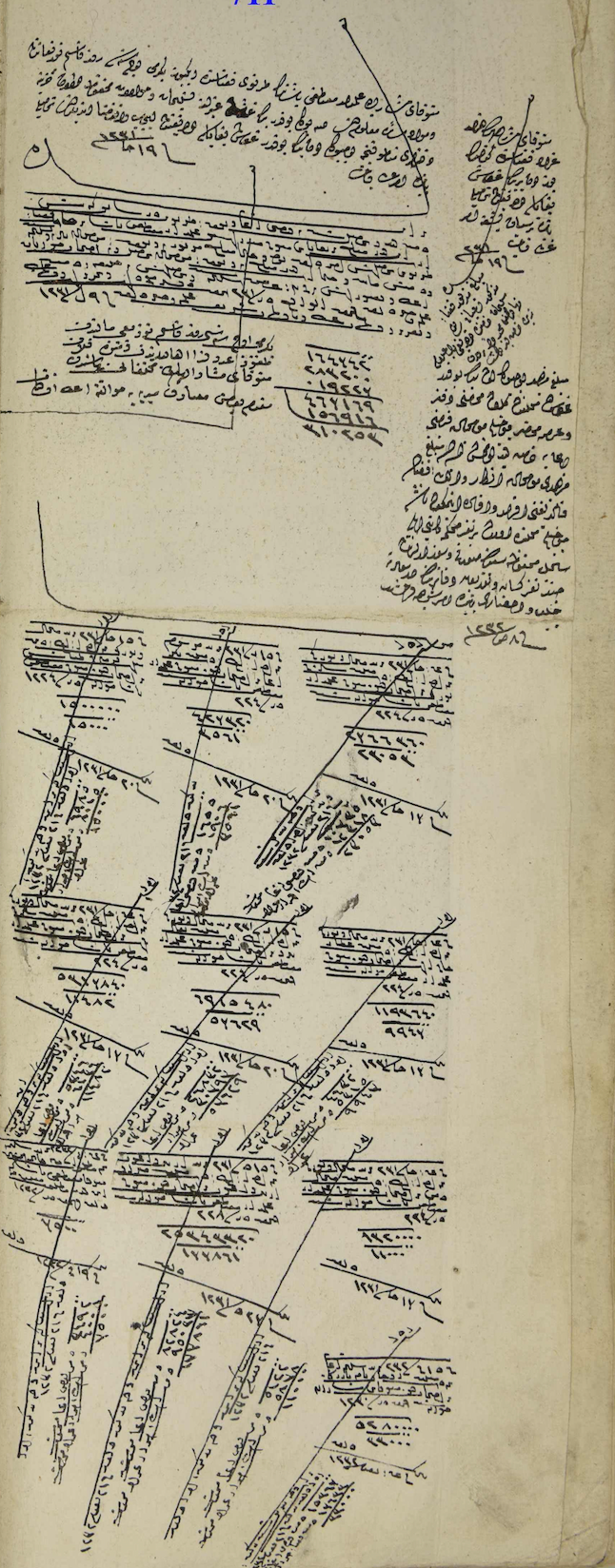
An Ottoman Fiscal Codex and Financial Tales of 134 Women and Men
Ali Yaycıoğlu (Stanford University)
Hosted by Sabine Schmidtke (School of Historical Studies, IAS).
At the center of this talk is a fiscal codex (defter), housed in the Ottoman Archives in Istanbul (call number MAD 9726), from 1808 to the 1840s. MAD 9726 was prepared by a group of Ottoman fiscal accountants to record the financial assets, public and private debts and credits of 134 prominent men (and a few women), who lost their lives (or who fled or were exiled) between 1807 and 1809. Among these individuals were high ranked statemen, bureaucrats, state contractors, financiers, merchants, and provincial notables. Most of them were Muslim, but some were Christian. The majority of them were part of a political movement known as the New Order (Nizam-ı Cedid). The New Order ruled the Ottoman Empire between 1789 and 1808 and fell in 1807-08 after three sequential popular revolts. In some ways, MAD 9726 is a massive confiscation inventory, prepared to seize, reveal, appraise, and redistribute the assets of a politico-financial network spread across the empire. In each entry in the codex, one encounters a dizzyingly complex financial tale centered on one of the 134 individuals, fashioned by tens of debt and credit transactions, financial partnerships, contracts, investments, speculations, capital transfers, bankruptcies, and confiscations. In each entry, one also meets several other individuals, waqfs and state institutions, communities, and sometimes foreign actors, who had financial deals with these individuals. The accounting in some of these entries was completed within a year or two after the death of the individual in question. Some cases, however, it continued for several years and even decades, because of intricacies of transactions, computations, and difficulties in debt collection, and complex political and diplomatic matters. These financial tales were narrated in an arcane accounting technique, known as fenn-i siyaqat, charged with encrypted short hands and paratextual symbols, which Ottoman fiscal scribes had employed for centuries to deal with complex financial matters in their computations. In fact, MAD 9726 is one of the most developed but also final examples of fenn-i siyaqat, which would die out in the mid-19th century, with the introduction of new accounting techniques. This talk will present the intertwined story of a codex, the financial tales of 134 prominent individuals, the final phase of the accounting methods of Ottoman fiscal bureaucracy, and the political-economic transformation of the Ottoman Empire in the late 18th and early 19th centuries.
Register in advance here.
After registering, you will receive an email containing information about joining the event.
- January 29, 2022
- 0 Comment
Shii News – BBC: ‘Life Under the Taliban’
Life under the Taliban: Yalda Hakim’s journey back to Afghanistan
With access to the new Taliban government, the BBC’s Yalda Hakim travels back to Afghanistan to find out what the country is like under their rule.
She speaks to former teachers who chose to stay and fight for their rights and visits a hospital where children are malnourished because their families cannot afford food.
In Kandahar, Yalda meets the Taliban police governor and questions what his force is doing to protect the Shia minority from extremist attacks.
Watch Yalda’s full journey around Afghanistan on Our World: Inside the Taliban regime from Saturday 29 January.
- January 28, 2022
- 0 Comment
Shii News – CfP: Seventh Annual Conference on Shi‘i Studies (London: 14, May, 2022)
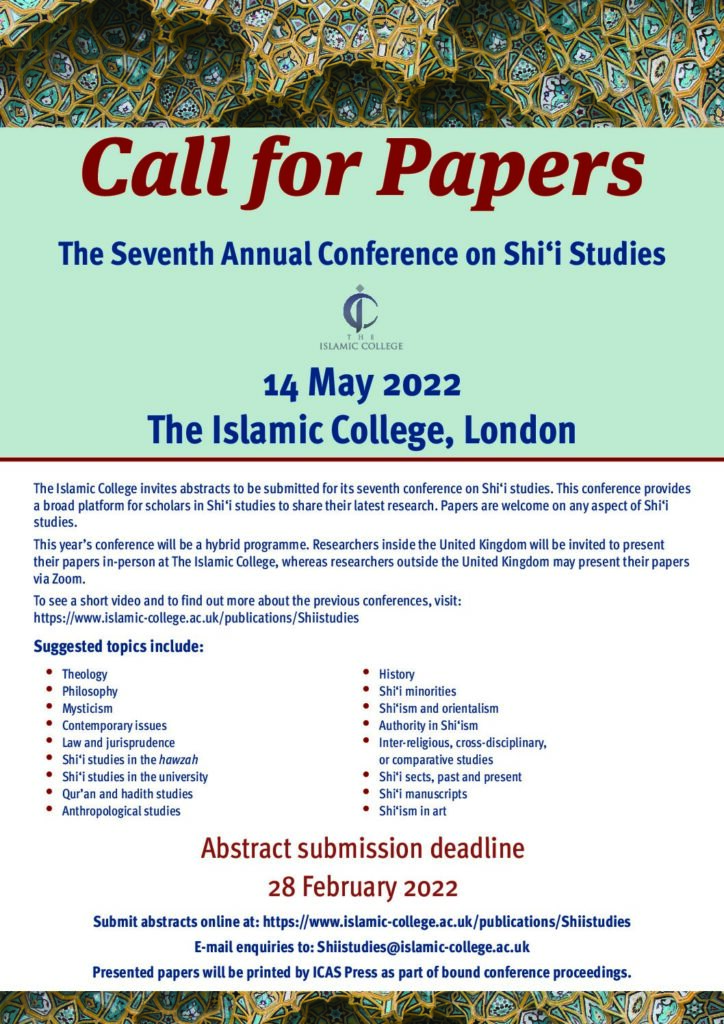
Abstract deadline: 28 February, 2022
For full information and to register:
https://www.islamic-college.ac.uk/publications/shiistudies/
- January 27, 2022
- 0 Comment
- January 26, 2022
- 0 Comment
Shii News – Academic Items
1.HIAA Biennial Symposium CFP – Deadline April 8
Call for Papers
Historians of Islamic Art Association Biennial Symposium
“Expanding Contexts”
The Museum of Fine Arts and Rice University, Houston
March 2-4, 2023
As historians of Islamic art and architecture, we often deal with objects and edifices that are spatially and temporally removed from their contexts. Artworks are displayed in glass cases in museum galleries and heavily restored monuments offer little clue of the social life that once unfolded in and around them. The discussion of context has long been dominated by politics, dynasties, and patronage. Recent scholarship, however, has immensely expanded the definition of the context to include urban, sensory, perceptual, social, and global settings, to name a few trends. We no longer discuss works of art and architecture as reified creations but consider them in the context of labor, craft, and everyday practices. We construe artworks not as neutral reflections of their historical settings but as agents that actively inform their contexts. Rather than seeking a definite provenance, we write transregional narratives of objects and their dynamic (cross-) cultural lives.
For the next biennial HIAA symposium, we invite panels and papers that explore the question of context in Islamic art and architecture from new methodological and theoretical perspectives. We seek papers that engage new conceptual models, strategies, and technologies for reconstructing, narrating, and visualizing the historical contexts. What are the promises and pitfalls of the digital age for reconstructing the original contexts of artworks and architectural fragments? What approaches and conceptions can we take to invoke the context and intimate the embodied experiences of historical audiences for the public in museums, academic settings, and online platforms? Is it possible to redress the acts of transmission and dislocation that have led to the creation of major collections by means of reconstructing their contexts? How can we use the context to expand the global reach of the field and narrate the past in ways that speak to broader audiences?
There are two categories of submission: Pre-arranged panels (3-4 papers and a discussant) and individual papers. Please submit your abstract/s and a brief curriculum vitae to hiaa.symposium.2023@gmail.com, by April 8, 2022.
The 2023 Symposium Organizers:
Aimée Froom (Museum of Fine Arts, Houston) and Farshid Emami (Rice University)
Committee Members:
Stephennie Mulder, Nada Shabout, Abbey Stockstill, and Heather Ecker
2. Residence Program in Advanced Arabic & Social Studies
Fall Semester 2022
A limited number of merit-based tuition waiver and housing support
The Language Center at the Doha Institute for Graduate Studies (DI) is pleased to announce its Fall semester 2022 – 2023 Residence Program in Advanced Arabic Language and Social Studies. The DI aims to create an enduring legacy of intellectual innovation and education within the Arab world and beyond. It assumes and promotes the Arabic language as a tool of scientific inquiry, an official language in public discourse, and a primary language for teaching and research.
The Residence Program is an important part of the DI’s mission to establish, maintain, and nurture intellectual links and two-way dialogues between its students, faculty, and the international learning and research community. The Program is a unique forum for academic and cultural exchange between the DI’s predominantly native Arabic speaking graduate students and faculty (from across the Arab world) and their international non-native or heritage peers.
The Residence Program is offered for one semester on site in Doha (world health conditions permitting). It meets the language, culture, and academic needs of advanced non-native and heritage graduate students who wish to strengthen their language and cultural skills, as well as prepare for specific challenges related to their academic areas of expertise. The Program is delivered entirely in Arabic and consists of a twin advanced language-training and academic components.
The language-training component prepares students to function professionally in Arabic and offers dedicated courses in language, translation, and content-based instruction. The program adapts to the academic needs of students as a base for linguistic and cultural acquisition, emphasizes productive and presentation skills, and
develops higher levels of proficiency in speaking, listening, reading, writing, and translation.
The academic component gives fellows the opportunity to take advantage of the wide array of unique graduate-level courses the DI distinguished faculty teach in Arabic through its academic units: The School of Social Sciences and Humanities and the School of Public Administration and Development Economics. For more detailed
information about the DI, please go to:
https://www.dohainstitute.edu.qa/EN/Pages/default.aspx
To Apply to the Doha Residence Program, click on the link below:
https://dilc.wufoo.com/forms/znatdf40sd7rqv/
Semester Program Features:
- 6 credits of Intensive Arabic;
- A language partner;
- Option to audit graduate academic courses taught in Arabic if eligible;
- Option to have an academic partner;
- Access to the DI rich conferences, symposia, and guest lectures.
Admission Requirements:
- Advanced level in Arabic;
- Housing: 11,000 per semester (approximately $3000 or 2,650)
- Program Dates:
- Application Deadline: March 15, 2022
- Start of Classes: July 31, 2022
- End of Classes: November 3, 2022
3. ONLINE Lecture: “Hunger, Heresy and Rebellion in ʿAbbasid Arabia” by Peter Webb (Univer-siteit Leiden), University of Hamburg, 15 February 2022, 4:00 – 5:30 pm CET
This is a part of the lecture series: “Rethinking Social Contention: Rebellion, Banditry and Martyrdom in the Pre-Modern Islamicate World” hosted by the Emmy Noether Research Group “Social Contexts of Rebellion in the Early Islamic Period (SCORE)”.
Information and registration: https://www.aai.uni-hamburg.de/voror/forschung/score/news/2021-12-lecture-series.html
No lecture in March –
12 Apr 2022
Antonia Bosanquet (Universität Hamburg): Was it a Berber Rebellion? Ethnic and Religious Labels in Histories of the 740 Uprising
17 May 2022
Teresa Bernheimer (Ludwig-Maximilians-Universität München): ʿAlid and Kharijite Revolts in the First Two Centuries of Islam a Comparative Re-Assessment
14 Jun 2022
Maribel Fierro (CSIC Instituto de Lenguas y Culturas del Mediterráneo y Oriente Próximo): How Rebellions End: A View from the Medieval Islamic West
The online lecture series will take place during Spring Term on Tuesdays from 4.00 to 5.30 pm CET on Zoom. To register, please contact the SCORE team at score.aai@uni-hamburg.de.
4. ONLINE Conference: “The Concept of Protology/Cosmology and the Concept of Eschatology in Judaism, Christianity and Islam” in the Series “Key Concepts in Interreligious Discourses” (KCID), Bavarian Research Center for Interreligious Discourses (BaFID), Universität Erlangen-Nürnberg, 16-17 February, 2:00 pm CET
Speakers on Protology/Cosmology: Prof. em. Dr. Philip Alexander and Prof. Dr. Daniel Langton, University of Manchester/UK, on Judaism; Prof. Dr. Dirk Ansorge, Frankfurt/Main, on Christianity; Prof. Dr. Mira Sievers, HU Berlin, on Islam. Speaker on Eschatology: Prof. em. Dr. Todd Lawson, University of Toronto/CA, on Islam; etc.
Information and registration: https://www.bafid.fau.eu/research/conference-series-kcid/
June 22-24, 2022: The Concept of Emotion and the Concept of Morality in Judaism, Christianity and Islam
Lectures
- Emotion:
Prof. Dr. Jonathan Garb, Hebrew University Jerusalem/IL, on Judaism
Prof. Dr. John Corrigan, Florida State University/USA, on Christianity
Prof. Dr. Paul Heck, Georgetown University/USA, on Islam - Morality:
Prof. Dr. Alan Mittleman, Jewish Theological Seminary/USA, on Judaism
Prof. Dr. Marianne Heimbach-Steins, University of Munster, on Christianity
Prof. Dr. Mutaz Al-Khatib, Hamad Bin Khalifa University/QA, on Islam
September 21-23, 2022: The Concept of Mysticism and the Concept of Divine-Human Communication in Judaism, Christianity and Islam
Lectures
- Mysticism:
Prof. em. Moshe Idel, Hebrew University Jerusalem/IL, on Judaism
Prof. Dr. Ann Astell, University of Notre Dame/USA, on Christianity
Prof. Dr. Erdal Toprakyaran, University of Tübingen, on Islam - Divine-Human Communication:
Prof. Dr. Aaron Hughes, Indiana University Bloomington/USA, on Judaism
Prof. Dr. Jennifer Eyl, Tufts University/USA, on Christianity
Dr. Ghassan El Masri, BaFID/FAU Erlangen-Nuremberg, on Islam
February 15-17, 2023: The Concept of Religion and the Concept of Rationality in Judaism, Christianity and Islam
Lectures
- Religion:
Prof. Dr. Oliver Leaman, University of Kentucky/USA, on Judaism
Univ.-Prof. Mag. Dr. Gregor-Maria Hoff, University of Salzburg, on Christianity
Prof. Dr. Moncef Ben Abdeljelil, University of Sousse/TUN, on Islam - Rationality:
Prof. Dr. Yitzhak Melamed, Johns Hopkins University/USA, on Judaism
Dr. Dr. Martin Breul, University of Erfurt, on Christianity
Prof. Dr. Ulrich Rudolph, University of Zurich, on Islam
June 21-23, 2023: The Concept of Authority and the Concept of Modernity in Judaism, Christianity and Islam
Lectures
- Authority:
Prof. Dr. Lawrence Kaplan, McGill University/CA, on Judaism
Prof. Dr. Christoph Seibert, University of Hamburg, on Christianity
Prof. Dr. Vincent Cornell, Emory University/USA, on Islam - Modernity:
Prof. Dr. Allan Arkush, Binghamton University/USA, on Judaism
Prof. Dr. Vasilios N. Makrides, University of Erfurt, on Christianity
Prof. Dr. Armina Omerika, University of Frankfurt/Main, on Islam
October 11-13, 2023: The Concept of Suffering and the Concept of Happiness in Judaism, Christianity and Islam
Lectures
- Suffering:
Prof. Dr. Robert Gibbs, University of Toronto/CA, on Judaism
Prof. Dr. Christopher Southgate, University of Exeter/UK, on Christianity
Prof. Dr. Mohammed Ghaly, Hamad bin Khalifa University/QAT, on Islam - Happiness:
Prof. em. Dr. Kenneth Seeskin, Northwestern University/USA, on Judaism
Prof. em. Dr. Paul J. Wadell, St. Norbert College/USA, on Christianity
Dr. Raid al-Daghistani, University of Munster, on Islam
The last conferences were held from October 6th to 7th, 2021 on “The Concept of Education and the Concept of Family in Judaism, Christianity and Islam” (Program), from June 23th to 24th, 2021 on “The Concept of Sin and the Concept of Redemption in Judaism, Christianity and Islam“ (Program) and from February 17th to 18th, 2021 on “The Concept of Will and the Concept of Predestination in Judaism, Christianity and Islam” (Program).
5. ONLINE Lecture: “The Politics of Jihad in Early Crusading Period among the Turkmen and Kurds” by Prof. Dr. Taef El-Azhari (Helwan University), University of Marburg, Germany, 24 February 2022, 5:00 pm CET
This is part of the Lecture Series “Rethinking Memory and Historiography of the Crusades in the Middle East”. Moderator: Prof. Dr. Umar Ryad (University of Leuven). Organised by Dr. Ahmed M. Sheir.
Information and registration: https://drive.google.com/file/d/1w00onNuGTJiDFSoQ3gfE1cBsJF7zINd-/view?usp=sharing
6. Workshop: “The Arab-majority and Muslim-majority Worlds in/and Contemporary Decolonisation Debates”, University of Edinburgh, 5-6 April 2022
This workshop seeks to specifically think the decolonising movement and an engagement with it from the histories, experiences, perspectives, traditions, and problematics of the Arab-majority and Muslim-majority worlds (broadly defined) as a contribution toward growing decolonial scholarship and movement.
7. ONLINE Conference: “Islamic Perspectives on Exotheology”, Zayed University, 10-11 May 2022
Organised by Shoaib Ahmed Malik, Zayed University and Jörg Matthias Determann, Virginia Commonwealth University, etc.. Questions to be asked: Are extraterrestrials even metaphysically or hermeneutically possible in Islamic thought? If extraterrestrials exist, how would this impact Islamic jurisprudence and/or ethics? What philosophical implications could there be for Muslims if extraterrestrial life exists? Etc.
Information: https://www.academia.edu/51090491/Call_for_papers_Islamic_Perspectives_on_Exotheolgy
8. Panel on “Liberalism and Islam in Contemporary Global Literature”, Conference of the British Association of Islam Studies (BRAIS), University of Edinburgh, 6-7 June 2022
Topics include: “Every day Islam” in Literature; Liberalism and Orientalism; The relation between piety and its performance in Muslim everyday life in literature; Neo-Orientalism in global literature; Muslim identity pol-itics and liberalism in western spaces.
Deadline for abstracts: 28 January 2022. Information: https://networks.h-net.org/node/73374/announce-ments/9554601/liberalism-and-islam-contemporary-global-literature-brais
9. HYBRID Conference: “Mercenaries and Crusaders (1202-1480s)”, University of Debrecen, Hungary, 22-24 June 2022
Panels and papers are welcome on the topics: Mercenaries in the Holy Land; Mercenaries in Byzantine Armies; Mercenaries in the Crusades against the Ottomans; Crusades in the Holy Land, the Baltics, the Iberian Peninsula; against the Ottomans; Crusades against Christians; Perception of Mercenaries in Narra-tive Literature; etc.
Extended deadline for abstracts: 31 January 2022.
Information: https://mercenariesandcrusaders.com/?page_id=51
10. Conference: “Unfreedom in the Premodern World: Comparative Perspectives on Slavery, Servitude & Captivity”, Trinity College Dublin, 23-24 June 2022
Papers will explore any aspect of the history of unfreedom, slavery, servitude or captivity in the period before 1492. Papers are welcome from any academic discipline and with any geographical focus. Interdisciplinary papers and studies of regions outside of Western Europe are particularly encouraged.
Information: https://networks.h-net.org/node/8330/discussions/9058439/unfreedom-premodern-world-com-parative-perspectives-slavery
11. Eighth Conference of the School of Mamluk Studies, University of Marburg, 4-9 July 2022
The themed portion of the conference on 7July will be “Environment and Nature in the Mamluk Sultanate”. Papers will focus on land use, hydrology and irrigation, disease and famine, flora and fauna, crops and food, and anything related to these topics.
Information: https://mamluk.uchicago.edu/sms-conference.html
12. “Twelfth Nordic Conference on Middle Eastern Studies” by the “Nordic Society for Middle Eastern Studies (NSMES)” on “The Middle East in Myth and Reality”, University of Iceland, Reykjavik, 22-24 September 2022
Paper proposals are encouraged to explore and discuss social, political, geographical, historical and religious myths and realities from all fields and disciplines of the Middle Eastern studies, including the following fields: Middle Eastern history, anthropology, archaeology, religion, politics, sociology, language, and literature. Papers on other relevant themes pertinent to current Middle Eastern Studies are also welcome.
Deadline for abstracts: 15 March 2022. Information: https://vigdis.hi.is/en/events/nsmes-conference-2022/
13. Conference: “Balance of Justice in the Ottoman Empire. Non-Muslims as Agents in an Islamic Imperial Legal Context”, Sabancı University, Istanbul, 13-15 October 2022
Focusing on the period from the early modern to the modern era papers are invited on the followind questions: How can we reveal non-Muslims’ agency in the Ottoman legal context? What notions and practices of insti-tutionalization, authority, and coercion did non-Muslims have? And what new, dynamic models can we de-velop in their place to better understand the varying ways non-Muslims participated in Ottoman society?
Deadline for abstracts: 28 February 2022.
Information: https://www.ottolegal.net/thebalanceofjustice
14. Doctoral Research Fellowship (3 Years) in Middle Eastern Studies, University of Oslo, Norway
The doctoral project, designed by the applicant, is expected to explore the relationship between cultural pro-duction and social changes in the Middle East and beyond. Qualification: Master’s degree in Middle Eastern studies, comparative literature, or other related fields; Fluent oral and written communication skills in English, fluency in Arabic; Competency in other Middle Eastern Language.
Deadline for application: 28 February 2022. Information: https://www.jobbnorge.no/en/available-jobs/job/215412/doctoral-research-fellowship-in-middle-eastern-studies
15. Wissenschaftl. MitarbeiterIn (3 Jahre) in Arabistik/Islamwissenschaft, Dienstort Kairo, Orient-Institut Beirut
Voraussetzungen: MA-Abschluss oder BA-Abschluss und fortgeschrittenes MA-Studium in den Fächern Arabistik/Islamwissenschaft oder verwandten Fächern der Nahost-Studien; Sprachkenntnisse in Wort und Schrift in Deutsch, Arabisch und Englisch; Bereitschaft zu Dienstreisen.
Bewerbungsschluss: 15. Februar 2022. Informationen: https: https://www.orient-institut.org/people/vacancies/wmoibkairo/
16. Senior Assistant Professor/Associate Professor/Professor of Islamic Governance, Universiti Brunei Darussalam
Qualifications: Ph.D. in Islamic Studies (Governance, Politics and/or Public Policy), Political Islam, Islamic Law (Applied Shari’ah) or related field from a recognised university; Demonstrate outstanding record of re-search output, particularly on the conceptualisation and application of Shari’ah or policies within the context of Islamic or Muslim societies; Record of teaching excellence.
17. Visiting Assistant Professor (1 Year) of History with Specialisation in the Middle East, Nazareth College, Rochester, New York
Candidates must be either ABD or have a PhD in history or closely related field. The successful candidate will teach four courses per semester (two sections of introductory classes, survey classes and upper division classes in areas of specialization).
Deadline for application: Open until filled. Information: https://jobs.naz.edu/postings/2779
18. CEST Summer School “Cultural Exchange and Heritage (Related to Turkey)”, University of Vienna, 11-22 July 2022
The CEST Summer School is open to graduate students (enrolled in advanced MA and PhD programs) and early career scholars (within four years of receiving their PhD) in Turkey and Europe whose research interest is relevant to cultural exchange and heritage in the context of Turkey.
Deadline for applications: 25 February 2022. Information: https://cest-graduateschool.univie.ac.at
19. ONLINE Summer Course “Introduction to Arabic Manuscript Studies”, Hill Museum and Manuscript Library, Collegeville, MN, 13-24 June 2022
For graduate students, advanced undergraduates, faculty, and independent scholars with a research interest in Arabic manuscripts. The program welcomes international applicants.
Deadline for application: 1 March 2022. Information: https://hmml.org/programs/arabic-mss-studies/
20. The Qatar National Library, as the IFLA Preservation and Conservation Regional Center, for MENA region, is organizing this online training on “Combating Art Trafficking: A special focus on manuscripts“: Course will be offered in English, with translation into Arabic, Persian and Turkish under the framework of the Himaya project to counter the trafficking and illegal circulation of the documentary heritage.
Registration: https://events.qnl.qa/event/d175A/EN
This course is organized in the franwork on the HIMAYA
For more information contact Stephane Ipert sipert@qnl.qa
Starts:
21.02.2022 04:00 PM
Ends:
23.02.2022 06:00 PM
21. Siyah Zibast, Black is beautiful
Date: 25 January 2022Time: 5:00 PM
Finishes: 25 January 2022Time: 6:30 PM
Venue: Virtual Event
Type of Event: Webinar
Hidden Histories Seminar Series
A seminar series curated by the Library Decolonisation Operational Group, led by Farzana Qureshi, Dr Ludi Price, Amma Poku and Angelica Baschiera.
Hidden Histories seeks to highlight stories from African, Caribbean and Asian communities in the UK and beyond, bringing to light a shared vision of decolonising knowledge production, and documenting the unique voices and experiences of diasporas in Britain and across the world.
About this event
With Siyah Zibast, Black is beautiful, the Collective for Black Iranians invites you for a conversation about the importance of language in identity formation and in seeing ourselves. Black is beautiful, Siyah Zibast is the first call in the Iranian community to see and say that Blackness lives in Iranian identity and vice-versa, a call to say that “Black is beautiful”. Co-founders, Priscillia Kounkou-Hoveyda, Alex Eskandarkhah, Norman Soltan Salahshour and resident historian Beeta Baghoolizadeh, as well as residents from Iran, will join us for an evening of conversations on the myriad ways in which the Collective creatively says the Persian words, “Black is Beautiful”, through its work.
About the panellists
The Collective for Black Iranians is a creative and critically conscious initiative proposing an Iranian culture that stands fully at its Black and African intersections. Founded out of the necessity to be heard, seen and understood, the Collective has been trailblazing conversations around race, Blackness, belonging, anti-Blackness and the importance of listening to stories we may not have known existed.
The event will be chaired by Dr Ida Hadjivayanis (Lecturer in Swahili and Head of Africa section, School of Languages, cultures and linguistics, SOAS), and Dr Narguess Farzad (Senior lecturer in Persian studies and Chair of the Centre for Iranian studies, SOAS).
Registration
This event is free and open to public. If you would like to attend the event please register. Please register via Zoom.
Organiser: SOAS Decolonising Working Group (DWG)
Contact email: cas@soas.ac.uk
22. Call for Contributions to the 7th IDHN Conference
The 7th IDHN Conference will take place on Thursday, May 5, 2022.
We are now calling for contributions from both members and guests, who are developing or deploying digital methods and tools in the study of Islam and Muslim communities. Our conference is open to participants from both humanistic and scientific disciplines. We would also like to encourage Master’s and PhD students to share their Digital Humanities research with us.
If you wish to participate in the conference, please send an email to team@idhn.org with a preliminary title, abstract (150-300 words), and your academic affiliation by Friday, March 25, 2022.
We will select four to six presentations for our conference. Each presentation will be 20 minutes long, followed by Q&A for 10 minutes.
We will hold the meeting online on ZOOM; the access code and link will be sent to you in the network’s newsletter. We will schedule our conference to accommodate presenters from all time zones. This schedule will correspond with the morning hours in the Americas and evening hours in Europe and the Middle East.
- January 25, 2022
- 0 Comment
Shii News – ‘The Art of Resistance in Islam, The Performance of Politics among Shi’i Women’ – Y Shanneik
- January 24, 2022
- 0 Comment
Shii News – Academic Items
1. IFRI Webinar SERIES : Regards sur les arts du monde iranien / Insights into the Art of the Persianate Societies
Nous avons le plaisir de vous annoncer que la première séance 2022 du Webinaire de l’IFRI (IFRI Webinar SERIES)
Regards sur les arts du monde iranien / Insights into the Art of the Persianate Societies
coorganisé par l’Institut Français de Recherche en Iran (IFRI) et le CeRMI,
aura lieu
le mardi 25 janvier 2022, de 15h à 17h (heure de Paris) / 17h30-19h30 (heure de Téhéran).
Cette première séance s’articulera autour du thème “Regards sur les arts du métal / Insights into Metalwork“, avec les interventions suivantes :
- Metalwares from the Medieval Iranian World: Archaeometallurgy, Actors and Systems of Production
Annabelle Collinet (Musée du Louvre, Paris), David Bourgarit (Centre de recherche et de Restauration des Musées de France, Paris/UMR 8068 TEMPS)
- Medieval Metalwork from Afghanistan: Preserving the Memory of Lost Collections
Valentina Laviola (University of Bologna)
Pour suivre cette séance online (sur Skyroom), inscrivez-vous avant le 22 janvier sur le lien suivant : https://webquest.fr/?m=111505_regards-sur-les-arts-du-monde-iranien-periodes-islamiques
>> Pour plus d’informations sur le Webinaire
N’hésitez surtout pas à faire circuler l’information !
Au plaisir de vous retrouver nombreux ;
Sandra Aube (CNRS, CeRMI)
pour le comité d’organisation
Centre de Recherche sur le Monde iranien (CeRMI), CNRS UMR 8041
27 rue Paul Bert – 94204 Ivry-sur-Seine
——————————————————–
CeRMI – CNRS UMR 8041
Centre de Recherche sur le Monde Iranien
27 rue Paul Bert – 94204 Ivry-sur-Seine – France
cermi@cnrs.fr – https://www.cermi.cnrs.fr
2. Smith College – Lecturer in Modern Middle East History
https://www.h-net.org/jobs/job_display.php?id=62862
Closing date: 4.14.22
3. Workshop series: Afghanistan through Afghan Voices: Society, Literature & the Arts
https://www.international.ucla.edu/apc/centralasia/article/251182
Afghanistan through Afghan Voices: Society, Literature & the Arts
Talks | Conversations | Readings | Visual Inspirations
Organizers: Aria Fani (University of Washington), Domenico Ingenito (UCLA), Mejgan Massoumi (Stanford University)
Afghanistan through Afghan Voices is a series of virtual workshops that highlights and critically engages with recent scholarship on one of the most culturally diverse regions in the world. It aims to open an inclusive and multidisciplinary space where Afghan scholars and artists come together in conversation with broad audiences to publicly reflect on their research endeavors and creative trajectories. Monthly programs include Afghan artists from around the globe in dialogue with scholars of literature, art, and history; panels featuring conversations on visual culture and media; and poetry readings in Persian/Dari, Pashto, and English.
The monthly series is hosted via Zoom by the UCLA Program on Central Asia and co-sponsored by the University of Washington’s Persian and Iranian Studies Program, Stanford University’s Center for South Asia and Abbasi Program in Islamic Studies, the UCLA Center for Near Eastern Studies, CMRS Center for Early Global Studies, as well as the Center for India and South Asia.
Schedule
Each meeting is held on the listed date from 9:30 to 11:00 AM Pacific time.
Session 1 | Mr. Blinken’s “Play List”: War, the State, and Empire in Afghanistan in the Age of Neo-liberal (Dis)Order
Thursday, January 27
Wali Ahmadi (UC Berkeley)
Discussant: Munazza Ebtikar (University of Oxford)
Session 2 | Invisible Persons, Invisible Texts: Translation and Translators in Medieval and Modern Afghanistan and the West
Thursday, February 17
Book Panel on Zrinka Stahuljak’s Les Fixeurs au Moyen âge – Histoire et littérature connectées
Zrinka Stahuljak (UCLA), Jawanshir Rasikh (University of Toronto), and Arezou Azad (University of Oxford)
Discussant: Domenico Ingenito (UCLA)
Session 3 | What is the Value of the Persianate to Afghanistan Studies?
Friday, March 11
Panel with Marjan Wardaki (Yale University), Neelam Khoja (University of Pennsylvania), and Nicolas Roth (Harvard University)
Discussant: Aria Fani (University of Washington)
Session 4 | Media, Feminism, and Resistance in and Beyond Afghanistan
Thursday, April 7
Panel with Wazhmah Osman (Temple University), Helena Zeweri (University of Virginia), and Hosai Qasmi (University of Ottawa)
Discussant: Mejgan Massoumi (Stanford University)
Session 5 | How to (Not) Read Afghan Literature?
Thursday, May 5
Panel with Ahmad Rashid Salim (UC Berkeley), Zuzanna Olszewska (University of Oxford), and Samuel Hodgkin (Yale University)
Discussant: Aria Fani (University of Washington)
Session 6 | Inside/Outside the Line: Reading and Translating Afghan Poetry
Thursday, June 2
Panel with Parwana Fayyaz (University of Cambridge), Rahman Arman (Indiana University), Elyas Alavi (Adelaide, Australia), Julie Ershadi (UCLA), and Domenico Ingenito (UCLA)
https://www.international.ucla.edu/apc/centralasia/article/251182
4. Online Talk – “Islamic Ceramics: Archaeology, The Art Market and the Creation of Taste,” with Scott Redford (SOAS) – February 1
Online Talk Announcement:
The 52 William Cohn Lecture, Ashmolean Museum, University of Oxford – Tuesday 1 February 2022, 5-6pm
Islamic Ceramics: Archaeology, The Art Market and the Creation of Taste
With Professor Scott Redford, Nasser D. Khalili Professor of Islamic Art and Archaeology, School of Oriental and African Studies, University of London
In the West, the collecting of Islamic ceramics has traditionally taken a back seat to east Asian ceramics. Why is this so? This lecture explores the roles played by dealers, collectors, and museums in creating a body of material known as “Islamic ceramics.” What constitutes this body, and how did it come to be? How might it have been different?
BOOKING:
Please book by emailing eastern.art@ashmus.ox.ac.uk
This free event will take place on Zoom and a link to join will be shared in advance by email.
5. Postdoctoral position at the UCLouvain (Louvain-la-Neuve, Belgium) as part of the FNRS Incentive Grant for Scientific Research “Prisca Alchimia. The Beginnings of Arabic Alchemy in the East (8th-10th centuries) and its Transmission to al-Andalus and to the Latin World” conducted by Prof. Sébastien Moureau.
Prisca Alchimia is a two-year F.R.S.-FNRS project to start in January 2022 at the UCLouvain (UCL) under the supervision of Prof. Sébastien Moureau. This research project focuses on the history of the Arabic alchemy of the first centuries (8th-10th centuries) approached as the starting context of the alchemical ideas that were transmitted to al-Andalus in the 10th century and then to the Latin West in the 12th and 13th centuries. The aim is to study the first of the three stages in the transfer of alchemy from the Arab-Muslim East to the Latin world through al-Andalus. In order to do so, research will be oriented towards the sources of alchemical literature of al-Andalus and Latin Europe.
As part of this project, a postdoc position of two years (to start before 1 July 2022) is offered for the second sub-project, i.e. a profound re-evaluation of the manuscript tradition of the corpus of alchemical texts attributed to Jābir b. Ḥayyān, the creation of an inventory of witnesses and the acquisition of copies of the most important manuscripts. This position will involve numerous stays in countries where little or poorly catalogued Arabic alchemical manuscript collections are found (Morocco, Algeria, Tunisia, Egypt, Turkey, Saudi Arabia, Iran, India, etc.).
The qualifications required are:
- a PhD in Islamic Studies, in Middle Eastern Studies, or related fields, granted within the last 6 years (i.e. after 1/7/2016);
- an excellent command of Classical Arabic;
- excellent skills in codicology, Arabic paleography, and manuscript tradition studies;
- a first-rate track record and research experience;
- publications of articles in peer-reviewed international journals or monographs with recognised academic publishers;
- academic writing and presentation skills in English;
- the ability to work both individually and as part of a team.
This postdoc position is full-time equivalent. It is offered initially for a period of 12 months, renewable for another 12 months (two years in total) upon good performance. The postdoc retained will be required to reside in Belgium for the whole period of the fellowship, with many trips and stays abroad, and will be asked to contribute to the intellectual life of the project and of the UCLouvain.
How to apply?
Applications should be made via PDF files and contain the following:
(1) a cover letter setting out the candidate’s qualifications and motivation for applying for the position (maximum 2 pages);
(2) a curriculum vitae (maximum 3 pages);
(3) a list of publications;
(4) two samples of published work (articles, chapters) in pdf (preferably in English or French);
(5) a transcript of grades and/or copy of the PhD certificate;
(6) the name (with title, affiliation and email) of three people having accepted to be contacted as potential referees.
Applications should be made electronically (PDF files only) and sent to the following address:
sebastien.moureau@uclouvain.be
The application deadline is 28 February 2022.
Candidates selected for the interviews will be contacted by March 4 and asked to write a short research design on a topic to be announced at that moment.
Online interviews will be arranged between 14 and 18 March 2022.
Employment must become effective before 1 July 2022.
6. Lecture Series – NYU, Silsila: Center for Material Histories – Spring 2022
Silsila: Center for Material Histories
Spring 2022 Series
We are delighted to announce the spring 2022 program of New York University’s Silsila: Center for Material Histories. The full details of our spring program are listed below and can also be found on our website:
https://as.nyu.edu/silsila/events.html
Only registered attendees will be able to access the events. Links to register for each event can be found on the webpage for each, accessed through the website.
Silsila Spring 2022 Series
Feb 2nd (Wed), 12:30-2:30pm
“ILLUMINATING THE HISTORY OF PRIVATE DEVOTION IN THE MUSLIM WEST” Hiba Abid, Silsila/NYU
Feb 9th (Wed), 12:30-2:30pm
“SILSILAS FROM THE ISLAMIC EAST: MIRACLES AND MATERIAL LIFE” Teren Sevea, Harvard University
Feb 23rd (Wed), 12:30-2:30pm
“THE FABRIC OF THE CITY: SPACES OF SILK WEAVING AND MASS PRODUCTION IN EARLY MODERN KASHAN” Nader Sayadi, Metropolitan Museum of Art
Mar 2nd (Wed), 12:30-2:30pm
“REVISITING THE GREAT MOSQUE OF DAMASCUS” Alain George, University of Oxford
Mar 9th (Wed), 12:30-2:30pm
“THE THEATRE-CARAVANSERAI OF TBILISI. A HETEROTOPIA FROM THE CAUCASUS” Luka Nakhutsrishvili, Ilia State University, Tbilisi
Mar 30th (Wed), 12:30-2:30pm
“MODERN MEN AND AMATEURS OF ANTIQUITIES: COLLECTING PRACTICE IN 19th OTTOMAN TUNISIA” Ridha Moumni, Harvard University
Apr 6th (Wed), 12:30-2:30pm
“ARCHIVE WARS: THE POLITICS OF HISTORY IN SAUDI ARABIA” Rosie Bsheer, Harvard University
Apr 13th (Wed), 12:30-2:30pm
“‘ABOU FARID’S WAR’ AND OTHER LOVE STORIES – ARTIST OMAR MISMAR IN CONVERSATION WITH JOAN RETALLACK” Omar Mismar, American University of Beirut & Joan Retallack, Bard College
Apr 20th (Wed), 12:30-2:30pm
“THE QUR’AN IN PRACTICE” Anouk Cohen, CNRS Paris
Apr 27th (Wed), 12:30-2:30pm
“BLOCK-PRINTED AMULETS FROM THE QUBBAT AL-KHAZNA IN DAMASCUS: DISCOVERY, TECHNIQUE AND TEXTS” Arianna D’Ottone Rambach, La Sapienza University, Rome
May 4th (Wed), 12:30-2:30pm
“SLAVES AND MATERIAL CULTURE IN THE MEDIEVAL AND EARLY MODERN MEDITERRANEAN” Lamia Balafrej, UCLA; M’hamed Oualdi, Sciences Po-Paris & Meredith Martin, NYU
7. New Publication – Epidemic Urbanism: Contagious Diseases in Global Cities
Epidemic Urbanism: Contagious Diseases in Global Cities, edited by Mohammad Gharipour and Caitlin DeClercq, is available as an ebook, paperback and hardback.
The recent pandemic has put into perspective the impact of epidemic illness on urban life and exposed the vulnerabilities of societies. Interdisciplinary case studies from across the globe explore what insights from the outbreak, experience, and response to previous epidemics might inform our understanding of the current world.
This book seeks to explore the profound and complex ways that architecture and landscape design were impacted by historical epidemics around the world, from North America to Africa and Australia, and to convey this information in a way that meaningfully engages a public readership. The chapters analyse the development of urban infrastructure, institutions and spaces in western and eastern societies in response to historical pandemics. They also demonstrate how epidemic illnesses, and their responses, exploit and amplify social inequality in the urban contexts and communities they impact. The contributors to this new study are historians, public health experts, art and architectural historians, sociologists, anthropologists, doctors and nurses. In researching their contributions, all have spoken to an audience that includes the public, practitioners and academic readers; the resultant case studies reveal a diverse range of urban interventions that are connected to the impact of epidemics on society and urban life, as well as the conceptualization of and response to disease.
8. The Alwaleed Centre for the Study of Islam in the Contemporary World
University of Edinburgh/IASH (Institute for Advanced Studies in the Humanities)
IASH-Alwaleed Research Fellowship
The application deadline for the 2022/23 IASH-Alwaleed Research Fellowship is 25th February 2022.
The Fellowship includes a stipend of up to £3500 to enable a scholar to visit Edinburgh for up to four months during the 22/23 academic year. Further details can be found here: https://www.iash.ed.ac.uk/iash-alwaleed-research-fellowship
Especially for those whose research fits with the Alwaleed Centre’s focus on the contemporary/globalised Muslim world. IASH are particularly keen to welcome scholars whose work links to their Institute Project on Decoloniality.
9. Teaching Fellow – Languages for All (Arabic)
University of Birmingham
Languages for All in the Department of Modern Languages is looking to appoint a Teaching Fellow in Arabic. As part of the University’s strategic vision for Languages for All, the Teaching Fellow will contribute to an innovative digital-first year-round programme which maximises the opportunities of digital language learning through a curriculum aligned with the University’s global community.
Deadline | 6 February 2022
10. Call for Papers – Post-Millennial MENAWA Conference
Online conference | 21-22 June 2022 | MENAWA
Papers are invited for this multidisciplinary conference which seeks to examine MENAWA (Middle East/North Africa/West Asia) creative expression through innovative lenses and new critical paradigms. The organisers aim to identify emergent trends across literature and visual media as well as networks of production, reception, and circulation (pedagogy, literary translation & criticism, publishing) in order to illuminate new approaches to understanding creative cultural expression from these regions.
Deadline | 28 February 2022
More information
11. British Yemeni Society Research Grant
As part of its educational mission, the British–Yemeni Society offers a £500 grant annually to assist with academic study related to Yemen. Applications are invited from anyone carrying out research in, or on Yemen, at a British or Yemeni University. Applicants’ nationality is irrelevant. Applications may be made to assist with study in any subject or field, so long as it is concerned with Yemen, and is for a specific qualification (e.g., BA, MA, PhD etc.). Post-doctoral researchers may apply but will only be considered should no more junior applicant approach the Committee.
Deadline | 31 May 2022
More information
12. NES Lecture: FROM COMPILATION TO INDEXING: TRACING THE PRACTICE OF EARLY MODERN ORIENTALIST SCHOLARSHIP, February 16, 12:00 PM
Near Eastern Studies Lecture
February 16,12:00 PM Eastern Time (US and Canada)
From Compilation to Indexing: Tracing the Practice of Early Modern Orientalist Scholarship
Paul Babinski (University of Copenhagen)
Hosted by Sabine Schmidtke (School of Historical Studies, IAS).
How did orientalists read, learn languages, and produce dictionaries, editions, and other works? Annotated manuscripts in particular offer a glimpse into the orientalist’s study, showing the sources they used, their methods of deciphering texts and comparing manuscripts, and their collaboration with amanuenses. Annotations also afford us a view of development over time, charting practices of early modern orientalist scholarship through shifting patterns of note-taking. This talk will trace that history in the early modern period, giving an overview of the conventions of orientalist annotation and focusing on a comparison between manuscripts from the two premier Western European Arabists of the seventeenth and eighteenth centuries, respectively: Jacob Golius and Johann Jacob Reiske. Both scholars’ libraries remain largely intact, and, viewed broadly, offer a perspective onto questions of scholarly specialization, the character of philological progress, and the changing social contexts of orientalist learning.
Register in advance here.
After registering, you will receive a confirmation email containing information about joining the webinar.
13. Storey Online– Persian Literature: A Bio-Bibliographical Survey
C.A. Storey’s Persian Literature: A Bio-Bibliographical Survey is the most authoritative reference work on the Persian written tradition, offering the names of authors and the titles of those of their works that have survived in the Persian language.
“Charles Ambrose Storey’s (1888-1968) Persian Literature: A Bio-bibliographical Survey is a standard reference work about the Persian literary tradition. Storey’s Survey originally consisted of 5 volumes (1.1; 1.2; 2; 3; and 4), but not all volumes were actually published. A new volume (no. 5) was published later by François de Blois. Based on Storey’s handwritten legacy preserved by the Royal Asiatic Society, Brill has published the missing volumes, completing the Survey in 2020 and 2021.
Explicitly intended as a counterpart to Carl Brockelmann’s Geschichte der arabischen Litteratur, Storey’s Survey offers entries on Persian authors as well as their works, listing their manuscripts and editions.
Storey Online makes available all 6 volumes of Persian Literature: A Bio-bibliographical Survey, as well as the new cumulative index volume, as an online resource. Its publication in Open Access was made possible by the Persian Heritage Foundation.”
14. The 8th Yemen Exchange Conference (Online), February 28 – March 11, 2022
The Eighth Yemen Exchange February 28-March 11 (Monday-Friday, 16:00-19:000 Sana’a Time) is an intensive online version of the Yemen Exchange organized by the Sana’a Center for Strategic Studies and The Exchange Foundation since 2017. The conference is designed to provide unique access to information, perspectives, updates and analyses on Yemen for both those seeking to develop a working background on the country as well as those already thoroughly versed in its dynamics. During the ten-day program conducted via Zoom, participants from around the world will listen to Yemeni analysts, academics, politicians, bureaucrats, business leaders and international experts to gain insight and rare first-hand knowledge about the country from a wide range of perspectives. Participants will have the chance to both virtually engage with speakers during the sessions and connect with speakers individually after the Exchange.
The sessions themselves – totaling more than 30 hours – will dive into several specific areas, including but not limited to: Yemen’s multifaceted conflicts, socio-political dynamics, internal divisions and alliances among parties to the conflict, developments in the southern governorates and the Red Sea, military and political developments on the ground, the status of various armed groups, gender issues, the Yemeni diaspora, the regional battle for Yemen, the humanitarian response, the state of the economy, the UN-led peace process and a variety of other topics.
All information at: https://sanaacenter.org/event/the-eighth-yemen-exchange
15. Lecture on “The Metaphysical Dimension of the Prophet in Avicenna’s Thought” at The Institute of Ismaili Studies, London
This upcoming lecture is the eighth in the ‘Islamic History and Thought Lecture Series’ convened by The Institute of Ismaili Studies, and the first to be hybrid. Scholars are warmly invited to register to attend online via Zoom, or in person at the Aga Khan Centre in Kings Cross, London.
Date: 3 February, 2022
Time: 5:00pm – 6:30pm GMT
Speaker: Dr Meryem Sebti (CNRS)
The prophet has a major metaphysical function. This is a fundamental thesis of Avicenna’s prophetology, and one of the main theses that will be explored in this lecture. The Metaphysics of the Kitāb al-Šifā’ closes with a treatise on prophetology, and one must give a reason for that. The prophet is not only the one who transmits the revealed Law to mankind, nor merely the one who ensures the best possible government of the city: he is also a model of perfection for men. This exemplarity of the prophet has its foundation in the very structure of Avicenna’s metaphysics. The intellect, soul and body of the prophet – in their mutual relationship – present a perfect correspondence with the intellect, soul and body of the ten celestial entities that structure the cosmos according to Avicenna.
Find out more and register (in person or online): https://bit.ly/3nBHM9w
About the lecture series: https://bit.ly/31VxnLb
Subscribe to The Institute of Ismaili Studies academic newsletter: http://eepurl.com/gqvLlz
- January 22, 2022
- 0 Comment
Shii News – ‘The 12th intensive Course on Shi’i Studies’ (24 Feb – 4 March, Qom)
The University of Religions and Denominations (URD) – Qom, Iran- has organized the 12th intensive Course on Shi’i Studies (24 February to 4 March 2022) for scholars, professors, and students from various academic backgrounds, who are interested in expanding their understanding of Islam and Shiism.
Shi’i Intensive Course gives you the chance to develop your skills and knowledge, expand your international experience, and study unique and interesting subjects on Shiism and Iran.
Studying at URD Shi’a Intensive Course is the perfect way to broaden your academic and cultural horizons at an Iran-leading university and is a fantastic option to enjoy one of the world’s most unique cities. Our social programs let you experience the best of the city, while our class schedule gives you plenty of opportunities to explore Shi’i Islam in Iran. The course also includes a 5-day cultural tour (Matin-Abad, Isfahan, Shiraz) to truly immerse yourself in the vibrant atmosphere that Iran has to offer.
For further information and to apply:
http://shiacourse.urd.ac.ir/application-form/
Last day to register: 29 January.
- January 21, 2022
- 0 Comment