
Archive for January, 2026
Shii News – Academic Items
1.PhD studentship (Medieval Arabic and Islamic Studies) at the University of Exeter
(UK): ‘Pustules, Palaeogenetics and Pandemics from Galen to Rhazes: How to do the
Early History of Smallpox and Measles’
The Institute of Arabic and Islamic Studies (IAIS) wishes to recruit a Graduate Research
Assistant to support the work of Professor Nahyan Fancy, Institute of Arabic and Islamic
Studies, within the interdisciplinary project: ‘Pustules, Palaeogenetics and Pandemics from
Galen to Rhazes: How to do the Early History of Smallpox and Measles’. This Wellcome
funded post is available from September 15 2026 to March 15 2030 (42 months). Funding
covers salary and UK home or international level PhD fees for that period.
The successful applicant will contribute to the work of the project through (1) supporting the
research and publication activities of the academic team as they focus around the works of
Rhazes; and (2) undertaking their own research project exploring pandemics, disease and
medicine in the early Medieval Islamicate world.
The kinds of research topics you might be interested in include, but are not limited to:
Religious responses to fatal diseases and/or epidemics in medieval Islam.
Animals and epidemics
Translation, Disease and Medical Writing
Theories of the spread of diseases
Depictions of diseases in medieval Arabic literature and/or poetry
You can find more details of the project, and the research team, through the webpages of
Exeter’s Centre for the study of Science, Technology, Ancient Mecdicine and Philosophy
(STAMP). (https://sites.exeter.ac.uk/stamp/2026/01/20/pustules/ )
Application: For more details of the position, the job requirements, and the application
process see the University of Exeter Job Board: ‘Graduate Research Assistant in IAIS with an
option to undertake a PhD’. You will need to provide: cv, cover letter, writing sample and
PhD project proposal with your application.
The closing date for completed applications is 26th March 2026. Interviews are expected to
take place in the week beginning April 20th 2026.
For further information please contact Professor Nahyan Fancy: N.Fancy2@exeter.ac.uk .
2. Séminaire “L’Afghanistan à travers les âges” – 5e séance mercredi 4 février 18h-19h30
nous avons le plaisir de vous convier à la troisième séance du séminaire “L’Afghanistan à travers les âges”, qui se tiendra mercredi 4 février 2026, 18h-19h30, en salle 3.01 à l’INaLCO (65 rue des Grands Moulins, Paris XIII, 3eétage).
Nous sommes heureux d’accueillir M. Stefano Pellò, Université de Venise “Ca’ Foscari”, pour une conférence intitulée : Kafiristan in Persian Sources (ca.1500-1800): Ethnographical Imagination across the Hindukush.
Résumé:
The historical region formerly known as Kafiristan (whose heart, as it is well-known, was officially renamed as Nuristan after Abd al-Rahman Khan finally conquered it in 1896), has been the object of a considerable interpretative imagery in pre-colonial and early colonial writings. As a matter of fact, long time before Rudyard Kipling made the name Kafiristan familiar to (and misunderstood by) the British and European public with his famous short novel The Man Who Would Be King (1888), the still unconverted high-altitude region between present-day Afghanistan and Pakistan had been richly discussed by Persianate observers. Looking at some little-known Persian sources produced in and around this region, I will thus explore here the Persianate textual territories of Kafiristan, showing how much literary conventions have consistently overlapped with historical observations and “ethnographic” descriptions. More specifically, I discuss how the conventional poetic ethno-geographical tropes of kāfir and kāfiristān interact with “historical” Kafir peoples and cultures in the Hindukush: I’ll do this by focusing on a few cases from the Persian hypertext, including the lyrical and epic poetry of Chitral master poet Bābā Siyar (c.1770-c. 1840) and the first Persian ethnography on the Kafirs (ca. 1840), composed by a Pashtun secretary from Peshawar at the behest of French general Claude-Auguste Court.
Vous trouverez l’intégralité du programme 2025-2026 du séminaire mensuel de recherche “L’Afghanistan à travers les âges” en ligne sur le site du CeRMI: L’Afghanistan à travers les âges – Centre de recherche sur le monde iranien
Vous trouverez également ici le lien de connexion: https://zoom.us/j/96136711428?pwd=jqZ3lotYx6re8bpoU4uAYPl9GRM1CF.1
3. Kyushu University – Associate Professor in Inamori Frontier Program
https://networks.h-net.org/jobs/69704/kyushu-university-associate-professor-inamori-frontier-program
4. Call for Proposals for a Graduate Student Colloquium:
The Visual Culture of Algeria Through Exchange, Circulation, and Global Networks
Wednesday, April 29, 2026
UCLA & Online
Proposal submission deadline: February 27, 2026
UCLA Center for Near Eastern Studies is inviting graduate students from UCLA and beyond to submit a paper proposal for a graduate student colloquium “The Visual Culture of Algeria through Exchange, Circulation, and Global Networks.” The Colloquium will take place on April 29, 2026, at UCLA and online, and is organized by UCLA graduate students Ava Hess (Art History), Yubai Shi (Art History) and Sarp Tanridag (Architecture and Urban Design).
A central aim of the colloquium is to rethink dominant narratives of Algerian (and broader Maghribi) modernism. The growing interest in Algerian modern art and architecture often remains limited by national or colonial temporal frameworks. While colonial histories remain central to understanding nineteenth- and twentieth-century Algeria, recent scholarship reminds us that colonialism alone cannot account for the complexity of North African cultural production. Here, we will investigate the circulations and exchanges that have shaped artistic practice and visual culture across beylical, colonial, post-independence, and contemporary periods, while also attending to practices and media that have been marginalized in standard accounts of modernism. We encourage papers that propose new ways of writing Algerian art history and visual culture—for example, moving beyond rupture-based temporal models, colonial or nationalist canons, and conventional medium-bound studies. We are especially interested in work that treats circulation (of objects, materials, techniques, or ideas) and networks (institutional or independent, regional or transnational) as methodological tools for rethinking periodization, media hierarchies, and artistic agency.
Please submit an abstract in English of no more than 300 words, a one-line biographical statement, and a CV via the submission link by February 27, 2026. Applicants will be notified within one week of the deadline.
5. Call for Applications: FLAS Summer 2026 Fellowship
Application deadline: February 20, 2026
UCLA Center for Near Eastern Studies is currently accepting applications for its Summer 2026 Foreign Language and Area Studies Fellowship (FLAS).
Foreign Language and Area Studies fellowships are provided by a grant from the U.S. Department of Education Title VI program. The program is intended to broaden the nation’s pool of area and international specialists.
The FLAS program supports UCLA graduate and undergraduate training in Middle East and North African (MENA) studies and modern languages of the region including: Arabic, Armenian, Hebrew, Persian, and Turkish. Other less commonly taught languages of the region may be considered for funding as well. Graduate and undergraduate students who are studying the languages at intermediate level or higher are eligible. Beginning level of a language may be undertaken by graduate students only if the student already is at advanced level in a second MENA language. Past awardees may reapply.
FLAS Summer Award Amount:
Summer Program Tuition and Fees – up to $5,000
Student stipend – $3,500
New and continuing UCLA graduate and undergraduate students may apply. All FLAS application materials, including faculty recommendations, must be submitted online by February 20, 2026.
6. You are invited to celebrate the launch of new books in the Edinburgh University Press series The Islamicate East: New Approaches to Texts and History, with a welcome from Alison MacDonald, Interim Director of the Department for Continuing Education at the University of Oxford.
Join author Arezou Azad, Programme Director of Invisible East, for a discussion on new approaches and trends in Islamic history through Persian sources. An expert panel will include:
- Edmund Herzig, Masoumeh and Fereydoon Soudavar Professor of Persian Studies
- Yasmin Khan, Professor of Modern History
- Zuzanna Olszewska, Associate Professor in the Social Anthropology of the Middle East
The evening will begin at 5.30pm in the lecture theatre of Oxford Lifelong Learning, Rewley House, 1 Wellington Square.
Registration is essential — free tickets are available here.
7. Call for Papers: Springer Encyclopedia of Latin American Religions
Updated Islam Section — Springer Encyclopedia of Latin American Religions
The editors of the Springer Encyclopedia of Latin American Religions invite proposals for updated and newly commissioned entries for the Islam section in an upcoming revised edition. Scholars working on Islam in Latin America, the Caribbean, and Latina/o/e/x communities in the United States are warmly encouraged to contribute.
We seek entries that reflect current scholarship, emerging research areas, and the expanding diversity of Muslim communities across the region. Contributions may be topical, geographical, or thematic, and may vary in length depending on the scope and importance of the subject.
Deadline for proposals: March 1, 2026
Final entries will be due later in 2026.
More info at:
https://www.lacisa.org/call-for-papers-springer-encyclopedia-of-latin-american-religions
8. The Book of a Thousand Judgements: A Sasanian Law-Book
Mazda, 2026
https://www.mazdapublishers.com/book/book-of-a-thousand-judgements
9. Research Associate in Refugee Studies
University of Leicester
Applications are invited for a Research Associates in Refugee Studies to join a multi-country research programme on LGBTIQ+ asylum and forced migration, based in the School of Criminology, Sociology and Social Policy at the University of Leicester. Working closely with Dr Diego García Rodríguez and a network of international partners, the post-holders will design, co-design and conduct ethnographic fieldwork, support mixed-methods surveys, and work with civil society organisations and experts by experience.
Deadline | 1 February 2026
More information
10. Tenure-track Assistant Professor Position in Arabic Literature
American University of Beirut
The Department of Arabic and Near Eastern Languages at the American University of Beirut invites applications for a tenure-track assistant professor position in Arabic Literature, covering all periods of the Arabic literary tradition. The appointment is expected to begin on August 15, 2026. Applicants must hold a PhD in Arabic Literature or a closely related field at the time of appointment.
Deadline | 15 February 2026
More information
11. Call for Papers | Middle Eastern and Islamic Studies (MEIS) Graduate Student Virtual Symposium
Workshop, University of Alberta, 15 May 2026
Submissions are welcomed from graduate students from whose research engages with any aspect of socio-cultural, historical, religious, artistic, or political issues in Muslim contexts. We particularly encourage proposals grounded in critical and decolonial approaches that center the voices, lived experiences, and struggles of Muslims and other marginalized communities resisting systemic and epistemic violence.
Deadline | 2 February 2026
12. Call for Applications | International Fellowships Programme 2026
Funding Call, The British Academy & The Royal Society
The International Fellowships programme provides support for outstanding early career researchers to make a first step towards developing an independent research career through gaining experience across international borders. Each award is expected to involve a specific and protected research focus with the award holder undertaking high quality, original research.
Deadline | 11 March 2026
13. Upcoming Conferences at LSE
Registration is open for three upcoming conferences hosted by the LSE Middle East Centre:
- Reframing Iraq: Power, Politics, and Paths to Inclusion, 14 February 2026
- Kurdish Studies Conference 2026, 29 April-1 May 2026
- Algeria: Historical Struggles and Imagined Utopias, 28-29 May 2026
14. Islamic Art & Architecture at Play
Lecture | AKU-ISMC | 18 February 2026
In this lecture, Glaire Anderson will be discussing her work, which bridges video games, GLAM (Galleries, Libraries, Archives, Museums) and academic sectors. She will discuss how her recent experiences as a games industry consultant and collaborator, as a speaker at #GDC2024 and as an academic game developer and entrepreneur engages with ongoing debates about historical and cultural representations in games, and the positive social impact of games.
More information
15. UCLA lectures:
Brief Rise and Fall of Late Ottoman Islamists and Their Legacy
Historiography of the Middle East Lecture Series
A virtual lecture by Andrew Hammond (Australian National University)
Moderator: James Gelvin (UCLA)
Tuesday, February 3, 2026
3:00 PM – 4:30 PM PST
Online
Incoming: Words and Movement from the Periphery in Arabic Travel Writing
A lecture by Björn Bentlage (University of Bern/University of Munich)
Moderator: Nile Green (UCLA)
Thursday, February 5, 2026
3:30 PM – 5:30 PM PST
Bunche Hall 10383
Water Knows No Borders:
Transboundary Water Sources in the Middle East
A lecture by Eilon Adar (Ben-Gurion University of the Negev)
Moderator: Yoram Cohen (UCLA)
Tuesday, February 3, 2026
10:00 AM – 11:00 AM PST
Online
https://www.international.ucla.edu/cnes/event/17448
16. HYBRID Book Talk “Borícua Muslims: Everyday Cosmopolitanism among Puerto Rican Converts to Islam” by Ken Chitwood (University of Bayreuth), Berlin Graduate School Muslim Cultures and Societies, 2 February 2026, 16:15 – 17:45 CET
Drawing on years of ethnographic research and more than a hundred interviews, Ken Chitwood tells the story of Puerto Rican Muslims as they construct a shared sense of peoplehood through everyday practices. Borícua Muslims thus provides a study of cosmopolitanism as a reality that complicates scholarly and public conversations about race, ethnicity, and religion in the Americas. Expanding the geography of global Islam, Borícua Muslims is an insightful reckoning with the mani-fold entanglements of identity amid late-modern globalization.
Information and registration: https://tinyurl.com/3pj8m8wy
17. International Conference “Maritime Connections: Jews Across the Indian Ocean”, O.P. Jindal Global University, Sonipol, India, 16-18 February 2026
The program contains many papers related to the Levante: https://mrtmsummit.com/program/
18. Early Modern Ottoman Studies (EMOS) Conference IV: “Entangled Histories in/of the Mediterranean: Ottoman and Wider Perspectives, 14th – 18th Centuries”, University of the Aegean, Mytilene, Greece, 11-12 September 2026
The conference aims to examine the Empire’s integral position in this maritime world through politics, warfare, intermediaries, and networks of exchange. In this vein, the conference invites contributions grounded in Ottoman archives as well as those incorporating perspectives from non-Ottoman milieus (such as Venetian, Spanish, French, or North African), with the aim of facilitating a genuine dialogue between diverse historiographical traditions.
Deadline for abstracts: 15 February 2026.
Information: https://historiansnet.com/call-for-papers-2026/
19. Library Traineeship (Civil Service, “Bibliotheksreferendariat”), Profile “Arabic and Islamic Studies” at the Bavarian State Library, Bayreuth and Munich
The two-year preparatory service (A13h) is starting 1 October 2026 with a practical year in Bay-reuth, followed by a theoretical year in Munich. Field profile C: Arabic and Islamic Studies; Mas-ter’s degree required, PhD desirable. Full-time, on-site; appointment as civil servant on probation.
Deadline for applications: 25 February 2026.
Information: https://interamt.de/koop/app/stelle?0&id=1393142
20. 8 Fellowships for Studies on “Imagining Futures: Dealing with Disparity” at the “Merian Centre for Advanced Studies in the Maghreb (MECAM)”, Tunis, September 2026 – April 2027
Applications are welcome from postdoc and advanced scholars in five interdisciplinary research fields: Aesthetics & Cultural Practice, Inequality & Mobility, Memory & Justice, Resources & Sustainability, and Identities & Beliefs.
Deadline for applications: 2 March 2026. Information: https://tinyurl.com/msk2vjwz
21. Spring School “Islamicate Concepts: Between Particularism and Universalism” of the “European Network for Islamic Studies (ENIS)”, Freie Universität Berlin, 14-17 April 2026
We welcome RMA-students and PhD-candidates who engage with questions in Islamicate con-texts. What is the relative weight of local actors and semantics on the one hand and of external influence on the other? How can local meanings be related to and made fruitful for broader theorizing? Contributors are invited to reflect on central concepts within their project from these angles.
Deadline for applications: 2 March 2026. Information: https://tinyurl.com/26hnzctavv
22. ONLINE Summer Skills Seminar “Reading Ottoman Turkish” with Oscar Aguirre Mandujano (University of Pennsylvania) The Mediterranean Seminar, 15-18 June 2026
The course will introduce participants to the Ottoman language, it’s alphabet, calligraphic styles, basic grammar and structure, as well as an overview of changes over time. The course will focus on primary sources often used by historians and the paleographic challenges they present. Par-ticipants should have at least one year of Modern Turkish and preferably some knowledge of either Arabic or Persian.
Deadline for applications: 26 April 2026. Information and program: https://tinyurl.com/3b9ewwpf
23. ONLINE Summer Skills Seminar “Medieval Mediterranean Coinage: An Introduction” with Alan Stahl (Princeton University), The Mediterranean Seminar, 22-25 June 2026
The seminar will introduce participants to the dynamic interactions of Roman and Sasanian coin-ages in the Late Antique period, which gave way to the tripartite division of Latin, Byzantine, and Islamic coinages of the succeeding centuries. We will examine how these three coinages devel-oped and interacted through the later medieval centuries, laying the groundwork for the modern monetary systems. No prior experience with numismatics is expected.
Deadline for applications: 26 April 2026. Information and program: https://tinyurl.com/2e6vwbmk
24. Academic Book Prize: “Riwaq Prize for Science and Culture” (Focus on Arab Cultures and Societies) by the “Orient Institute Beirut (OIB)” and “Der Divan – The Arab Cultural Centre”
Book publications by scholars at all career stages are eligible for nomination. Established scholars and publishers are eligible to nominate monographs. Self-nominations by authors are not ac-cepted. The prize is awarded in three language categories (Arabic, English, German); each of the three categories is endowed with €1,000. The winner in each category is selected by a jury con-sisting of three renowned scholars.
Deadline for nominations: 14 February 2026. Information: https://riwaqbookprize.com/en/
25. Articles on “The Socio-Political Role of Artists in Authoritarian Contexts in the Arab Region” for a Special Issue of the Journal “Rowaq Arabi”
This peer reviewed journal of human rights studies calls for submissions of abstracts of original research articles that explore topics related to the evolving dynamics of the socio-political role of art creators in the context of authoritarianism in the Arab Region. Relevant articles (English or Arabic) from all disciplines of social sciences, humanities and law are welcome and will be finan-cially compensated.
No deadline, submissions are processed until the issue is complete.
Information: https://tinyurl.com/tcbrepsa
26. Chapters on “Turkish and Ottoman Ecofeminists” for “The Handbook of Ecofeminism”
The volume will demonstrate that ecofeminism is not only a critical framework for exposing injus-tice but also a generative force for imagining and enacting emancipatory futures. Areas of eco-feminist studies: • Disability Studies • Materialism/New Materialism • Queer Studies • Postcolonial Studies • Posthumanism Studies • Criminal Rights • Spirituality/Enlightenment • Ecopoetry/Ecolit-erature.
Deadline for abstracts: 13 February 2026. Information: https://tinyurl.com/yvxan2ta
27. New books:
New Book: “Women’s Empowerment through Public Space: Gendered Urban Experi-ences across the Middle East and Europe” by Hooshmand Alizadeh, Selda Tuncer, Josef Kohlbacher, and Sonya Karami, Springer, 2025, 240 pages
This book explores the transformative power of urban public space for women’s empowerment. Addressing a critical gap in the existing literature, the authors develop an empirically grounded methodology to measure women’s interactions and empowerment in contemporary public spaces across diverse urban settings. The book presents a fresh perspective on the intersection of gen-der, urbanism, and empowerment, and invites readers to engage in the ongoing dialogue shaping the future of urban public spaces.
Information: https://link.springer.com/book/10.1007/978-3-032-02009-3
New Book: “The Premodern Origins of Jihadi-Salafism” by Jaan Islam, Edinburgh Uni-versity Press, 2026, 368 pages
This is the first book to disaggregate linear histories of Jihadi-Salafism by shifting the focus from Wahhābism to Sunnism, including Māturīdite and Ashʿarite doctrinal schools and the ‘four schools’ of law. Based on archival research and interviews, it examines the thought of diverse Ulama. It highlights their profound commitment to the classical Islamic sciences, as well as their distinct interpretations of historical crises that befell the premodern Umma, ultimately articulating a vision for its future.
Information: https://tinyurl.com/axp4sucs
New Book: “Rethinking Islamic Modernism – Religious Identity and Community in Co-lonial North India” by Maria-Magdalena Pruss, McGill University Press, Montreal, 2026, 312 pages
Through an in-depth and multifaceted historical analysis of one of the foremost Muslim associations of colonial North India, the “Society for the Defense of Islam” (established 1884 in Lahore), Maria-Magdalena Pruss proposes a nuanced understanding of Islamic modernism as a mode of thought, highlighting its internal diversity and complex development over a period of more than sixty years.
Information: https://tinyurl.com/4wyxmftp
New Book “Sufism in Saudi Arabia Since 1979 – The Politics of Orthodoxy in Contem-porary Islam” by Besnik Sinani, Studies on Sufism, Vol. 11, Brill, 2026, 243 pages
This is the first full-length monograph to explore Sufism in Saudi Arabia since 1979 – a ground-breaking journey into a rarely seen side of the kingdom’s religious life. Drawing on rich fieldwork, in-depth interviews with Sufi practitioners, and archival research, the book brings readers deep into the spiritual networks that persist beneath the surface of state enforced Wahhabi orthodoxy. It traces a century of scholarly life in the Hejaz and examines the profound religious shifts unfold-ing under the rule of Mohammed bin Salman.
Information and full pdf: https://brill.com/display/title/70192
- January 31, 2026
- 0 Comment
Shii News – CfP: “Alevism: History, Religion, and Transformation”
Articles on “Alevism: History, Religion, and Transformation” for a Special Issue of the Open Access Journal “Religions”
We welcome historical, ethnographic, comparative, and theoretical perspectives from religious studies, anthropology, history, sociology, ethnomusicology, and political science to situate Alevism within broader debates on religion and modernity.
Deadline for abstracts: 15 January 2027.
Information:
https://www.mdpi.com/journal/religions/special_issues/167FG68S4I
- January 28, 2026
- 0 Comment
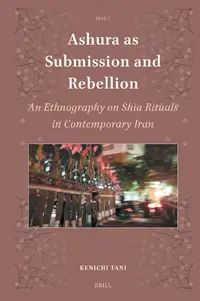
Shii News – Academic Items
1. ‘”Political jurisprudence” in HTS, IS and Al-Qaeda texts: competing visions of Islamic government’
J S Islam, M S Siyech,
Politics, Religion and Ideology, 2025 (26/4)
https://www.tandfonline.com/doi/full/10.1080/21567689.2025.2606088
2. Online BRISMES event
What’s in an Archive? The Colonial and Anticolonial Afterlives of MENA Archives
Tuesday, 27 January 2026, 3-4:30pm (GMT)
Info and registration:
https://www.brismes.ac.uk/events/outreach-and-pedagogy/mena-archives
3. Imagining the Lūṭīand the people of Lūṭ
Jonny Lawrence
Journal of the Royal Asiatic Society, Volume 35 / Issue 4, October 2025, pp 985 – 1009
doi: 10.1017/S1356186325101089 Published Online on 14 November 2025
4. Spring 2026 funding: Laura Bassi Scholarship
The Laura Bassi Scholarship was established in 2018 with the aim of providing editorial assistance to postgraduates and junior academics whose research focuses on neglected topics of study, broadly construed. The scholarships are open to every discipline and the next round of funding will be awarded in Spring 2026
Spring 2026
Application deadline: 8 March 2026
Results: 20 March 2026
All currently enrolled master’s and doctoral candidates are eligible to apply, as are academics in the first five years of full-time employment. Applicants are required to submit a completed application form along with their CV through the application portal by the relevant deadline. Further details, including previous winners, and the application portal can be found at: https://editing.press/bassi
5. Companions of the Sun:
History and Mystery of Iranian Sacred Dance, Music, and Ritual
By Farima Berenji, PhD
ISBN: 978-1-963433-08-1
Sacred Dance/ Iranian/Persian | Paperback
Paper: 420 pages, 6 X 9, $29.95
See http://farimadance.com/companions-of-the-sun
6. Khamseen 2026 Graduate Student Presentation Award
Khamseen: Islamic Art History Online offers talks and other resources to support teaching, learning, and research in Islamic art, architecture, visual culture, and related fields. Since the website’s launch in Fall 2020, new contributions by scholars in the field have grown our catalogue.
Khamseen‘s Graduate Student Presentation Award enables graduate students to feature their expertise and contribute a talk to Khamseen. This year, graduate students may partner with a mentor to collaborate on a presentation.
For this year’s Khamseen Graduate Student Presentation Award, we thus invite:
- PhD candidates (ABD) to submit a script of ca. 1,500 words and accompanying Powerpoint slides for a Topic presentation.
or
- A team consisting of a PhD student and a mentor (professor, curator, librarian, or more senior colleague) to submit a script of ca. 1,500 words and accompanying Powerpoint slides for a Topic, Term, or Hands-On presentation.
The award recipient(s) will work with our team to revise and then produce their presentation, and they also will receive a prize of $500 upon their talk’s launch on the Khamseen website.
Submission Guidelines:
Applications due: April 13, 2026
Notification of decisions: June 1, 2026
Eligibility:
PhD candidates (ABD) and advanced PhD students in their third year or above (for doctoral programs without candidacy) enrolled in a degree-granting program in Islamic art and allied fields. If submitting a collaborative presentation with a mentor, graduate students should be enrolled in a PhD program. We do not accept applications from undergraduate and Masters students.
Application Procedures:
Candidates should submit a polished script of ca. 1,500 words and accompanying Powerpoint slides for a Topic talk or, if in collaboration with a mentor, a Topic, Term, or Hands-On presentation following Khamseen‘s Guidelines. Additionally, applications should include a 3-5 sentence synopsis of the Topic or Hands-On presentation (note: this is not necessary if submitting a Term presentation), a 2-page CV, and a note of support from an advisor (e.g., a dissertation committee member) if the talk is submitted solely by a PhD candidate.
Please submit materials to TeamKhamseen@umich.edu; notes of support by advisors and queries by candidates also should be sent to TeamKhamseen@umich.edu.
URL
https://asia.si.edu/research/publications/seto-and-mino-ceramics-2026/
7. CFP: Ephemera & Place in the Ancient, Medieval, and Early Modern Worlds
Graduate Conference at Yale University
Department of History of Art
Friday, April 17, 2026
Co-organizers: Blair Betik and Nicole Boyd, Ph.D. Candidates
Keynote Speaker: Professor Abhishek Singh Amar (Hamilton College)
Artists and architects of the ancient, medieval, and early modern worlds worked in anticipation of human action. Altars in Greco-Roman sanctuaries; frescoes in Renaissance villas; screen paintings in East Asian court complexes; and figurines in Mesoamerican tombs were all designed to enrich, animate, and accommodate an assortment of activities, including religious rituals, theatrical performances, diplomatic gatherings, and celebrations. Though these fleeting phenomena are known to art historians thanks to textual, visual, and material evidence, they test the limits of art historical inquiry, which has traditionally prioritized what is enduring, complete, and visible.
Ephemera & Place will bring together graduate students to explore how built spaces and site-specific artworks dating up to the year 1700 shaped and were shaped by ephemeral events. Recent scholarship has emphasized the “global” diffusion and transformation of artistic objects, techniques, forms, and subjects. This conference instead foregrounds the dynamic tensions which emerged in particular places across geographies in the pre-modern world as art and activity converged.
The event invites papers by graduate students across institutions and disciplines which consider:
- Methodologies for studying and representing ephemeral events in situ.
- The traces left on artistic and architectural programs by impermanent events.
- The way pre-modern art or architecture was designed with specific events in mind.
- How the experience of pre-existing art and architecture shaped rituals and events.
To submit: please send a brief abstract (around 300 words), a CV, and a short biographical statement to ephemera.place2026@gmail.com by February 1, 2026
Important Dates:
- February 1, 2026 → *new deadline to submit
- Early February, 2026 → *notification of acceptance
- April 17, 2026 → date of conference
8. Online Roundtable – Healthcare Architecture in Islamic Traditions/Translations – 7 March 2026
Please join the 2026 International Journal of Islamic Architecture (IJIA) Dialogues online roundtable on the theme “Healthcare Architecture in Islamic Traditions/Translations,” taking place on 7 March 2026.
This annual Dialogues session explores how Islamic societies have shaped health-conscious architecture, from traditional practices to responses to epidemics and pandemics. Cansu Değirmencioğlu, Sara Honarmand Ebrahimi, and Kamyar Salavati will join IJIA Assistant Editor Deniz Avci for a discussion on culturally responsive approaches to healthcare design across hospitals, domestic spaces, and urban environments.
Join us for an interdisciplinary conversation on architecture, health, hygiene, and care in Islamic contexts.
7 March 2026 | 15:00–16:30 GMT / 6:00–7:30 Pacific / 9:00–10:30 Eastern
Register via Zoom:
https://us06web.zoom.us/j/83691919135?pwd=nNd8AKf7uZvzV3MKBezfZrvzNvevXD.1
URL
https://us06web.zoom.us/j/83691919135?pwd=nNd8AKf7uZvzV3MKBezfZrvzNvevXD.1
9. Rørbye & Bindesbøll.
The Journey to Constantinople
David Collection, Copenhagen, Denmark
5 February 2026 – 23 August 2026
In December 1835, the steamship Levant cuts through cold winter winds as two Danish artists stand on deck, gazing toward the horizon. Ahead lies Constantinople: the great metropolis situated between East and West. For the painter Martinus Rørbye (1803–48) and the architect Gottlieb Bindesbøll (1800–56), their encounter with the city would mark a decisive turning point.
Two Artists Abroad
Rørbye and Bindesbøll crossed paths in Italy in the mid-1830s during their prolonged study tours abroad. After a stay in Naples, they decided to continue travelling together to Greece, which had recently gained independence from Ottoman control. From there, they were unexpectedly given the opportunity to travel on to Constantinople in the Ottoman Empire – an unusual destination for two Danish artists at the time.
They arrived in Constantinople (today Istanbul) in December 1835 and stayed for six weeks, producing a remarkable number of sketches. Rørbye focused on the life of the city: coffee houses, public fountains, and the crowds around the great mosques. Bindesbøll, by contrast, concentrated on architecture – its ornamentation, colours, and structures – often depicted in precise details rather than monumental overviews. On 1 February 1836, they left the city.
The journey to Constantinople proved transformative. Rørbye returned home and created a series of Orientalist paintings that quickly gained him recognition. For Bindesbøll, the impact of the journey was subtler, yet deeply embedded in his architectural work. His encounter with Ottoman ornamentation and polychromy played a significant role in shaping his highly personal style, most notably in Thorvaldsen’s Museum.
The Exhibition
With Rørbye & Bindesbøll. The Journey to Constantinople, the David Collection invites visitors to embark on this shared journey. The exhibition focuses on the stay in Constantinople as a clearly defined yet pivotal chapter in both artists’ careers.
Through travel sketches and a selection of later paintings, the exhibition traces the course of the journey and the motifs that preoccupied the artists. The exhibition combines a partly chronological structure with thematic sections, and reveals how experiences from the journey were processed and transformed after their return to Denmark. At the same time, it tells a broader story about artistic inspiration and about how shared experiences and mutual observation can shape very different artistic expressions.
Works and Publication
The exhibition offers a rare opportunity to see works that have never been shown in combination, including several of Bindesbøll’s sketches that are exhibited for the first time. Loans have been secured from some of the country’s most important museums and institutions, as well as from private collections.
In connection with the exhibition, a richly illustrated book will be published in collaboration with Strandberg Publishing, featuring contributions by Mogens Pelt, Peter Thule Kristensen, Jesper Svenningsen, Jakob Skovgaard-Petersen, and Anette Lindbøg Karlsen. In the event program David’s Bazaar, visitors can also learn more about both the exhibition and present-day Turkey.
Dates: 5 February – 23 August 2026
For press images and further information:
m.vindahl@davidmus.dk
10. Lecture – “Framing Time and Space in Transcultural Dialogue: The Jāmiʿ al-Tawārīkh and the ‘Pictorial Turn’ in Ilkhanid Mongol Book Art,” Xinyu Liang, Virtual Islamic Art History Seminar Series, January 27
The first talk for the Virtual Islamic Art History Seminar Series spring 2026 semester will take place on Tuesday, January 27, at 12:00 New York / 17:00 London / 20:00 Istanbul.
Xinyu Liang (Metropolitan Museum of Art) will present “Framing Time and Space in Transcultural Dialogue: The Jāmiʿ al-Tawārīkh and the ‘Pictorial Turn’ in Ilkhanid Mongol Book Art.”
To attend, please register in advance here: https://wellesley.zoom.us/meeting/register/wo1hZhtqTDybICFJVwHpqA
Upon registration, you’ll receive the link to access the lecture.
As always, you can find a full schedule of upcoming talks and register for our list-serv on our website at viahss.org. Although not every talk is recorded, we also have recordings of several recent talks available on the VIAHSS Vimeo page at vimeo.com/viahss. Lastly, you can follow us on Instagram at @theviahss to stay up to date on upcoming events!
Contact Information
Drs. Alexander Brey, Jaimee Comstock-Skipp, and Rachel Winter
Contact Email
URL
11. Arabic Seminars with Kevin Blankinship 1/29 on al-Maʿarrī’s Fables
Please find below information regarding our first meeting of the semester with Professor Kevin Blankinship (Brigham Young University) next Thursday (1/29) at 7pm EST in Faculty House. The talk is titled: “The Serpent and the Fox, and the Bird in the Jar: Two Eye-Popping Fables by al-Maʿarrī.”
Please note that due to new regulations, non CUID holders will not be allowed into Faculty House without prior notice. If you intend to be present in-person and do not have a Columbia ID, please RSVP ASAP by responding to this message. If we don’t receive your RSVP we will not be able to let you in. You should receive a QR code before Wednesday morning–if not, please reply to this message. The talk will be live streamed here on ZOOM for guests who can’t make it in person.
We will begin at 7:00 pm. If you would like to join the speaker for dinner at 6:00 pm at Faculty House please RSVP to the seminar’s rapporteur (rma2152@columbia.edu). The cost of dinners is $30, payable via card or check.
COLUMBIA UNIVERSITY SEMINAR IN ARABIC STUDIES
The Serpent and the Fox, and the Bird in the Jar: Two Eye-Popping Fables by al-Maʿarrī
Thursday, January 29, 2026
7 pm EST at Faculty House
Kevin Blankinship
12. Opportunity: Library of Congress Asian Division – Librarian In Residence 2026
We have an open call for a short-term Librarian-in-Residence (LIR) with a specific focus on community engagement utilizing the Asian collections: https://www.loc.gov/item/internships/librarian-in-residence/. This is one of seven LIR positions this year, and these are designed for students who earned or will complete their Master’s degree in library and information science from an ALA-accredited program between December 1, 2024 and June 13, 2026. The Asian Division project is the following:
- 4. Community Engagement: Researcher and Collections Services/General and International Collections Directorate/Asian Division. The Librarian-in-Residence (LIR) in the Asian Division (AD) will assist with AD’s initiative to engage new, younger, and online audiences, including students and young professionals. AD has traditionally excelled in serving established researchers such as doctoral students, faculty, and scholars at domestic and international institutions. An LIR position focusing on community engagement will help the division broaden its user base by identifying potential new segments and developing targeted outreach strategies to amplify awareness among younger audiences. Working closely with AD librarians and specialists, the LIR will identify content likely to appeal to younger users and will compile LibGuides as the go-to venue for connecting with and serving them. The LIR will also collaborate with the Informal Learning Center and the Office of Communications to determine effective channels and platforms for outreach. Strengthening AD’s social media presence will be another key responsibility, including creating content that resonates with target audiences. The LIR will participate in staff meetings, briefings, and tours; interact with researchers, patrons, and event attendees; and gather insights and feedback to guide the design and content of orientations and instructions. The LIR may also contribute posts to the 4 Corners of the World blog. This project strongly supports the General and International Collections Directorate’s performance goal to increase users’ engagement with services and expertise. It further complements the Researcher Experience Initiative by offering a model for language-based collections. The focus on Asian-language content may serve as a framework adaptable to other collections broadly. Candidates should be able to read in one of these languages: Chinese, Japanese, Korean, South Asian languages (examples: Bengali, Hindi, Tamil, Sanskrit, Urdu), Southeast Asian languages (examples: Balinese, Burmese, Indonesian, Javanese, Khmer, Lao, Malay, Tagalog, Thai, Tetum, Vietnamese); Tibetan; Mongolian.
See the link above for more information, including information sessions on Friday January 16 at 12pm Eastern; Wednesday January 21 at 4pm Eastern; and Monday February 2 at 12pm Eastern. Note that the deadline is February 13, 2026. Please feel welcome to reach out to librarians-in-residence@loc.gov with questions, too.
All best,
Charlotte Giles, PhD
South Asia Specialist, Asian Division
Library of Congress
13. ONLINE Lecture “Erased in Solidarity: Middle Eastern Women and the US Progressive Imaginary” by Dr. Esha Momeni, Middle East Librarians Association (MELA), District of Columbia, 28 January 2026, 18:00 – 19:00 CET
The scholar will discuss how Middle Eastern women’s experiences and political demands are sys-tematically erased within contemporary US progressive discourse on recent Middle Eastern conflicts. Drawing on two decades of navigating US academia as a Middle Eastern woman and child of war, Dr. Momeni examines progressive responses to the Woman, Life, Freedom uprising in Iran and the war on Gaza, demonstrating how gender and class analyses are conspicuously absent from these conversations.
Information and registration: https://tinyurl.com/u46vb699
14. ONLINE Seminar “The Color Black: Enslavement and Erasure in Iran” by Beeta Baghoolizadeh (Middle East Institute, Columbia University), University of Turin, 29 January 2026, 17:00 CET
This is part of the Seminar Series “Histories Across the Red Sea and the Persian Gulf”
Information and registration: https://zenodo.org/records/18173844
15. HYBRID Book Talk “Borícua Muslims: Everyday Cosmopolitanism among Puerto Rican Converts to Islam” by Ken Chitwood (University of Bayreuth), Berlin Graduate School Muslim Cultures and Societies, 2 February 2026, 16:15 – 17:45 CET
Drawing on years of ethnographic research and more than a hundred interviews, Ken Chitwood tells the story of Puerto Rican Muslims as they construct a shared sense of peoplehood through everyday practices. Borícua Muslims thus provides a study of cosmopolitanism as a reality that complicates scholarly and public conversations about race, ethnicity, and religion in the Americas. Expanding the geography of global Islam, Borícua Muslims is an insightful reckoning with the manifold entangle-ments of identity amid late-modern globalization.
Information and registration: https://tinyurl.com/3pj8m8wy
16. ONLINE “Networking Meeting for Early Career Scholars in Middle East Studies”, Organised by the “German Middle East Studies Association (DAVO)”, 9 February 2026, 12:00 CET
The meeting offers an opportunity to connect with peers, share research ideas, and collaboratively shape the program of the Werkstattgespräche at this year’s DAVO Congress in Munich (September 2026). Your perspectives and contributions are essential: Together, we aim to create a productive forum where you can receive valuable feedback, refine your research, and advance your academic career. The meeting also provides a chance to familiarize yourself with the German academic land-scape and expand your professional network.
Information and registration: https://tinyurl.com/23f6kmcz
17. New Date of the “Congress of the German Middle East Studies Association (DAVO)”, Ludwig-Maximilians-University Munich, 10-12 September 2026
After members’ feedback that the Oktoberfest begins shortly after the originally planned date, making hotel accommodation scarce and expensive, we have decided – together with the local organisers – to bring the DAVO Congress forward by one week. .
Information: https://tinyurl.com/37ycykmr
18. Workshop “Wine in the Middle East and North Africa: Images, Places, Markets, and Brands of a Contested Commodity”, Organised by Steffen Wippel, Freie Universität Berlin, 15-17 March 2027
The workshop aims to better address the still insufficient state of research by studying the Middle Eastern world of wines and vines, both past and present. A decisive theme of the workshop is to consider the region- and country-specific socio-cultural and political contexts and conditions that are usually given little consideration in wine studies. These contexts and conditions can impede the cul-tivation, trade, and consumption of wine, resulting in practices of dissimulation and invisibilisation.
Deadline for abstracts: 30 March 2026. Information: https://tinyurl.com/8r6ck9bt
19. Postdoctoral Fellowship (1 Year) on the Impact of U.S. Economic and Financial Policies on the Southwest Asia and North Africa Region, American University of Beirut
Eligible candidates should hold a PhD in Economics or a closely related field. The fellowship is aimed at researchers with a background in macroeconomics, international trade, finance, or development economics. Applicants should not have held, nor currently hold, a professorial position at another institution.
Deadline for applications: 1 February 2026. Information: https://apply.interfolio.com/178844
20. Postdoctoral / Post-professional Fellowship (10 Months) for Research in Islamic Art, Architecture,
Urbanism, Design and Preservation at the Aga Khan Program for Islamic Architecture, Massachusetts Institute of Technology
The program is open to scholars with a Ph.D. and practitioners in any field related to architecture with at least three years of experience. Relevant fields include the history of art, architecture, landscape, and urbanism; as well as contemporary art, design, landscape, heritage studies, urban planning, anthropology, and archaeology.
Deadline for applications: 31 March 2026. Information: https://tinyurl.com/yrzpwtj6
21. Financial Support for the Presentation of Research and Recommendations that Facilitate Policy-making in the Euro-Mediterranean Region by the “Anna Lindh Foundation (ALF)”
The Programme seeks to enhance the capacity of academic institutions to translate knowledge into visible, rigorous and actionable policies and practices that benefit civil society and tackle pressing challenges. Selected authors will receive a lump sum of 700 euro net for the production of a Brief and up to 500 euro net for the organisation of a dissemination event in their community of practice (“Academic Dialogue”) to foster peer discussions, intergenerational exchange, and visibility of their research.
Deadline for applications: 23 February 2026. Information: https://tinyurl.com/p3jbe945
22. Summer School “Critical Muslim Studies: Decolonial Struggles and Liberation Theologies”, Granada, Spain, 15-20 June 2026
We will have a dynamic faculty team for the 2026 program, bringing together diverse perspectives and approaches within Critical Muslim Studies – including Decolonial thought, Muslim women’s lib-eration perspectives, Islamic theology of liberation, and traditional Islamic scholarship.
Deadline for applications: 1 February 2026. Information: https://www.dialogoglobal.com/granada/
- January 24, 2026
- 0 Comment
Shii News – ‘Shaping the Dawn of Islam in Germany (1983-1989)’ – J C Gümmer
Shaping the Dawn of Islam in Germany (1983-1989): Al-Fadschr, the Twelver Shiite Magazine of the Islamic Center Hamburg
Oriento Moderno
https://brill.com/view/journals/ormo/105/1-2/article-p183_7.xml
- January 23, 2026
- 0 Comment
Shii News – Academic Items
1. CfP: Subalterns in the Persianate world in the Zand and Qajar periods
3nd workshop: RECOVERING ‘LOST VOICES’:
THE ROLE AND DEPICTION OF IRANIAN/PERSIANATE SUBALTERNS FROM THE 13TH CENTURY TO THE MODERN PERIOD
A multi-year research project funded by the British Institute of Persian Studies (BIPS).
The third workshop on subalterns across the entire Persianate world in the Zand and Qajar periods will be held at the University of Edinburgh, UK, on 27-29 October, 2026.
Papers from PhD students, ECRs and unaffiliated scholars – for whom limited financial support may be available – are encouraged.
Read more at:
http://www.shii-news.imes.ed.ac.uk/projects/the-subalterns-project/
RSVP to anewman@ed.ac.uk by Friday, 12 June, 2026.
2. Massachusetts Institute of Technology – MIT AKPIA 2026-2027 POSTDOCTORAL/POST-PROFESSIONAL FELLOWSHIPS FOR RESEARCH IN ISLAMIC ART, ARCHITECTURE, URBANISM, DESIGN, AND PRESERVATION
3. Le CeRMI a le plaisir de vous convier à la prochaine séance du séminaire “Sociétés, politiques et cultures du Monde iranien”, qui se tiendra le jeudi 29 janvier 2026, 17h-19h, en salle 3.03 à l’INaLCO(65 rue des Grands Moulins, Paris XIII, 5eétage).
Nous sommes heureux d’accueillir notre collègue M. Marc Toutant, chargé de recherche au CNRS (CETOBaC), pour une conférence intitulée : Le Tuḥfat al-ṭālibīn, une grammaire moghole du turc oriental. Enseignements philologiques, culturels et politiques.
Résumé :
Le Tuḥfat al-ṭālibīn est une grammaire du turc oriental (ou « chaghatay ») rédigée en persan à la fin du xviiie siècle par un certain Ḥayāt ‘Alī Dihlawī pour un dignitaire moghol. Conservé uniquement sous forme manuscrite dans plusieurs bibliothèques du sous-continent, l’ouvrage n’a jusqu’ici fait l’objet d’aucune étude. Parfois mentionnée brièvement dans les catalogues de manuscrits, cette grammaire fait pourtant partie des rares témoignages directs qui peuvent nous indiquer le rapport que les descendants de Babour (1483-1530), le fondateur des Grands Moghols, entretenaient avec leur langue maternelle. Bien que le persan se fût imposé définitivement dès le règne d’Akbar (1556-1605), il existe tout un ensemble de traités grammaticaux et lexicaux qui montrent que le turc conservait une certaine importance pour ces Timourides indiens (Babur était issu du lignage de Tamerlan), qu’il s’agit à présent de préciser. L’autre intérêt du Tuḥfat al-ṭālibīn est qu’il inclut de nombreuses citations de poètes centrasiatiques et fait à ce titre figure de répertoire culturel.
Fondée sur l’examen de trois copies provenant respectivement de Hyderabad, de Rampur et d’Islamabad, cette présentation aura ainsi pour objectif de répondre aux questions suivantes : comment écrit-on une grammaire du turc en persan durant la période moghole ? Que nous disent les nombreuses illustrations poétiques du Tuḥfat al-ṭālibīn à propos de la réception de la culture centrasiatique en Inde à la fin du xviiie siècle ? De quelle façon le traité de Ḥayāt ‘Alī Dihlawī rappelle-t-il le lien des Moghols avec la dynastie de Tamerlan ?
Orientations bibliographiques :
– Alam (M.). 2015. “Mughal Philology and Rūmī’s Mathnavī”. World Philology, dir. par S. Pollock, B. A. Elman, K. Chang. Cambridge : Harvard University Press. 178-200.
– Guizzo (D.) 2002. I tre classici della lessicografia persiana d’epoca moghul: Farhang-i Ğahāngīrī, Burhān-i Qāṭiʿ e Farhang-i Rašīdī. Venise : Cafoscarina.
– Péri (B.) 2020. “Turki Language and Literature in Late Mughal India as Reflected in a Unique Collection of Texts”. Turkish History and Culture in India. Identity, Art and Transregional Connections, dir. par A. C.S. Peacock & R. P. McClary. Leyde : Brill. 367-387.
– Siddiqi (W.H). 1997. Fihrist Nuskhahā-yi khaṭṭī fārsī, Kitābkhāna-yi Rażā – Rāmpūr, Delhi: Diamond Printers.
– Turan (F.). 2009. “Turkic grammar books written in Mughal India during the 18th and 19th centuries”. Turkic Languages 13. 163-171.
Vous retrouverez l’intégralité du programme 2025-2026 du séminaire mensuel de recherche “Sociétés, politiques et cultures du Monde iranien” en ligne sur le site du CeRMI: https://cermi.cnrs.fr/seminaires-de-recherche/societes-politiques-et-cultures-du-monde-iranien-2025-2026/
Dans l’attente du plaisir de vous retrouver à l’occasion de ces séances, qui se déroulent en présentiel sur le site de l’INaLCO (65 rue des Grands Moulins, Paris XIII), nous vous adressons tous nos vœux les meilleurs pour la nouvelle année, à vous et à vos proches.
En ces temps si sombres, nos pensées sont avec les Iraniens. Puisse 2026 apporter paix et justice à nos amis et collègues en Iran, et à travers le monde.
Bien cordialement,
Les organisateurs –
Simon Berger et Justine Landau
Contact: justine.landau@sorbonne-nouvelle.fr
- January 20, 2026
- 0 Comment
Shii News – Abstract Deadline extended: ‘Conference on Shi‘i Studies’ to 31.1.26
Due to current events (including the inaccessibility of some digital libraries and research databases), the deadline for submitting abstracts for the 11th Annual Conference on Shi‘i Studies has been extended to 31 January 2026.
If you have not yet submitted an abstract, you may do so at: https://eur02.safelinks.protection.outlook.com/?url=https%3A%2F%2Fislamic-college.ac.uk%2Fcall-for-papers-eleventh-annual-conference-on-shii-studies%2F&data=05%7C02%7C%7C9fc742b73b8d4708611e08de55108f93%7C2e9f06b016694589878910a06934dc61%7C0%7C0%7C639041728474672666%7CUnknown%7CTWFpbGZsb3d8eyJFbXB0eU1hcGkiOnRydWUsIlYiOiIwLjAuMDAwMCIsIlAiOiJXaW4zMiIsIkFOIjoiTWFpbCIsIldUIjoyfQ%3D%3D%7C80000%7C%7C%7C&sdata=AoxRsJQ2N%2FOhTrMPv9%2B1j5hX14Ej0RGfE2%2FoYRq0SD0%3D&reserved=0
Conference information:
Date: 9 May 2026
Location: In-person at The Islamic College (London, UK) and online
Papers are welcome on any aspect of Shiʿi studies, including but not limited to theology, philosophy, mysticism, law and jurisprudence, contemporary issues, history, anthropology, sociology, art, literature, the ḥawzah, ritual practice, and interfaith/interfaith studies. Papers may address any branch of Shiʿism.
Special theme: Shiʿism and the study of the Qur’an. This year, we are hosting special panels on Shiʿi approaches to the study of the Qur’an. We particularly encourage the submission of papers on topics such as Shiʿi approaches to Qur’anic exegesis (tafsīr), past and present; the history and compilation of the Qur’an; Qur’anic manuscripts; translations of the Qur’an, classical and modern; or any other topic pertaining the study of the Qur’an which involves a Shiʿi angle.
Publication: Presenters will have their work featured in conference proceedings and/or an edited volume on the Qur’an published by ICAS Press, offering an opportunity for quick, quality publication of research.
Submit an abstract at: https://eur02.safelinks.protection.outlook.com/?url=https%3A%2F%2Fislamic-college.ac.uk%2Fconference-on-shii-studies-submit-an-abstract%2F&data=05%7C02%7C%7C9fc742b73b8d4708611e08de55108f93%7C2e9f06b016694589878910a06934dc61%7C0%7C0%7C639041728474716909%7CUnknown%7CTWFpbGZsb3d8eyJFbXB0eU1hcGkiOnRydWUsIlYiOiIwLjAuMDAwMCIsIlAiOiJXaW4zMiIsIkFOIjoiTWFpbCIsIldUIjoyfQ%3D%3D%7C80000%7C%7C%7C&sdata=MkRjGvls%2Fat5a1FW2Ux8r2BwRtkeIpyOQd6izEspLDU%3D&reserved=0
E-mail enquiries to: shiistudies@islamic-college.ac.uk
Abstract deadline: Due to current events, the deadline has been extended to 31 January 2026
Online presentations: Limited slots for online presentations are available. When submitting your abstract, indicate whether you would like to present in-person or online. This option cannot be changed.
- January 19, 2026
- 0 Comment
Shii News – Academic Items
1. Della Valle’s Travels Through Persia, 1617-1622, Translated by Willem Floor
https://mage.com/travels-in-persia-1617-1622-by-pietro-della-valle/
2. The British Society for Middle Eastern Studies invites submissions of interest for our upcoming conference‘War, Empire, and Sabotage in an Age of Genocide,’ co-hosted with the SOAS Middle East Institute. The conference will take place at SOAS University of London on 23-25 June 2026.
The submission deadline is next Sunday, 18 January 2026 at midnight (UK time).
In addition to submissions aligned with the conference theme, we welcome papers on a broad range of topics related to Middle East Studies. Relevant fields include, but are not limited to, politics, culture & society, literature, anthropology, economics, history, linguistics, and translation studies, with a focus on the MENA region. We welcome proposals for Panels, Roundtables, Individual/Co-authored Papers, and Creative Interventions.
https://www.brismes.ac.uk/conference/about-the-conference/conference-theme
3. Advanced Persian through History of Art Texts
About the course:
This 12-week advanced Persian course strengthens students’ ability to read and analyze sophisticated Persian prose through foundational texts on the history, theory, and practice of Iranian art. Focusing on Persian treatises and art-related writings—such as manuals of calligraphy and painting, artists’ biographies (tazkiras), architectural descriptions, and courtly reflections on aesthetics—the course trains students to engage directly with technical vocabulary, stylistic conventions, and evaluative discourse in art history. Emphasis is placed on close reading, genre awareness, and contextual interpretation. The course is especially beneficial for advanced Persian learners, graduate students, and scholars of art history, Islamic art, Iranian studies, and manuscript culture who seek direct access to Persian art discourse in original sources.
Course Details:
Schedule: Fridays, 30 January 2026 – 10 April 2026
Time: 09:00–10:00 AM (US Pacific), 12:00–13:00 (US Eastern), 06:00–07:00 PM (Central European)
Format: 24 online sessions
Class days and times may be adjusted in accordance with the request of enrollees.
Registered participants will receive full access to recorded session videos and all course materials.
Contact Email
URL
https://www.ghandeparsi.com/winterschool/arttexts
4. The American Center of Research in Amman Archaeological Ceramics Courses, Summer 2026
The American Center of Research is pleased to announce two new courses for 2026, taught by Assistant Professor Sarah Wenner:
* Introduction to Classical Period Ceramics of Southern Jordan and Northern Saudi Arabia: Introductory
* Introduction to Classical Period Ceramics of Southern Jordan and Northern Saudi Arabia: Advanced.
APPLICATION DEADLINE: March 15, 2026.
For further information, please visit the course webpage:
https://acorjordan.org/ceramics-field-schools-2026/
5. Doctoral and Postdoctoral Fellowships at the Orient Institut Beirut (OIB)
6. Between Veil and Vanguard: Ideological Battles over Afghan Femininity
Sayed Hassan Akhlaq
Review of Middle East Studies, Volume 59 / Issue 2, December 2025, pp 55 – 67
7. MESA 2026 Call for Papers Opens
https://mesana.org/annual-meeting/call-for-papers
Deadline for abstracts: 17 February 2026.
8. ONLINE Webinar Series “Empowering Muslim Women in Scientific Research” on “Gender Attitudes and Trends over the Last Decade: Examining Female Labor Force Participation” by Prof. Amaney Jamal (Princeton), University of Manchester & University of Sharjah, 28 January 2026, 14:00 – 15:30 CET
Female labour force participation in MENA has been and continues to be quite low when com-pared cross-nationally. Using data from the Arab Barometer, this presentation will examine ap-proximately 20 years of data capturing societal attitudes from across MENA on female employ-ment and empowerment. What progress has and has not been made over the last two decades?
Information and registration: https://tinyurl.com/mr2tsm6f
9. HYBRID Book Launch: “The Ascetic Qur’an and Its Kharijite Readers” by Nora K. Schmid (University of Tübingen), January 29, 2026, 15:00 – 17:00 CET
This book reframes Islamic asceticism away from premodern zuhd literature to the ascetic dimen-sion of the Qur’an and its Kharijite reception. Situating the asceticism of the Qur’an in late antiq-uity, it shows how interiorizing and enacting scripture shaped early Islamic culture. Respondents are Sean Anthony, Adam Gaiser, and Sebastian Guenther.
Information and registration: https://www.qasla.eu/book-launch-nora-schmid
10. European Workshops in International Studies (EWIS): “Diaspora Diplomacy Reconsidered: Mapping Possible Futures” (Focus MENA Countries), Izmir University of Economics, 1-3 July 2026
This workshop engages with the concept and practice of “diaspora diplomacy”, exploring how diasporas develop their own diplomacies and participate in a wider geopolitical worldmaking be-yond the state, and considering the geographies of their diplomatic practices. From state-led efforts to mobilise migrants as cultural ambassadors, to transnational diaspora political participation, “diaspora diplomacy” operates in spaces where international relations and everyday life intersect.
Deadline for abstracts: 11 February 2026. Information: https://tinyurl.com/yc42pnsvv
11. PhD Thesis Prize of the British Association of Islamic Studies (BRAIS) on the Study of Islam and the Muslim World
This international prize is awarded annually to an outstanding doctoral thesis. English-language submissions on any aspect of the academic study of Islam and the Muslim world, past and pre-sent, including Muslim-minority societies are accepted. Applicants can be based in any country.
Deadline for applications: 30 January 2026. Information: https://www.brais.ac.uk/prize
12. International Summer Academy: “Chagatai Manuscript Reading Course”, University of Münster, 29 June – 3 July 2026
The course aims to provide the participants with advanced knowledge of one of the central lan-guages of the Islamic world through the study of primary texts. Chagatai is not only one of the most important Turkic languages but also an essential source and literary language for studying
the history of Central Asia, Afghanistan and Northwestern China. However, due to the disciplinary division of this area between Slavic Studies, Sinology, Turkic, Islamic and Iranian Studies, Cha-gatai is rarely taught.
Deadline for applications: 13 February 2026. Information: https://tinyurl.com/4kvdzbvn
13. ONLINE “Politics Beyond Politics” in the Journal “Middle East Bulletin – A Greek Review of Middle Eastern Affair”, Vol. 47, January 2026, 51 Pages
Articles: The Politics of Turkish drama series. – Growth in a Desert of Censorship? Cinema in Saudi Arabia, the UAE, and Iran. – Tourism as a Political Instrument in the Contemporary Middle East: The Cases of Israel, Turkey, Egypt and Dubai. – The use of social media during Israel-Palestinian & Iranian-Israeli conflicts. – Israeli Universities and Academic Boycott: The limits of neutrality. – Etc.
Table of content and direct access to the text: https://tinyurl.com/44zuadbm
- January 17, 2026
- 0 Comment
Shii News – Hybrid: The Islamic College – Meet the author of ‘The Fatimids: Portrait of a Dynasty’ (D Cortese, 30.1.26, 6pm UK time)
Speaker: Delia Cortese
Date: 30 January 2026
Time: 6:00 pm – 7:30 pm (London time)
Location: In-person and Online
Register at:
https://islamic-college.ac.uk/event-register/
- January 16, 2026
- 0 Comment