
Archive for February, 2022
- February 07, 2022
- 0 Comment
Shii News – Academic Items
1.Open Islamicate Text Initiative Teleconference on Feb 7
We welcome all to join the Open Islamicate Text Initiative Arabic-script OCR Catalyst Project (OpenITI AOCP) team for a public teleconference with the OpenITI AOCP technical advisory group. The focus of this meeting will be the optical character recognition tools and datasets for Persian, Arabic, Ottoman Turkish, and Urdu that the OpenITI AOCP has developed.
The conference, led by Co-PI David Smith, will provide an update on the OpenITI AOCP technical work and include brief presentations from advisory group members about their own work in OCR. We will then develop recommendations for dataset and technical development in the next phase of the project.
We will virtually gather on Monday, February 7 from 11:00 a.m. to 1:00 p.m. EST. Please register at the link below if you would like to participate. We will prepare a report of the conference proceedings as well as record video of the presentations and discussion for those unable to attend. Be sure to watch out for a second public teleconference to be held this spring, with a focus on the formation of Persian and Arabic OCR user groups and the presentation of our digital text production pipeline, eScriptorium (developed in collaboration with the eScripta project).
For more on OpenITI AOCP, a project generously funded by The Andrew W. Mellon Foundation, please see here. For any questions on the teleconference, please email John Mullan (jmullan@umd.edu) or message us on Twitter (@Open_ITI).
You are invited to a Zoom meeting.
When: Feb 7, 2022 11:00 AM Eastern Time (US and Canada)
Register in advance for this meeting:
https://umd.zoom.us/meeting/register/tJUpcOGoqT4tE9aF_DRXZEXOt5uYNd6U5Fv9
After registering, you will receive a confirmation email containing information about joining the meeting.
2. Mysticism and Ethics in Islam
Bilal Orfali, Atif Khalil, and Mohammed Rustom
3. IIS: The Ismaili Special Collections Unit (ISCU) has launched an online catalogue of special collections housed at the IIS, featuring information on over 2,000 items, including manuscripts, artefacts (such as coins, coin weights, medals and other memorabilia), rare and special printed materials (including periodicals), photographs and archival materials.
Dr Wafi Momin, Head of ISCU, said “We are delighted to announce the launch of an online catalogue of the special collections housed at the IIS. This online catalogue represents a key milestone in making accessible the rich heritage of Ismaili communities from around the world to a varied audience including researchers, students and interested members of the public.”
For any queries about the catalogue, please contact Naureen Ali, Cataloguer and Adlib Officer, ISCU.
https://special-collections.iis.ac.uk/search/simple
4. Intellect is pleased to announce that International Journal of Islamic Architecture 11.1 is out now!
For more information about the journal and issue click here:
https://www.intellectbooks.com/international-journal-of-islamic-architecture
5. The Qur’an
Translated with a New Introduction
Translated by AJ Droge
Equinox, 2022
For more information and to order at 25% off quoting the code QT visit the book page:
https://www.equinoxpub.com/home/quran-translated/
6. The Barakat Trust has recently received a grant from the National Lottery Heritage Fundto create a new grant scheme. In each of 2022, 2023 and 2024, this scheme will offer 3 grants of £8,000 plus in-kind support for projects in the United Kingdom (UK) that use collections of Islamic art in the UK to foster greater understanding about the cultures of the Islamic world, and involve a significant element of public engagement, ideally as part of the process of making collections more accessible. The grant will be open to UK institutions with collections of Islamic art and material culture. We are particularly interested in understudied collections. The deadline for submission of applications for this year is March 31st 2022. This project will be delivered in partnership with the Islamic Art and Material Culture Subject Specialist Network and other partners.
Interested parties should contact The Barakat Trust to arrange an initial conversation about this scheme. Please email: projects@barakat.org
7. The Middle Eastern and Islamic Studies Minor at Rutgers University Newark is delighted to invite you to the first talk in the MEIS Inaugural Lecture Series on Monday February 7th, 11:30-12:50 EST, with Prof. Patricia Blessing (Art History, Princeton University), who will offer a lecture titled “Architecture and Material Politics in the Fifteenth-Century Ottoman Empire.”
Register here: HTTPS://TINYURL.COM/34AKWEN3
8. Tuesday, February 15, 2022 | 12:00 pm | Zoom
Syriac Villages in the Tur Abdin: A Microhistory of the Medieval Middle East
Marica Cassis, University of Calgary
Marica Cassis considers understudied archaeological material found in the Tur Abdin region of southeast Turkey. She will contextualize the churches as part of the network of villages and cities in the region, both in terms of the material remains and literary sources.
While scholarly work on the churches of the Tur Abdin dates back to the work of Gertrude Bell, and subsequently continued off and on through the twentieth century, the focus of most research has consistently been the churches in the region. However, churches are the heart of communities, whether villages or monasteries, and need to be considered as part of the whole. What has not been considered in detail is the importance of contextualizing churches in the villages and cities in the region, both in terms of the material remains and the literary sources.
Advance registration required. Register: https://eastofbyzantium.org/upcoming-events/
Contact Brandie Ratliff (mjcbac@hchc.edu), Director, Mary Jaharis Center for Byzantine Art and Culture with any questions.
An East of Byzantium lecture. East of Byzantium is a partnership between the Arthur H. Dadian and Ara Oztemel Chair of Armenian Art at Tufts University and the Mary Jaharis Center for Byzantine Art and Culture that explores the cultures of the eastern frontier of the Byzantine empire in the late antique and medieval periods.
9. Consider submitting your work to postmedieval: a journal of medieval cultural studies
After more than a decade of publication, the journal postmedieval has a new team of editors and a new editorial board and we are looking for contributions from the H-Mideast Medieval community!
postmedieval has long published theoretically driven scholarship on premodernity and its ongoing reverberations, and the aim of the new editorial leadership is to continue this while expanding the disciplines and subject-areas from which articles are drawn. To that end, we are actively seeking open-topic submissions from a wide variety of fields and disciplines. We’re writing in the hopes that you’ll spread the word and will also keep the journal in mind as a potential venue for your own work. We are currently seeking open-topic submissions between 6,000 and 12,000 words, accepted on a rolling basis.
To say a bit more—over the last year, the journal’s editorial team has worked to harness postmedieval’s foundations in conceptual adventure, ethical and political urgency, and stylistic experiment, while also stretching its scope to additional language traditions, geographic locales, and the work of scholars from identity groups that have not heretofore been featured consistently in our journal, or in other mainstream outlets for medieval studies. The new editorial board includes scholars working fields like Byzantine studies, art history, the Hispanophone early modern, medievalism, religious history, Jewish studies, the environmental humanities, film studies, Chinese, Arabic, Persian, Hebrew, Japanese, French, medieval Ethiopia, the Mediterranean, the Indian Ocean, Premodern Critical Race Studies, manuscript studies, and the digital humanities. We are eager to cultivate a pool of submissions that reflects such varied scholarly traditions.
In addition to the broadened content parameters of the journal, we have also imagined new scholarly genres. These include meditations on critical terms in the field, an essay-form we are calling “terms of art;” brief translations or other presentations of primary sources that extend their accessibility to wider readerships; “dialogues,” in which scholars share a conversation in print; and “reports from the field” that summarize and contextualize important field-specific discussions held at a recent symposium or exhibition. We envision these genres as supplements to the traditional essayistic articles and book-review essays that we will continue to publish and for which the journal has long been distinguished.
We encourage you to read more about these new genres, and about our vision for the future of academic publishing in medieval studies, in the free-to-view introduction to our editorial team’s inaugural issue, entitled “What Might a Journal Be?.” For remarks from some of the board members, you might have a look at this piece as well.
We hope that you will share with colleagues, students, and scholarly networks our invitation to submit new work. We can promise that all submissions will be treated with scholarly generosity and care. The editorial team embraces an ethics of peer review and publication that values the intense labor required to bring an essay to print, and we center in our review process the anti-racist and inclusive editorial practices outlined by the RaceB4Race Executive Board. Feel free to reach out to me with specific queries or ideas, and the editorial team is always happy to answer questions at our journal email address, postmedievalED@gmail.com.
10. Online Lecture- Social Fabrics: Inscribed Textiles from Egyptian Tombs
Please join us on March 11, 1:00 p.m. (EST) for a virtual lecture as curator Mary McWilliams discusses her research for The Harvard Art Museums’ exhibition Social Fabrics: Inscribed Textiles from Egyptian Tombs (January 22, 2022–May 8, 2022, University Research Gallery) looks at “tiraz” – highly prized textiles enhanced with woven, embroidered or painted Arabic inscriptions – to trace the structure of medieval Egyptian society during a transformative period. It reveals a story as interwoven and complex as these delicate objects themselves.
For more information and registration, visit: https://museum.gwu.edu/member-program-social-fabrics-inscribed-textiles-egyptian-tombs
(Ed note – Membership required.)
11. MEM Panel Sponsorship at MESA 2022
As part of the efforts of Middle East Medievalists (MEM) to raise the profile of medieval studies at MESA, the MEM Board of Directors announces our 2022 call for panel sponsorship. MEM is a MESA affiliate and thus may sponsor up to three panels at each annual meeting. MEM sponsorship does not guarantee inclusion on the program, nor does it come with financial support. However, sponsorship highlights a panel to the MESA program committee, and, if it is accepted, the panel will appear as MEM-sponsored on the final program. We will also publicize MEM-sponsored panels to our membership and in MEM’s annual “Medieval MESA” circular. We encourage all medievalists organizing panels for MESA 2022 to send us abstracts for both individual papers and the panel as a whole, as well as the names of participants, by February 7, 2022, so the MEM board may consider them for sponsorship before the MESA submission deadline. Please email your materials and/or any questions to Rob Haug (haugrt@ucmail.uc.edu).
12. Call for Papers for:
Travellers in Ottoman Lands: The Balkans, Anatolia and Beyond
Wednesday 24 August – Friday 26 August 2022
The Faculty of Islamic Studies of the University of Sarajevo, Bosnia and Herzegovina
An international three-day seminar organised by ASTENE (the Association for the Study of Travel in Egypt and the Near East), in association with the Faculty of Islamic Studies of the University of Sarajevo, Bosnia and Herzegovina.
Topics to be considered include: • travellers to Bosnia, the Balkans and the wider Ottoman world from other parts of Europe and elsewhere• travellers from the region to other parts of Europe and the Middle East• pilgrims and pilgrimage within the region• travel from the Balkans to the holy places of the Middle East, both Muslim and Christian• artistic and literary representations of the Balkans and other parts of the Ottoman world• the horticultural legacy of the region.
Proposals should be submitted (in English) to: ottomanlandsastene@gmail.com by 30 April 2022 at the latest.
For more details, including confirmed Keynote Speakers, proposal submissions and registration details, please go to:
https://www.astene.org.uk/current-events/travellers-in-ottoman-lands
13. UCLA:
Bilingual Lecture Series – Love at Eighty Film Screening and Panel Discussion
Sunday, March 13, 2022 at 11:30am Pacific Time via Zoom
Film in Persian with English Subtitles/Panel in Persian
Simin Behbahani: Love at Eighty is a retrospective of Simin Behbahani’s life and unique poetry. Largely in her own words, using family and period photos, interviews with noted poets and critics, this portrait traces her poetic development from her family roots, modern poetry movement, and reinventing Ghazal to explore the social, political, cultural, and moral issues of Iranian society.
14. Webinar on “Analyzing the Middle East Social Dynamics Using NLP and Big Data Methods”
Prof. Eric Atwell is inviting us all to join this online panel webinar on “Analyzing the Middle East Social Dynamics Using NLP and Big Data Methods” – as part of the CHSS Middle East Conference 2022.
Sunday Feb 6, 2022, 18:00-19:30 Qatar Time (15:00- 16:30 UK GMT)
Registration form to get the Webex links: https://lnkd.in/dXJQnbJC
Full Conference Program: https://www.hbku.edu.qa/en/mec/agenda
Chair: George Mikros, Professor in Digital Humanities, Middle Eastern Studies Department (HBKU)
Moderator: Wajdi Zaghouani, Assistant Professor in Digital Humanities, Middle Eastern Studies Department (HBKU)
- Kareem Darwish, Principal Scientist, Principal Scientist, aiXplain Inc:
“News Consumption in Time of Conflict: 2021 Palestinian-Israel War as an Example”
2. Muhammad Imran, Senior Scientist, Qatar Computing Research Institute (QCRI):
“Two Billion Multilingual COVID-19 Tweets with Sentiment, Entity, Geo, and Gender Labels”
3. Walid Magdy, Reader, School of Informatics, The University of Edinburgh:
“Understanding the Arab Region from Social Media: What can we learn?”
4. Eric Atwell, Professor of Artificial Intelligence for Language, School of Computing, University of Leeds:
“Understanding the Quran: A Challenge for Artificial Intelligence”
If you have any questions, please feel free to email : wzaghouani@hbku.edu.qa
- February 05, 2022
- 0 Comment
Shii News – Journal of Safavid Studies
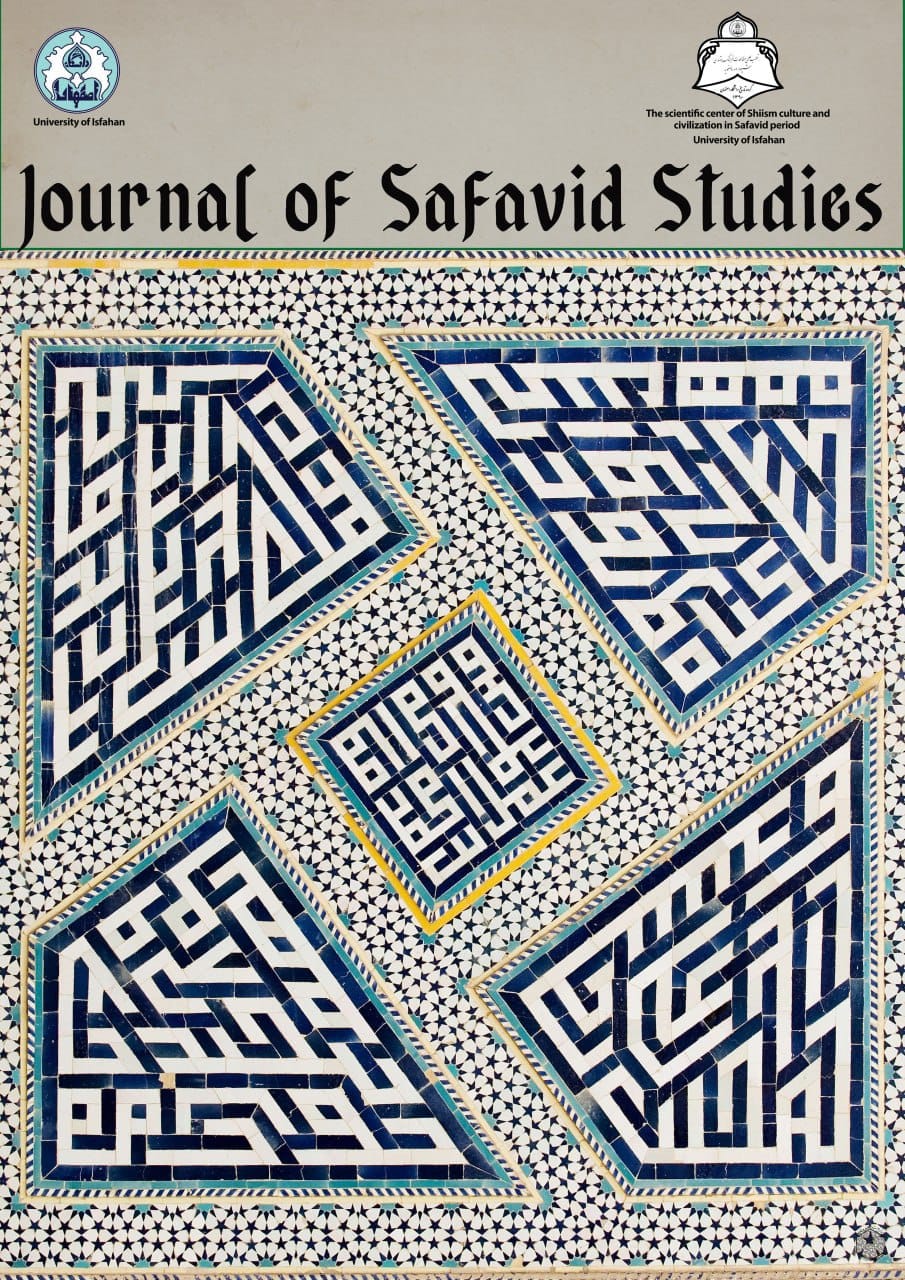
The Journal of Safavid Studies is an academic journal published by Safavid Studies center, University of Isfahan. The journal welcomes the articles that engage with any aspect of Safavid Studies that provide a scholarly platform for critical and informed articles with a historical approach.
The journal conscientiously aims to provide a scholarly platform for critical and informed articles with a historical approach in all fields of Safavid studies such as religious, political, cultural, social, economic, educational, artistic, international relations. The articles will cover the most debate-worthy issues in the aforementioned fields in the hope of ultimately contributing to the resolution of various theoretical, methodological and practical dilemmas encountered in Safavid Studies.This journal also aims to pave the way to increase cultural exchanges at the international level with an approach to introduce Safavid history and Shi’ism
https://ssj.ui.ac.ir/
Open Access Current Issue: Volume 1, Issue 1, Spring 2022
- February 03, 2022
- 0 Comment
Shii News – ‘British policy towards the Iraqi Shiites during the First World War’ – J Cole
- February 02, 2022
- 0 Comment
Shii News – Academic Items
1. Iridescent Kuwait: Petro-Modernity and Urban Visual Culture since the Mid-Twentieth Century
Laura Hindelang
Open Access e-book
2. The Aga Khan Program for Islamic Architecture at Harvard University presents
Spring 2022 AKPIA Lecture Series
A Forum for Islamic Art & Architecture
Held via Zoom Webinar
February 24, 2022. 6:00pm EST
“Emperor Shāh Jahān: The Gardener (chaman-pera) of a Vast Garden (bāgh wa būstān) called Hindustan”
Gulfishan Khan, AKPIA Associate; Professor of Medieval Indian History, Chairperson of the Centre of Advance Study, Aligarh Muslim University, Aligarh, India
Registration: https://bit.ly/akpiagkhan
March 10, 2022. 6:00pm EST
“A Thousand Futures: Negotiating Urban Transformation in Early Republican Istanbul (1923-1949)”
Ümit Fırat Açıkgöz
AKPIA Fellow; Assistant Professor, Department of Architecture and Design, American University of Beirut
Registration: https://bit.ly/thousandfutures
March 24, 2022. 12:00 noon EST *
“On Polychromy, Polysemy and Whiteness in Islamic Art”
Alain Fouad George
I.M. Pei Professor of Islamic Art and Architecture, Director of Graduate Admissions, Faculty of Oriental Studies, Fellow of Wolfson College, University of Oxford
Co-sponsored with the Standing Committee on Medieval Studies at Harvard University
*special early start time
Registration: https://bit.ly/akpiageorge
April 21, 2022. 6:00pm EST
“Documentary Life: Sketch as Chronicle in Shah Abbas’ Iran”
Kishwar Rizvi
AKPIA Fellow; Professor of Islamic Art and Architecture, Department of the History of Art, Yale University
Registration: https://bit.ly/documentarylife
Lectures are held via Zoom webinar; time listed is Eastern Standard Time; registration is required.
We anticipate that all lectures will be recorded and made available at the AKPIA website, after the event date.
THE AGA KHAN PROGRAM FOR ISLAMIC ARCHITECTURE AT HARVARD UNIVERSITY
Website: https://agakhan.fas.harvard.edu/news-events
Email agakhan@fas.harvard.edu
3. ONLINE Lecture “Muslim Bioethics Reimagined: Towards an Islamic Feminist Practice” by Ruaim Muaygil (College of Medicine, King Saud University), University of Manchester, 2 February 2022, 1:00 pm GMT
This paper argues that Islamic bioethics must shift from its predominant practice of unreflective scriptural application to a more contemplative and re-interpretative understanding of Islamic texts in order to right these healthcare injustices. It proposes an alliance with Islamic feminism as an alternative method of examining the moral foundations of Islamic jurisprudence.
Registration: https://zoom.us/j/97710007495
4. ONLINE Book Presentation: “Islam and the Arab Revolutions — The Ulama Between Democracy and Autocracy” by Usaama al-Azami, Leibniz-Zentrum Moderner Orient, Berlin, 7 Febru-ary 2022, 5:00 pm CET
The author traces the public engagements and religious pronouncements of prominent ulama, including Yusuf al-Qaradawi, Ali Gomaa and Abdallah bin Bayyah, to explore their role in either championing the Arab revolutions or supporting their repression. While a minority of noted scholars have enthusiastically endorsed the counter-revolutions, their approach is attributable more to their distinctly modern commitment to the au-thoritarian state.
Information and registration: https://www.zmo.de/veranstaltungen/islam-and-the-arab-revolutions-the-ulama-between-democracy-and-autocracy
5. ONLINE Book Introduction: “Development, Architecture, and the Formation of Heritage in Late Twentieth-century Iran” by Dr Ali Mozaffari, Manchester University Press, 10 February 2022, 1:00 am – 12:00 pm GMT
In this lecture, using Iran as an example, the author will draw upon case studies to demonstrate how archi-tecture became a conduit for the production of heritage at large in a modernizing Muslim society, and how it has been entangled with development and intellectual debates before and after the Islamic Revolution.
Information and registration: https://manchesteruniversitypress.co.uk/events/development-architecture-and-the-formation-of-heritage-in-late-twentieth-century-iran/
6. ONLINE Lecture: “Early Cities in Iran” by Prof. Dr. Barbara Helwing, Museum für Islamische Kunst, Berlin, 17 February 2022, 6:30 pm CET
The lecture presents the current state of knowledge of archaeological research on the first cities in the Iranian highlands and takes a look at the imaginative imagery of the surviving finds.
Information and registration:
-Modern Art in Iran | Ina Sarikhani
Thursday, 24 February 2022, 6:30 pm (CET)
Webex link: https://spk-berlin.webex.com/spk-berlin/j.php?MTID=m353ad99b63c0b6df0144a8f0a710698b
Language: English
-Kashan – Crossroads of Commerce and Culture | Prof. Dr. Roy Mottahedeh
Thursday, 3 March 2022, 6:30 pm (CET)
Webex link: https://spk-berlin.webex.com/spk-berlin/j.php?MTID=mdd136325730ab0ebe56f35650d3ad67e
Language: English
-The Rituals of the Zoroastrians from Antiquity to the Present Day | Prof. Dr. Alberto Cantera
Thursday, 10 March 2022, 6:30 pm (CET)
Webex link: https://spk-berlin.webex.com/spk-berlin/j.php?MTID=mc5c488d74435198e43428e2f45f9dc8c
Language: English
–Gärten in Iran – Einst und jetzt | Prof. Dr. Peter Heine
Donnerstag, 17. März 2022, 18:30 Uhr (MEZ)
Webex-Link: https://spk-berlin.webex.com/spk-berlin/j.php?MTID=mc0d1c7f633c50302f9902fb9c1b8258c
Sprache: Deutsch
7. Junior Professorship for Middle Eastern and Islamic Studies, Focus on Pre-modern History of the MENA Region (W1 with Tenure-track to W2), Department of Oriental and Asian Studies, University of Bonn
Qualification: Mastery in Arabic and at least one other languages of the region; specialization in history, literature, history of science, philosophy, law, or adjacent fields with experience in historical, cultural, and/or sociological approaches. Excellent oral and written English is required and relevant teaching experience is expected. Knowledge of German is desirable, but not a requirement.
Deadline for application: 13 March 2022.
8. Research Fellowship in the Study of Muslims in Britain (2 Years, Commencement April 2022), Oxford Centre for Islamic Studies
Applications are invited for a Research Fellowship which will co-ordinate and develop the Centre’s research interest in the study of the experience, aspirations and challenges faced by British Muslims.
Deadline for applications: 28 February 2022.
Further information: www.oxcis.ac.uk/vacancies
9. Academic Director, Cambridge Muslim College
The successful candidate will be a senior academic with academic management experience who can assume responsibility for all aspects of academic programming and research.
Deadline for applications: 2 March 2022. Information: https://www.cambridgemuslimcollege.ac.uk/ad22/
10. Qatar Digital Library is free to use and reuse.
This growing archive covers modern history and culture of the Gulf and wider region, available online for the first time.
- February 01, 2022
- 0 Comment